Ch. 1free to read
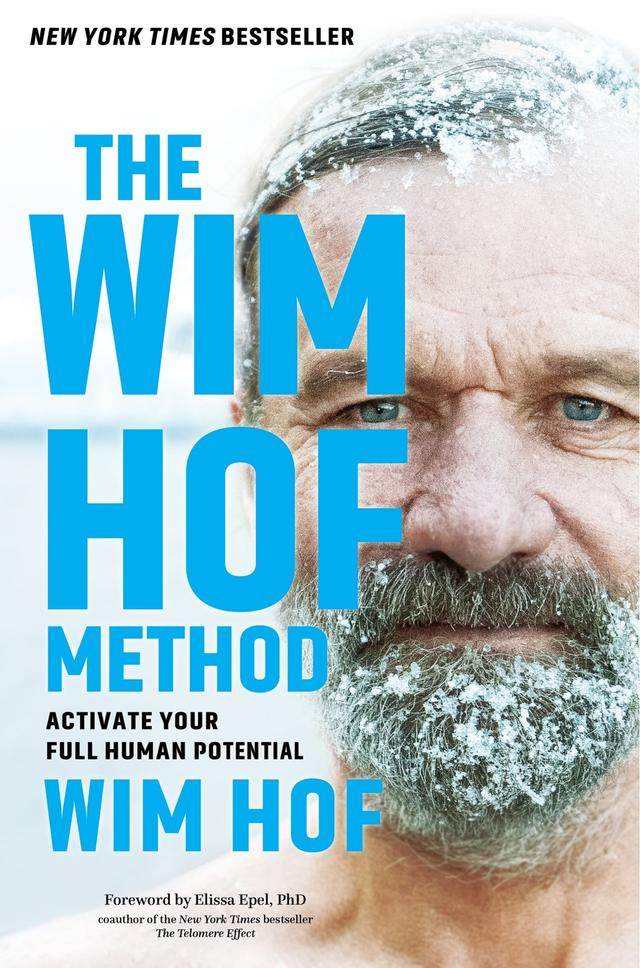
The Wim Hof Method
What It’s About
Ice baths look like a stunt. Wim Hof shows they are training. Cold exposure, a breathing method you can run in ten minutes, and a mindset that holds when your body wants out. The science is real: volunteers trained in his method turned down their own immune response in a lab. Ordinary bodies, extraordinary control.
Three Key Ideas
Cold Exposure Builds Resilience
Regular cold showers and immersion activate brown fat, spike norepinephrine, and train the nervous system to recover from acute stress.
Breathing Shapes the Immune System
A controlled hyperventilation and breath-retention cycle allowed trained subjects to measurably suppress inflammation in a landmark 2014 Radboud study.
Voluntary Discomfort Restores Capacity
Deliberate exposure to cold and breathwork reverses the atrophy caused by modern comfort, rebuilding stress tolerance the nervous system normally never exercises.
Read a Sample
The Wim Hof Method
On January 26, 2008, a Dutch man named Wim Hof lowered himself into a container filled with ice cubes in front of a live audience in New York City. He had done this dozens of times before, but this attempt was different. He planned to stay inside for more than an hour, long enough to set a new world record. Core temperature drops below 35 degrees Celsius typically trigger shivering, confusion, cardiac arrhythmia, and then unconsciousness. He sat in the ice, eyes half-closed, breathing in a steady, controlled rhythm, his face unnervingly calm.
Hof was not a freak of genetics. He was not a professional athlete in any conventional sense. He was a Dutchman who had spent decades training his mind and body through a combination of cold exposure, a specific breathing protocol, and what he calls commitment, a mental posture that he considers as trainable as any muscle.
The book he eventually wrote, "The Wim Hof Method," is not a conventional fitness manual. It is part memoir, part physiology primer, part philosophy of suffering. The method it describes is simple enough that anyone can start in a single afternoon, yet deep enough that its practitioners report changes in immunity, mood, sleep, stress tolerance, and pain management. Some of those claims are supported by peer-reviewed science. Others remain contested, anecdotal, or simply untested at adequate scale. This summary holds both realities at once, because the honest picture of the Wim Hof Method sits somewhere between miracle and marketing.
Three ideas are worth carrying through everything that follows. The first is the method itself: cold, breathing and commitment are three pillars Hof treats as inseparable, and what they build is the capacity to meet discomfort with breath and attention rather than with contraction and avoidance. The second is about evidence: some of the method's effects rest on real findings, while many of its claims remain contested, anecdotal, or untested at adequate scale. The third is a hard safety rule: the breathing technique weakens the body's signal to breathe, so it must never be practiced in or near water.
Who It’s For
- Anyone who wants a practical, science-grounded introduction to cold exposure and breathwork.
- Anyone who struggles with chronic stress, low energy, or mood dips and wants a drug-free daily tool.
- Anyone curious about the gap between what the Wim Hof Method claims and what peer-reviewed research actually supports.
- Anyone recovering from grief or burnout who is looking for a physical practice to anchor mental stability.
About the Author: Wim Hof
Wim Hof is a Dutch athlete and wellness instructor, widely known as "The Iceman" for his documented ability to withstand extreme cold. He holds 26 Guinness World Records, including the longest time submerged in ice at 1 hour and 52 minutes, and has completed feats such as a barefoot marathon above the Arctic Circle and a near-summit of Everest in shorts.
He developed his method after the death of his first wife, combining cold exposure, controlled breathing, and focused attention into a teachable system. He founded Innerfire, which runs instructor training and retreats globally, and has collaborated with researchers at Radboud University Medical Center whose 2014 study on voluntary immune modulation drew significant scientific attention.