Ch. 1free to read
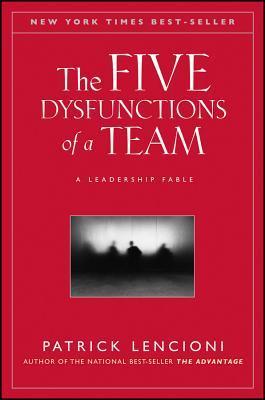
The Five Dysfunctions of a Team
What It’s About
The Five Dysfunctions of a Team explains, through a story, why even the best teams struggle with collaboration and offers practical strategies to overcome distrust and office politics in order to achieve important goals as a cohesive and effective unit.
Three Key Ideas
Vulnerability-Based Trust
Real team trust means being openly imperfect with colleagues, admitting mistakes and gaps in knowledge, not just meeting deadlines reliably.
Productive Conflict Over Harmony
Healthy teams argue out disagreements directly in meetings, then commit fully, rather than settling for polite silence that leaves decisions unresolved.
First Team Loyalty
Executive team members must treat their peer group as their primary team, not the departments they lead, or cross-functional decisions never get made in good faith.
Read a Sample
The Quietest Reason Companies Fail
A founder who had grown his company from nothing to a billion dollars once told Patrick Lencioni something he never forgot. If you could get everyone in an organization rowing in the same direction, you could dominate any industry, any market, any competitor, at any time. That sentence is the seed of this whole book, and it points to something most leaders won't admit. Your company's struggles probably have nothing to do with your strategy, your funding or your tech stack. They have to do with the eight or nine people who sit around the executive table quietly resenting each other.
It's a strange place to plant the center of a business book, and Lencioni knows it. He wrote it anyway, because after twenty years of consulting he kept watching companies with brilliant resources lose to weaker competitors, almost always for the same reason. The leadership team was a group, not a team. They sat in meetings together, but they protected themselves, dodged the hard conversations, and let the company drift while each of them polished their own piece of the org chart. Teamwork remains the ultimate competitive advantage, he writes, because it's both so powerful and so rare. Both halves of that sentence matter. It's rare precisely because being a real team is uncomfortable in ways most adults aren't willing to put up with.
The book makes its argument through a fable, and that choice of format matters more than it seems. Lencioni could have written a standard management book with five chapters and a checklist. Instead, he invents a struggling tech company called DecisionTech and a fifty-seven-year-old former auto plant executive named Kathryn Petersen, then has you watch her drag a broken executive team back to life over a few months. Team dysfunction isn't abstract. It looks like a real person rolling her eyes in a real meeting. It looks like a CTO who opens his laptop the second the conversation turns to feelings. You learn the model by watching the people, and you remember it because you've met every one of them at your own job.
Who It’s For
- Anyone who leads an executive or senior leadership team and suspects the real problem is not strategy but how the people at the top work together.
- Anyone who has watched a well-resourced team lose to weaker competitors and could not explain why.
- Anyone who wants a practical, story-driven framework for running meetings where real disagreements surface and decisions actually stick.
- Anyone who manages or joins a team and wants to understand why talented individuals so often fail to produce strong collective results.
About the Author: Patrick Lencioni
Patrick Lencioni is an American business consultant and author who founded The Table Group, a management consulting firm focused on organizational health and team development. He has spent decades advising executive teams across industries, and his consulting work is the direct source of the model he presents in this book.
Lencioni is known for writing business books in fable form, using fictional stories to illustrate management principles. The Five Dysfunctions of a Team is his best-known work and has sold millions of copies worldwide.