Ch. 1free to read
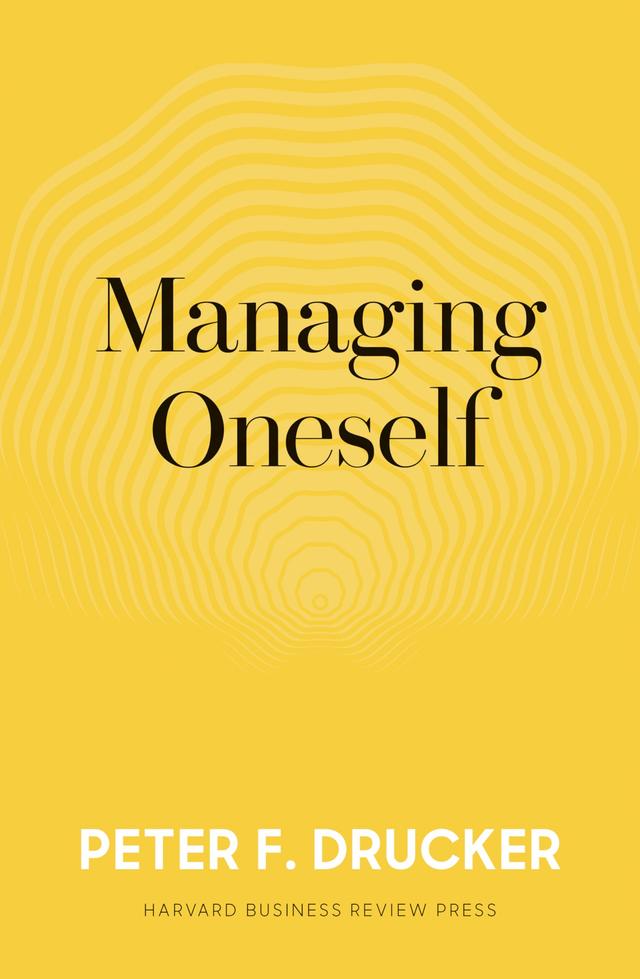
Managing Oneself
What It’s About
Through Managing Oneself, you will discover your true privileges and strengths, and with the combination of these, you will be able to build a pioneering business.
Three Key Ideas
Feedback-Based Strength Discovery
Analyzing feedback over time reveals your genuine strengths and shows where to focus your energy for maximum career impact.
Values and Work Alignment
Working in environments that reflect your personal values boosts motivation and performance, while misaligned workplaces gradually erode both.
Goal-Setting with Self-Awareness
Effective goals are specific, measurable, achievable within 18 months, and built around the strengths you have already identified.
Read a Sample
You can learn what your strengths and weaknesses are by analyzing the feedback you get. You can develop your own communication style, which makes it easier to open up in front of strangers. Favorite quotes: "In a knowledge-based economy, those who know themselves, their strengths, their values, and how to bring out the best in themselves will be successful." "Don't try to change yourself for others, it won't lead to success. Instead, work hard on increasing your performance." "Focus on your strengths, and this will bring results."
Key points: Defining self-management. Getting to know ourselves. Making self-reflection part of daily life. Defining Self-Management
According to Drucker, self-management means the ability to keep developing our skills and knowledge throughout our lives, so that we're able to build a successful career.
When it comes to managing ourselves, Drucker notes that it helps to think of ourselves as our own boss, the one who makes the decisions about our future. Those decisions might include getting more education to strengthen our resume, or working on our social skills so we get along better with colleagues.
Drucker believes we're now living in the age of "knowledge workers" (programmers, lawyers and the like), and that this has a positive effect on the quality of our work.
Who It’s For
- Anyone who wants to build a career around their natural strengths rather than fixing their weaknesses.
- Anyone who feels stuck in a role that does not match their values or working style.
- Anyone who wants a practical framework for setting career goals that are challenging yet realistic.
- Anyone who needs to improve how they communicate and collaborate with colleagues at every level.
About the Author: Peter Drucker
Peter Drucker was an Austrian-born management consultant, educator, and author whose work shaped the field of modern management throughout the twentieth century. He taught for many years at Claremont Graduate University in California and wrote dozens of influential books on business, organizations, and society.
Drucker is widely credited with developing the concept of the knowledge worker and with popularizing management by objectives. His thinking continues to influence how businesses and individuals approach leadership, productivity, and career development.