Ch. 1free to read
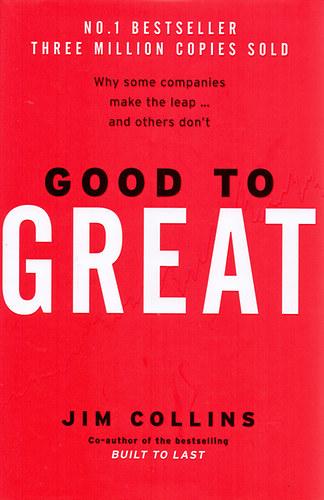
Good to Great
What It’s About
Can a good company become great, and if so, how?
After a five-year research project, the author concluded that the transformation from good to great can happen and does happen. Here, he uncovers the underlying variables that allow any type of organization to make the leap from good to great, while other organizations remain merely good.
Three Key Ideas
Level 5 Leadership
The best-performing companies were led by humble, fiercely determined executives who credited others for success and took personal blame for failures.
First Who, Then What
Great leaders filled their teams with the right people before deciding on strategy, trusting that capable, self-motivated people could adapt to any direction.
The Hedgehog Concept
Enduring companies organized everything around one clear idea at the intersection of what they could be best at, what drove their economics, and what they loved.
Read a Sample
Good to Great by Jim Collins
The Lawyer Who Sold the Mills
In 1971, a mild-mannered in-house lawyer named Darwin Smith became chief executive of Kimberly-Clark, a sleepy paper company that had spent the previous two decades trailing the stock market by thirty-six percent. A board member pulled him aside, gently, to mention that he probably wasn't qualified for the job. Two months later, Smith was diagnosed with nose and throat cancer and given less than a year to live. He told the board, refused to quit, and commuted weekly from Wisconsin to Houston for radiation treatments. He lived another twenty-five years, twenty of them as CEO.
Then he did something the financial press called stupid. He sold the mills. The paper mills had been Kimberly-Clark's core business since the company's founding, and Smith concluded they were doomed to mediocrity. He took the proceeds, poured them into consumer paper products like Huggies and Kleenex, and went head to head with Procter and Gamble. Wall Street analysts downgraded the stock. The business press called the decision foolish. A board member later said it was the gutsiest move he had ever seen a chief executive make.
Twenty-five years on, Kimberly-Clark owned Scott Paper outright and was beating Procter and Gamble in six of eight product categories. Asked by a journalist to describe his management style, Smith was silent for a long uncomfortable moment, then said one word: "Eccentric." Asked what allowed him to do what he did, he said, "I never stopped trying to become qualified for the job."
Who It’s For
- Anyone who leads a team or organization and wants to build results that outlast their own tenure.
- Anyone who suspects their company is stuck at "good enough" and wants a research-backed path to lasting improvement.
- Anyone interested in why some businesses compound their success over decades while comparable rivals stagnate.
- Anyone studying management or strategy who wants concrete case studies over abstract frameworks.
About the Author: Jim Collins
Jim Collins is an American researcher, author, and lecturer who has spent decades studying what makes organizations thrive over the long term. He ran his own management research laboratory in Boulder, Colorado, and taught at Stanford Graduate School of Business before focusing full-time on research.
His earlier book Built to Last examined companies that had been great from the start. Good to Great was written to answer the follow-up question that book left open: how does a good company actually make the leap? Collins is widely read in both business and nonprofit leadership circles.