 English
 Magyar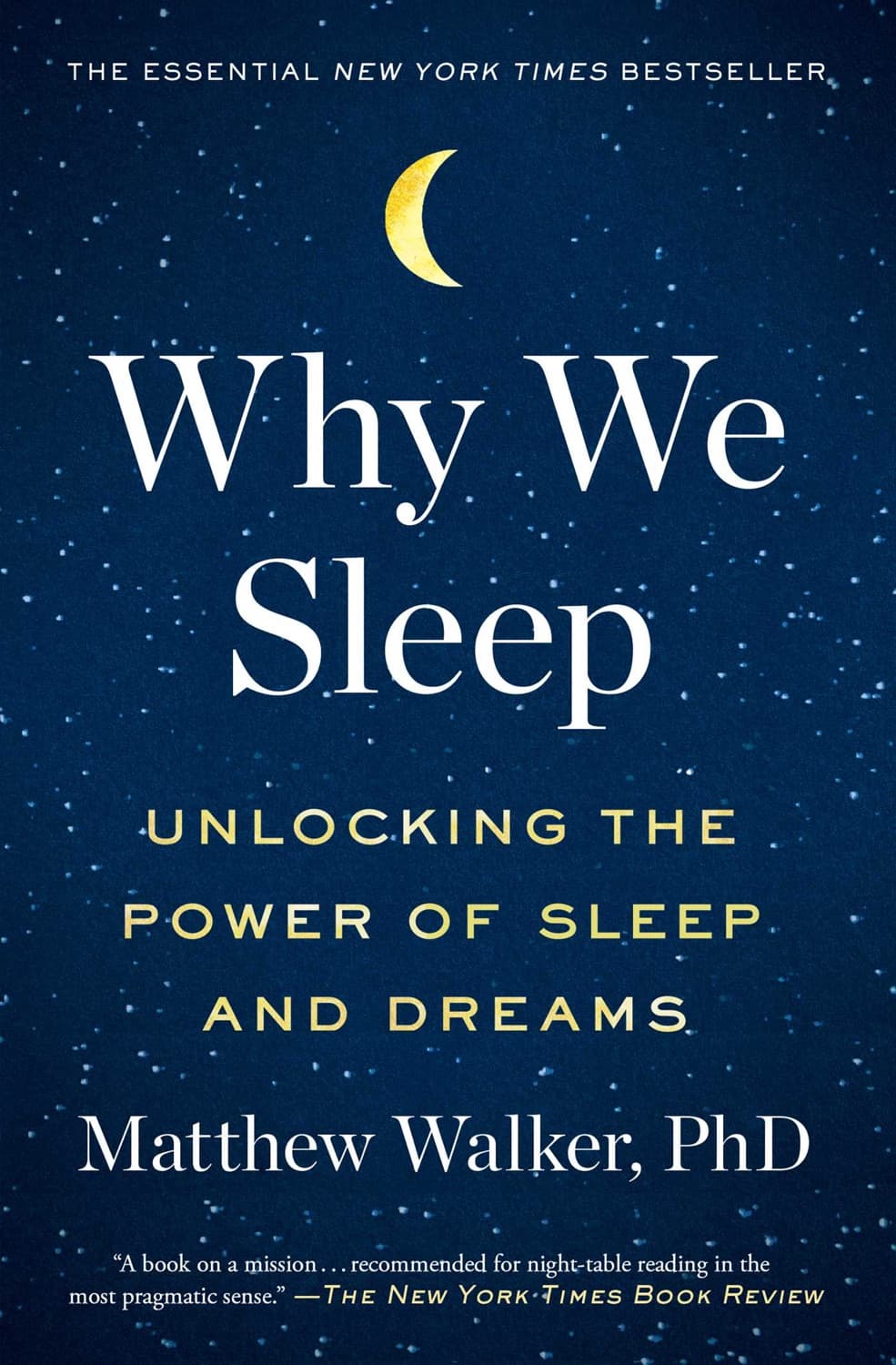
Why We Sleep
Matthew Walker
Free download · 500+ book summaries
What is Why We Sleep about?
What's quietly destroying your health more than diet, exercise, or stress combined: not enough sleep. UC Berkeley sleep scientist Matthew Walker walks through the molecular biology of sleep, the catastrophic effects of sleep loss, and the protocols that produce real rest. The book that single-handedly turned sleep into a wellness priority.
Key ideas of Why We Sleep
Sleep Architecture and Memory
Each night cycles through NREM and REM stages that store and integrate memories, and cutting sleep short destroys most of the critical REM phase.
Body-Wide Health Damage
Chronic short sleep measurably harms the heart, immune system, metabolism, hormones, and brain, and is causally linked to cancer, diabetes, and Alzheimer's.
Circadian and Behavioral Sabotage
Caffeine's long half-life and blue light from screens actively suppress the biological signals that initiate and sustain healthy sleep.
Read an excerpt from the summary
Why We Sleep
*Matthew Walker*
In the spring of 1964, a seventeen-year-old high school student named Randy Gardner decided to break a world record. Not by running a marathon, climbing a mountain, or holding his breath underwater. He would simply stay awake. For eleven days straight. What happened to his mind and body over those 264 hours would become one of the most famous experiments in sleep science. And it would foreshadow a warning that most of us are still ignoring sixty years later.
You probably slept about seven hours last night. Maybe six. Maybe less. You probably reached for your phone the moment you woke up, scrolled through something, and told yourself the tiredness would wear off after a coffee. Here is what you did not feel: your immune system weakening, your heart straining just a little harder, your brain failing to consolidate the things you learned yesterday. Sleep loss is the invisible epidemic of modern life. And the science behind it is far more alarming than most people realize.
Matthew Walker is a professor of neuroscience and psychology at the University of California, Berkeley. He has spent more than twenty years studying sleep. His book, Why We Sleep, is not a gentle nudge to get more rest. It is a full-scale alarm. Every major disease killing people in the developed world -- cancer, heart disease, diabetes, obesity, Alzheimer's, depression -- has a recognized causal link to insufficient sleep. Not a correlation. A cause.
Walker's central message is devastating in its simplicity: the shorter your sleep, the shorter your life. Over twenty large-scale epidemiological studies, tracking millions of people across decades, report the same clear relationship. And yet we live in a culture that celebrates sleeplessness as a badge of honor. CEOs brag about their four-hour nights. Students pull all-nighters before exams. New parents wear their exhaustion like medals. We treat sleep as a luxury we can trim when life gets busy. Walker's book exists to convince you that this attitude is killing us. Slowly, silently, and from the inside out.
Like it?
Continue in the appWho is it for?
- Anyone who regularly sleeps fewer than seven hours and wonders whether it is really a problem.
- Anyone who relies on caffeine to get through the day and suspects their sleep quality is poor.
- Anyone responsible for teenagers or school policy and curious why adolescents struggle to wake up early.
- Anyone interested in creativity, emotional resilience, or disease prevention and how sleep underpins all three.
About the author: Matthew Walker
Matthew Walker is a professor of neuroscience and psychology at the University of California, Berkeley, and the founder of the Center for Human Sleep Science. He has spent more than two decades researching sleep and its effects on the brain and body.
Walker writes and speaks widely on sleep science for both scientific and general audiences. Why We Sleep, published in 2017, became an international bestseller and is widely credited with raising mainstream awareness of sleep as a public health priority.
Read it in 46 minutes
The summary of Why We Sleep and 500+ more books await in the BookBase app.