 English
 Magyar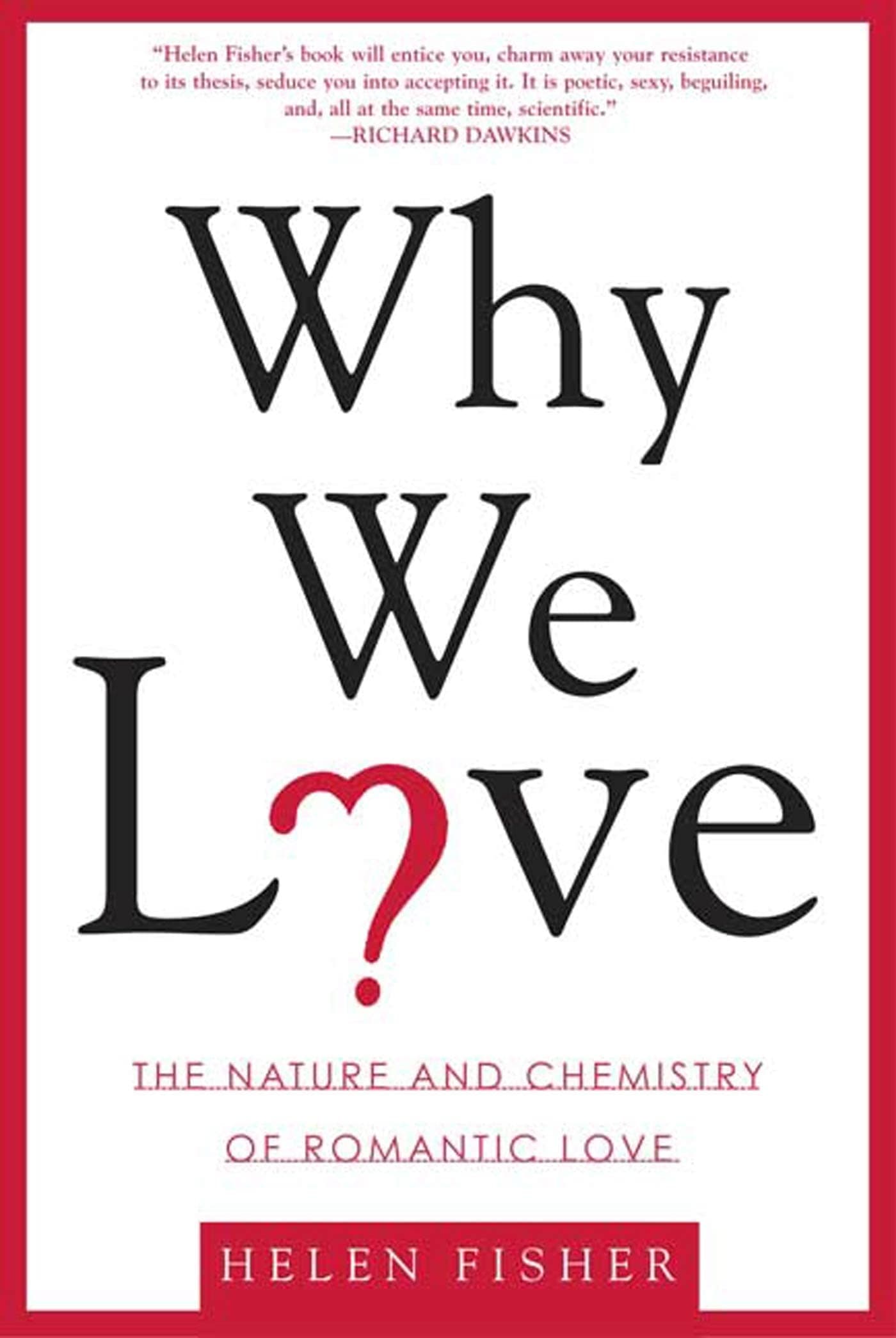
Why We Love
Helen Fisher
Free download · 500+ book summaries
What is Why We Love about?
Helen Fisher's book Why We Love is not only a report on the latest, shocking research but also a sensitive description of the infinite versatility of romantic love. This book is a scientifically grounded study of love that reveals how, why, and whom we love.
Key ideas of Why We Love
Love as a Brain Drive
Romantic love is a goal-directed motivation system running on dopamine, not a cultural invention or mere emotion.
Three Independent Mating Systems
Lust, romantic love, and attachment evolved separately, run on different chemistry, and can pull a person in conflicting directions at once.
Rejection, Rage, and Recovery
Romantic rejection amplifies dopamine firing before crashing it, producing protest, abandonment rage, and sometimes clinical depression.
Read an excerpt from the summary
The Drive Beneath Everything
Helen Fisher started looking for the brain circuitry of love in 1996. She was an anthropologist who had spent her career studying mating, marriage, and divorce across cultures, and she had grown convinced that romantic love was not what most of her colleagues thought it was. It was not a Western invention. It was not a luxury emotion that bloomed only after food and shelter were sorted. It was something older, hungrier, and more deeply lodged in human biology than that.
By the time she finished her fMRI scanning study eight years later, she had imaging data from more than forty men and women freshly and recklessly in love, and she had her answer. Romantic love is a drive. Not an emotion in the usual sense, not a cultural script, but a goal-directed motivation system as old as the reptilian brain, running on the same dopamine machinery that pushes a hungry animal toward food. It evolved for a reason, it follows rules, and you can watch it light up on a brain scan.
That is the spine of the book. Everything else — the survey of 839 Americans and Japanese, the courtship of elephants and prairie voles, the chemistry of jealousy, the four-year itch — hangs off it.
What Wild Ecstasy: The Anatomy of Being in Love
To find out whether being in love feels the same everywhere, Fisher and her collaborators handed a 54-item questionnaire to 437 Americans and 402 Japanese students. The results were startling for their flatness. Heterosexuals and homosexuals answered the same way on 86 percent of items. Men and women, on 87 percent. Catholics and Protestants, on 89 percent. People over forty-five reported the same intensity of passion as people under twenty-five. The one cluster of meaningful differences was cultural rather than emotional — Japanese respondents were more afraid of saying the wrong thing, for instance, because cross-sex relations in Japan are more formal.
Like it?
Continue in the appWho is it for?
- Anyone who wants to understand what is actually happening in their brain when they fall in love.
- Anyone who has struggled to get over a lost relationship and wants a science-backed framework for recovery.
- Anyone curious about how evolutionary biology shaped human courtship, pair bonding, and jealousy.
- Anyone interested in why love feels so universal across cultures, centuries, and species.
About the author: Helen Fisher
Helen Fisher is a biological anthropologist and senior research fellow at the Kinsey Institute. She has spent decades studying human mating, marriage, divorce, and the brain science of romantic love across cultures.
She is best known for her fMRI research on people in the early stages of romantic love, which produced some of the first direct imaging evidence that love activates the brain's dopamine reward circuits. She has advised major dating platforms and lectured widely on the evolutionary roots of human partnership.
Read it in 47 minutes
The summary of Why We Love and 500+ more books await in the BookBase app.