 English
 Magyar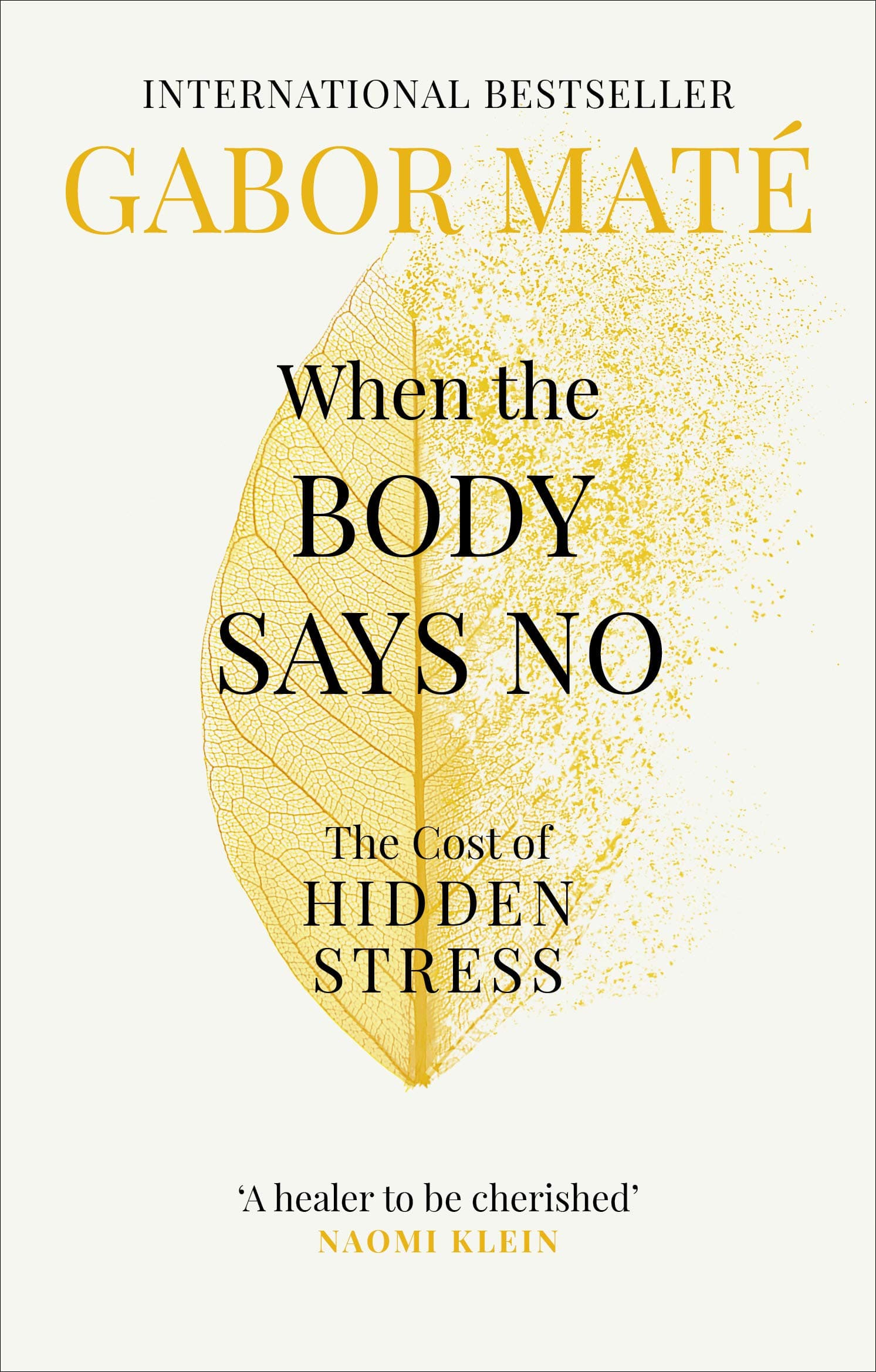
When the body says no
Gábor Máté
Free download · 500+ book summaries
What is When the body says no about?
When the Body Says No examines the hidden connections between mental health and physical diseases. Modern medicine often tries to reassure us that our mind and body are completely separate — when in reality, they are deeply interconnected. Emotional stress often manifests in the body in the form of physiological diseases, disorders, and chronic conditions that threaten our health and well-being.
Key ideas of When the body says no
Suppressed Emotions Drive Physical Disease
Chronic inability to say no or express authentic feelings reshapes the body's stress and immune systems until they begin attacking the organism itself.
Mind and Body as One Integrated System
Psychoneuroimmunology shows that the nervous system, immune system, hormones, and psyche operate as a single network, not separate entities.
Childhood Emotional Patterns Shape Adult Health
Early environments that condition compliance and emotional self-suppression create lifelong physiological vulnerabilities that persist into adulthood.
Read an excerpt from the summary
The Refusal You Could Not Speak
Mary was a slight, soft-spoken Native woman in her early forties, and for eight years she came to Gabor Maté's office in Vancouver wearing the same gentle smile. She was the patient who never complained, never raised her voice, never asked for anything she did not absolutely need. She also had scleroderma, an autoimmune disease that was slowly turning her own connective tissue into something stone-like. It had started with a sewing-needle puncture that refused to heal. Then Raynaud's. Then gangrene. Then amputation. Then a diagnosis with a name that sounded faintly geological.
One long appointment, Maté finally asked her about her life before medicine had a chart for her. Out came a childhood nobody had ever asked about. Abandoned. Shuttled between foster homes. At seven, huddled in an attic, holding her younger sisters while drunken adults fought below. "I was so scared all the time," she told him, "but as a seven-year-old I had to protect my sisters. And no one protected me." She had never told her husband of twenty years. She had never told anyone. She was, in Maté's careful phrasing, "incapable of saying no, compulsively taking responsibility for the needs of others."
The first time Maté wrote about Mary in a 1993 Globe and Mail column — "When we have been prevented from learning how to say no, our bodies may end up saying it for us" — a senior Canadian rheumatologist sent in a scathing letter denouncing the idea. Eight years later, Mary died. Her last words to him were, "You are the only one who ever listened to me."
This book is what happens when a doctor decides to keep listening. It is built around a single, unsettling claim: the chronic, often invisible suppression of authentic feeling — anger, grief, the simple word no — does not merely make us anxious or depressed. It physically reorganizes the body's defenses until, eventually, those defenses turn on us. Maté is not selling the comforting line that "stress causes disease." He is making a sharper and more uncomfortable case. The body, denied permission to refuse what the conscious mind has been trained never to refuse, eventually issues the refusal itself — through autoimmune attack, malignancy, the slow shutdown of a nervous system, the quiet erasure of memory. The body becomes the no the person could never voice.
Like it?
Continue in the appWho is it for?
- Anyone who has been diagnosed with a chronic or autoimmune condition and wants to understand the psychological roots of physical illness.
- Anyone who struggles to set boundaries, say no, or express anger and suspects it is affecting their health.
- Anyone caring for someone with a long-term illness who wants a deeper framework for understanding what the patient is experiencing.
- Anyone interested in the science connecting stress, emotional life, and the immune, hormonal, and nervous systems.
About the author: Gábor Máté
Gabor Mate is a Hungarian-born Canadian physician who spent years practicing in Vancouver, including work with patients in the Downtown Eastside and with his own palliative care patients. He developed a clinical focus on the connections between emotional trauma, childhood development, and adult disease.
He is a widely read author and speaker on topics including addiction, trauma, and mind-body medicine. His thinking draws on his own biography, including surviving the Nazi occupation of Budapest as an infant, as well as decades of direct patient care.
Read it in 55 minutes
The summary of When the body says no and 500+ more books await in the BookBase app.