 English
 Magyar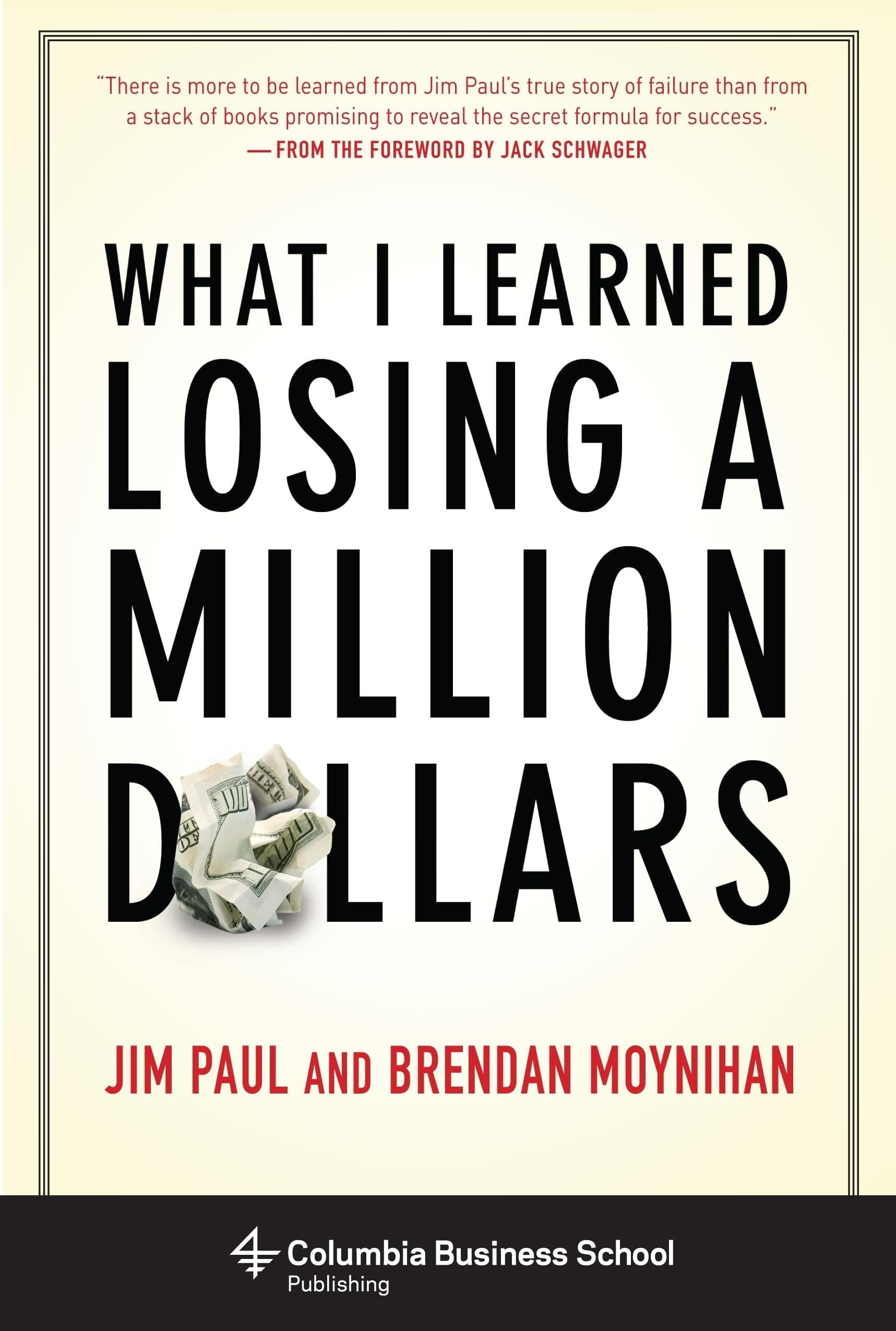
What I Learned Losing a Million Dollars
Jim Paul
Free download · 500+ book summaries
What is What I Learned Losing a Million Dollars about?
This book – which won the Axiom Business Book Award gold medal in 2014 – begins with a series of successes that helped Paul achieve a jet-setting lifestyle and secure a key position at the Chicago Mercantile Exchange. It then describes the circumstances that led to Paul's $1.6 million loss and the key lessons learned from it – primarily that, while there are as many ways to make money in the markets as there are people participating in them, all losses stem from the same few sources.
Key ideas of What I Learned Losing a Million Dollars
Losses Have a Common Pattern
While winning strategies contradict each other across traders, the ways people blow up their accounts are few and consistently the same.
Personalizing Losses Causes Ruin
Confusing a bad trade with personal failure turns an external number into an internal wound, triggering denial, bargaining, and deeper losses.
Plan Your Exit Before You Enter
Deciding a stop-loss before placing a trade is the single act that prevents the psychological spiral that destroys most losing positions.
Read an excerpt from the summary
A Different Kind of Money Book
Most books about money promise to teach you how to make it. This one does the opposite. Jim Paul lost $1.6 million of his own and other people's money in seventy-five days, and the book he wrote about that disaster argues something almost nobody in finance wants to hear: there is no dependable way to teach people how to make money, but there is a dependable way to teach them how to stop losing it.
The logic is simple once you see it. Markets hold as many winning strategies as there are winners. Some traders get rich on fundamentals, others on charts. Some pile everything into one position, others spread across forty. Their methods flatly contradict one another, and somehow they all work for somebody. Losing is different. The ways people wreck their accounts are few, repetitive, and shockingly consistent across personalities and decades. If success wears a thousand faces and failure wears only a handful, the smart move is to memorize the handful.
Nassim Taleb called this "the best noncharlatanic finance book I know." The compliment doubles as an insult to the rest of the genre. Paul isn't selling a system. He's dissecting a corpse, his own, to show you how a sharp, successful, well-connected man talked himself into ruin while believing the entire time that he was right.
Jack Schwager, who wrote the foreword, points out why trading fools so many people. No sane person reads a book about brain surgery over the weekend and shows up Monday to operate. Yet millions read a trading book on Saturday and expect to beat professionals by Monday. The reason is that trading offers only two actions, buy or sell, which means roughly a coin-flip chance of being right on any single bet. No other profession hands you a fifty-fifty shot at looking like an expert. Beginners win by luck, mistake the luck for skill, and get lured deeper. Schwager's blunt verdict on Paul's early career: the winning streak was luck, the loss was inevitable, and only the timing was ever in doubt.
Like it?
Continue in the appWho is it for?
- Anyone who trades stocks, futures, or any market and has ever held a losing position too long.
- Anyone who wants to understand why smart, experienced people make catastrophic financial mistakes.
- Anyone who has read classic market advice and found it contradictory or hard to apply under pressure.
- Anyone who manages money or makes high-stakes decisions and wants a clearer framework for cutting losses.
About the author: Jim Paul
Jim Paul was a governor of the Chicago Mercantile Exchange and a successful commodities trader who built a career from modest beginnings in Kentucky. After losing $1.6 million in the soybean oil market in 1983, he spent years studying what went wrong and how the greatest traders think about risk.
The book was co-written with Brendan Moynihan, a financial writer and market analyst. Nassim Taleb called it the best noncharlatanic finance book he knew, and Jack Schwager, author of the Market Wizards series, contributed the foreword.
Read it in 46 minutes
The summary of What I Learned Losing a Million Dollars and 500+ more books await in the BookBase app.