 English
 Magyar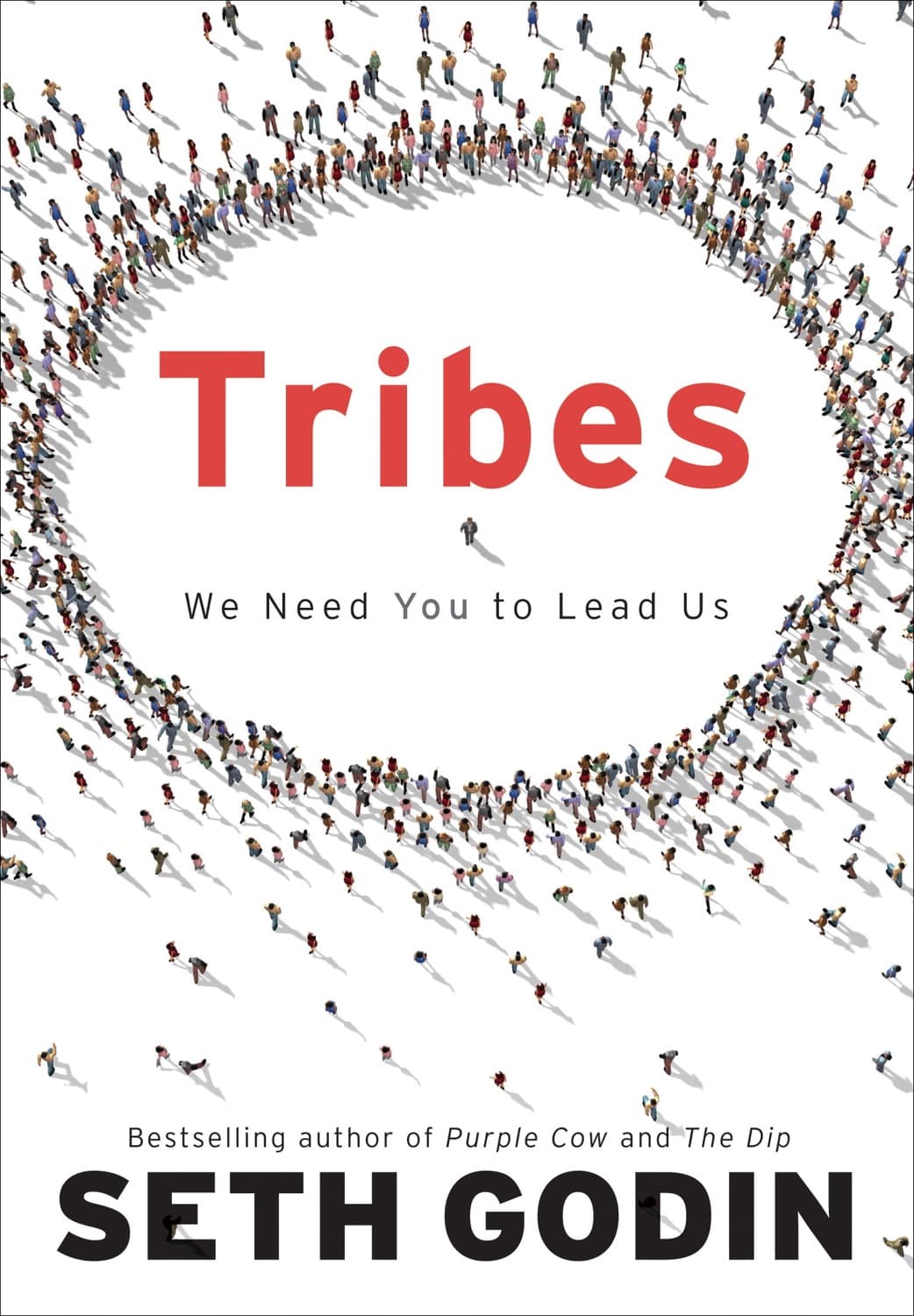
Tribes
Seth Godin
Free download · 500+ book summaries
What is Tribes about?
Anyone can lead a tribe. Seth Godin's 2008 book argues that the internet has dismantled the gatekeepers and made it possible for any committed person to gather a movement around a shared idea. Brief, energetic, and still relevant. The book that helped a generation realize they didn't need permission to start.
Key ideas of Tribes
Tribes Outperform Mass Audiences
A small group of people who deeply care about an idea and trust each other will always outperform a large, passive audience that merely consumes.
The Factory Trained Sheepwalkers
A century of factory-style schooling and work suppressed the initiative that the modern economy now rewards most, leaving capable people waiting for permission to lead.
Lead Without Waiting for Permission
Tribal authority is earned from below by saying what is true and specific, not granted from above by title or institutional approval.
Read an excerpt from the summary
Tribes
In the fall of 2000, a programmer named Joel Spolsky started a blog called Joel on Software. He had no marketing budget, no publisher, no distribution deal. He had opinions -- sharp, specific, occasionally infuriating opinions about how software should be built and how the people who build it should be treated. He wrote about things like why developers should have private offices and two monitors, why you should never rewrite code from scratch, why hiring smart people who get things done is more important than any technical credential. He was not trying to build an audience. He was trying to say something true.
Within a few years, Joel on Software had become the most widely read programming blog on the internet. A scattered, leaderless community of software developers -- people who had never met each other, who lived on five continents, who wrote in a dozen different languages -- had found something to rally around. They shared Joel's posts. They argued about his ideas in forums. They drove to conferences specifically because Joel was speaking. And when Spolsky eventually co-founded Stack Overflow, a question-and-answer platform for programmers, the tribe he had built over a decade showed up on the first day. It was not a product launch. It was a homecoming.
This is what Seth Godin is writing about in Tribes, his 2008 manifesto on leadership, connection, and change. The Joel Spolsky story sits near the opening of the book for a reason. It is not a story about a technology company. It is a story about a human being who had something to say, found others who cared about the same things, and changed how an entire profession thought about its work. No factory required. No mass advertising. No permission from above.
Like it?
Continue in the appWho is it for?
- Anyone who has an idea they believe in but is waiting for institutional permission to act on it.
- Anyone who manages a team or community and wants to build genuine commitment rather than passive compliance.
- Anyone who is frustrated that their industry or organization is moving in the wrong direction and wants to understand how change actually happens.
- Anyone who has tried mass marketing or broad outreach and found it fails to create the loyal, active following they need.
About the author: Seth Godin
Seth Godin is an American author and entrepreneur best known for his writing on marketing, leadership, and the spread of ideas. He has written more than twenty books, including Purple Cow, Linchpin, and The Dip, and ran the marketing platform Squidoo before its acquisition. His daily blog is one of the most widely read in the world on business and culture.
Godin worked at book packager Allworth Press before founding direct-marketing software company Yoyodyne, which Yahoo acquired in 1998. Tribes, published in 2008, draws on that experience alongside dozens of case studies to argue that authentic leadership, not advertising budget, drives lasting change.
Read it in 43 minutes
The summary of Tribes and 500+ more books await in the BookBase app.