 English
 Magyar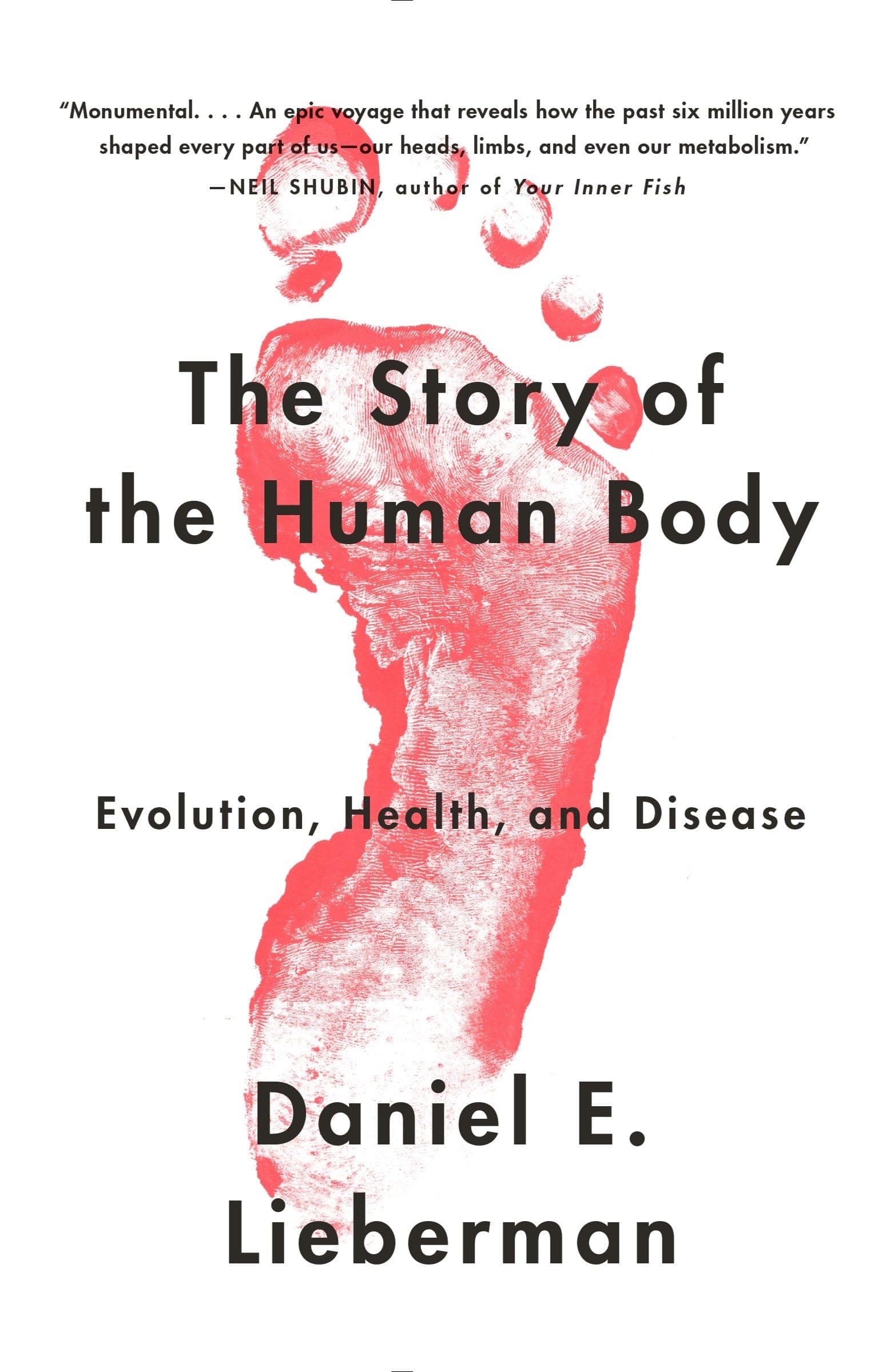
The Story of the Human Body
Daniel Lieberman
Free download · 500+ book summaries
What is The Story of the Human Body about?
The Story of the Human Body is a tale that spans over a million years, encompassing the evolution of the human body. Daniel Lieberman writes the book starting from the moment our ancestors first separated from their siblings, tracing the biological history of humanity all the way to our modern office-bound present.
Key ideas of The Story of the Human Body
Mismatch Drives Chronic Disease
Bodies shaped by millions of years of scarcity and movement are now exposed to abundance and inactivity, producing a wave of preventable chronic illness.
Agriculture as a Health Trade-off
Farming fed more people but narrowed the diet, shrank the jaw, and introduced infectious diseases that hunter-gatherer life largely avoided.
Dysevolution Traps Us in Illness
Treating symptoms without changing the environments that cause them lets mismatch diseases persist and deepen across each generation.
Read an excerpt from the summary
The Monkey in Tampa
For three years, a rhesus macaque lived in the suburbs of Tampa, Florida, raiding Dumpsters and outwitting animal control. He became famous during the 2012 Republican National Convention, mugged for cameras, and was finally captured in October of that year. Daniel Lieberman opens his book with this monkey because he wants you to understand something uncomfortable. The Mystery Monkey of Tampa Bay was a creature designed by millions of years of evolution to peel fruit in Indian forests, now subsisting on cold french fries behind a strip mall. He looked absurd. He looked sick. He looked, in Lieberman's quiet observation, exactly like the rest of us.
Lieberman is a paleoanthropologist at Harvard who has spent his career studying how human bodies came to be the way they are. His thesis sounds modest at first and then keeps growing teeth. The bodies you and I walk around in were assembled by natural selection over six or seven million years to do three specific things. Walk long distances on two legs. Eat a wildly varied diet of plants and lean meat we had to chase down or dig up. Cooperate with a small band of relatives and friends to survive in conditions of intermittent scarcity. Almost nothing about a modern office building, a supermarket, a couch, or a paved road resembles the world that shaped us. The gap between the body you have and the life you give it is what Lieberman calls mismatch, and he believes it is killing us slowly while we look the other way.
This is the story of how we got these bodies, why so many of them are breaking down, and what we keep refusing to do about it.
Like it?
Continue in the appWho is it for?
- Anyone who wants to understand why chronic diseases like diabetes, back pain, and myopia have become so widespread in modern life.
- Anyone who is curious about human evolution and how our ancestral biology still shapes our daily health and behavior.
- Anyone who feels disconnected from their body and is looking for grounded, evidence-based reasons to move more and eat differently.
- Anyone who works in public health, medicine, or policy and wants a clearer picture of why individual willpower alone cannot fix population-level health problems.
About the author: Daniel Lieberman
Daniel Lieberman is a paleoanthropologist and professor at Harvard University, where he has spent his career studying the evolution of the human body. He is best known for his research on bipedalism, endurance running, and the biomechanics of barefoot locomotion, work that contributed to widespread interest in the evolutionary roots of how humans move.
He has published extensively in scientific journals and written for general audiences on how understanding our evolutionary past can help explain the health challenges of modern life. His research on persistence hunting and the adaptations that make humans exceptional long-distance runners has been influential in both evolutionary biology and sports science.
Read it in 45 minutes
The summary of The Story of the Human Body and 500+ more books await in the BookBase app.