 English
 Magyar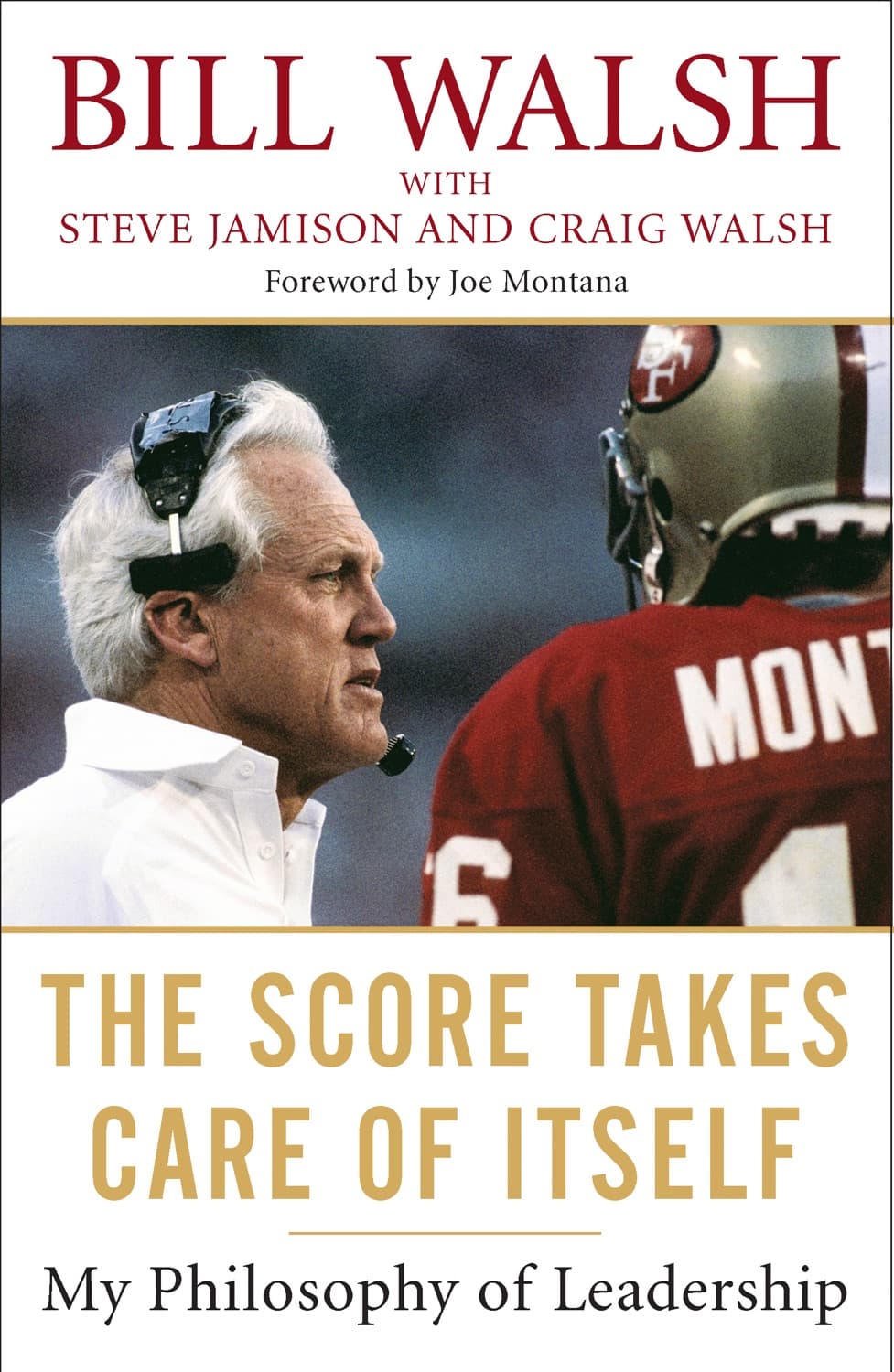
The Score Takes Care of Itself
Bill Walsh
Free download · 500+ book summaries
What is The Score Takes Care of Itself about?
The leadership philosophy of the coach who turned the 49ers from worst to best. Bill Walsh's Standard of Performance is a quiet, demanding system: focus on craft, build culture in micro-moments, let outcomes follow inputs. A masterclass in process-over-outcome thinking, told by a coach who won three Super Bowls.
Key ideas of The Score Takes Care of Itself
Standard of Performance
Walsh built championship culture by defining precise behavioral standards for every role before wins gave anyone a reason to believe in them.
Process Over Outcome
Scripting plays, rehearsing routines, and ignoring the scoreboard forced the 49ers to compete on preparation rather than desperation.
Leadership Through Teaching
Walsh believed a leader's primary job is to transfer understanding so deeply that the organization keeps functioning long after the leader is gone.
Read an excerpt from the summary
The Score Takes Care of Itself
The locker room in Miami smelled of sweat and champagne. It was the night of January 22, 1989, and the San Francisco 49ers had just beaten the Cincinnati Bengals 20-16 in Super Bowl XXIII at Joe Robbie Stadium, a game settled in the final 34 seconds when Joe Montana drove 92 yards on 11 plays and hit John Taylor on a crossing route in the back of the endzone to win it all. The dynasty was confirmed. Three Super Bowls in eight years. The most dramatic finish in Super Bowl history. Bill Walsh walked into the corridor beneath the stadium, away from the noise, and started to cry. Not from joy. He was crying because he already knew what he had to do, and doing it was going to be the hardest decision of his life.
He was 57 years old. He had spent a decade rebuilding an NFL franchise from rubble, pouring every thought, every nervous system, every hour of every day into the machine he called the Standard of Performance. He had invented an offense that would rewrite football for the next thirty years. He had identified talent nobody else in the league could see -- a skinny quarterback from Notre Dame taken with the 82nd pick, a wide receiver from a tiny Mississippi school that nobody wanted. He had assembled a coaching staff that would go on to win seven more Super Bowls after he left. And now, standing under that Miami stadium, alone with the noise of celebration seeping through the walls, he felt something he had not expected: emptiness. The score had taken care of itself. He had nothing left to give.
That moment -- the crying in the corridor, the retirement press conference the next morning when he told the world he was done -- was the end of one of the most consequential coaching careers in American sports history. It was also, in a sense, the beginning of the book he would spend the next eighteen years writing in his head. Published posthumously in 2009, two years after Walsh died of leukemia at 75, co-authored with his son Craig and longtime collaborator Steve Jamison, "The Score Takes Care of Itself" is not a football book. It is a manual for building something extraordinary out of almost nothing, for sustaining excellence under pressure, and for understanding the dark truths about leadership that most leaders are not willing to say out loud.
Like it?
Continue in the appWho is it for?
- Anyone who leads a team and wants a concrete, behavioral framework for building lasting culture.
- Anyone who feels trapped by short-term pressure and wants a principled case for process-first thinking.
- Anyone who manages talent and wants to understand how to select and develop people for a specific system rather than generic greatness.
- Anyone who has experienced a mentor's silence or a passed-over promotion and wants to understand what good succession and transparency look like.
About the author: Bill Walsh
Bill Walsh was the head coach of the San Francisco 49ers from 1979 to 1988, leading the team from a 2-14 record in his first season to three Super Bowl championships. He is widely credited with inventing the West Coast Offense, a short-passing system built on timing and spacing that reshaped how NFL teams approach the passing game for decades.
Walsh also coached at San Jose State and Stanford before his NFL tenure. His coaching tree, which includes Mike Holmgren, Tony Dungy, and George Seifert, went on to win multiple additional Super Bowls. He died of leukemia in 2007. This book was published posthumously in 2009, co-authored with his son Craig Walsh and Steve Jamison.
Read it in 43 minutes
The summary of The Score Takes Care of Itself and 500+ more books await in the BookBase app.