 English
 Magyar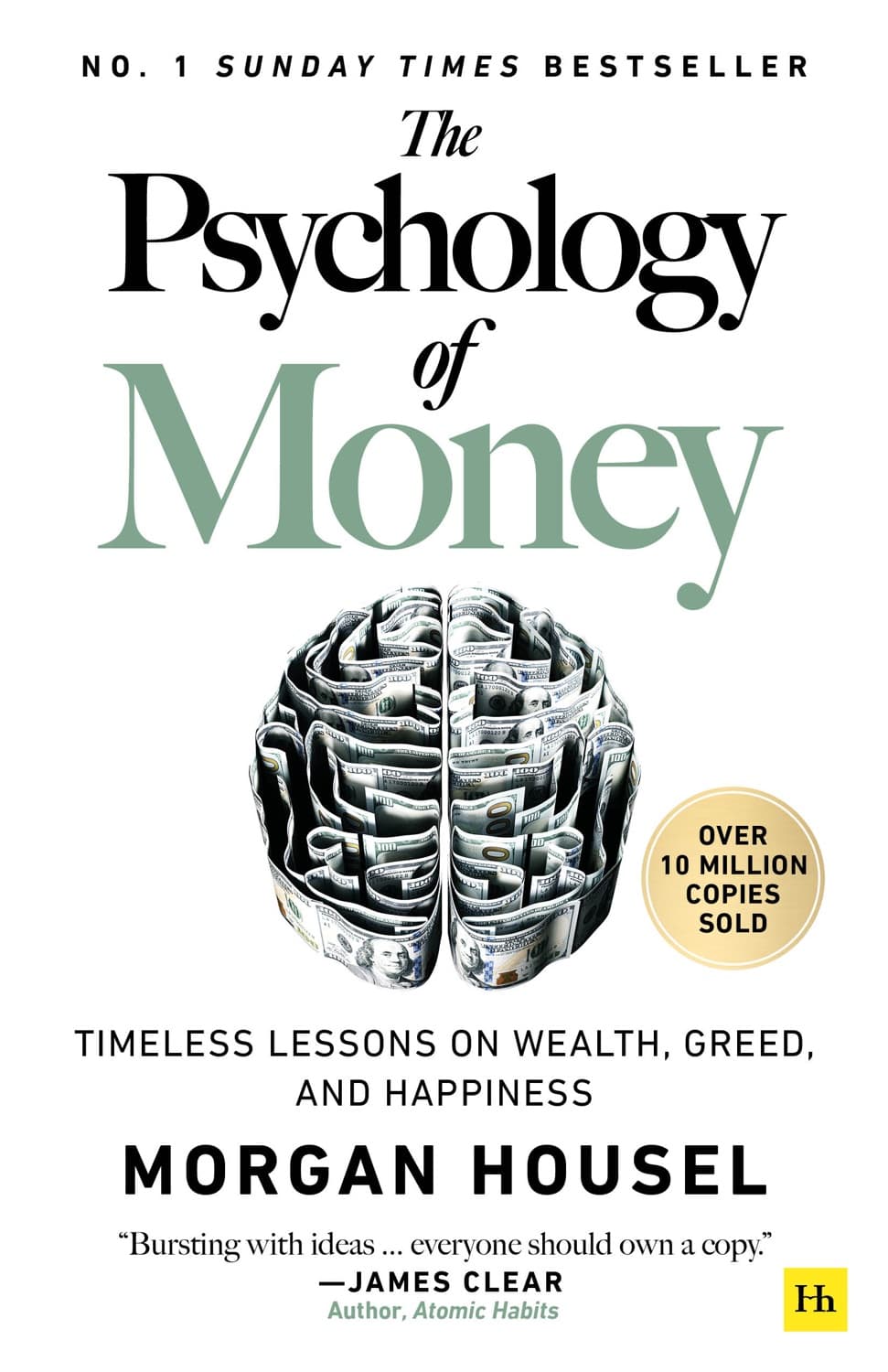
The Psychology of Money
Morgan Housel
Free download · 500+ book summaries
What is The Psychology of Money about?
Why smart people do dumb things with money. Morgan Housel argues that personal finance is more about behavior than math, and walks through 19 short lessons drawn from history, psychology, and his own family. The most readable money book of the last decade. The only one that takes ego, envy, and luck seriously.
Key ideas of The Psychology of Money
Behavior Beats Financial Knowledge
The gap between financial success and failure comes down to behavior, not intelligence, credentials, or access to better data.
Compounding Rewards Patience and Survival
Long-term wealth is built by staying in the game, avoiding ruin, and letting time compound returns without interruption.
Enough Is a Decision, Not a Number
Without defining what enough looks like in advance, rising ambitions push people to take risks that destroy what they already have.
Read an excerpt from the summary
The Psychology of Money
In the winter of 2014, the small Vermont town of Brattleboro learned something that made absolutely no sense. Ronald Read, who had spent his career pumping gas and sweeping floors at the local JCPenney, had died at ninety-two. His will left $1.2 million to the local library. Another $4.8 million went to Brattleboro Memorial Hospital. Six million dollars total, from a man whose neighbors remembered him wearing a safety pin to hold his coat together because he didn't bother buying a new one.
Nobody had any idea. Not his coworkers, not his neighbors, not his stepchildren.
That same year, financial news was still covering the aftermath of Richard Fuscone's collapse. Fuscone had been a Harvard-educated Merrill Lynch executive, a man whose professional pedigree placed him at the top of the financial world. He had borrowed heavily to fund a mansion in Connecticut and other properties. When the 2008 crisis hit, the leverage that had let him live extravagantly turned on him, and by 2010 he had declared personal bankruptcy. A man who spent his career managing vast sums of other people's money could not manage his own.
Same era. Same country. Radically opposite outcomes.
Morgan Housel opens "The Psychology of Money" with these two men standing side by side, and that contrast is the entire thesis in miniature. What makes someone wealthy isn't a high IQ or an elite credential or access to the right spreadsheets. It's behavior. And behavior is stubbornly human -- shaped by fear, ego, the neighborhood you grew up in, and the era you happened to be born into. Housel, a former columnist for The Wall Street Journal and The Motley Fool, now a partner at Collaborative Fund in Seattle, spent years watching smart people make ruinous financial decisions and ordinary people quietly accumulate fortunes. His conclusion: finance is taught as if it were math, but it functions more like psychology. And until you understand that, you'll keep applying the wrong tools to the problem.
Like it?
Continue in the appWho is it for?
- Anyone who earns a decent income but cannot figure out why they are not getting ahead financially.
- Anyone who wants to understand why smart, educated people make catastrophic money mistakes.
- Anyone who feels anxious watching their investment portfolio drop and wants a more durable mindset.
- Anyone who has read traditional personal finance books and found the advice hard to stick to in practice.
About the author: Morgan Housel
Morgan Housel is a partner at Collaborative Fund and a former columnist for The Wall Street Journal and The Motley Fool. He has spent much of his career writing about investing, business, and economic history for a general audience.
Housel is known for translating complex financial and behavioral ideas into plain, story-driven prose. The Psychology of Money, published in 2020, has sold over six million copies and is widely considered one of the most accessible personal finance books written in the past decade.
Read it in 46 minutes
The summary of The Psychology of Money and 500+ more books await in the BookBase app.