 English
 Magyar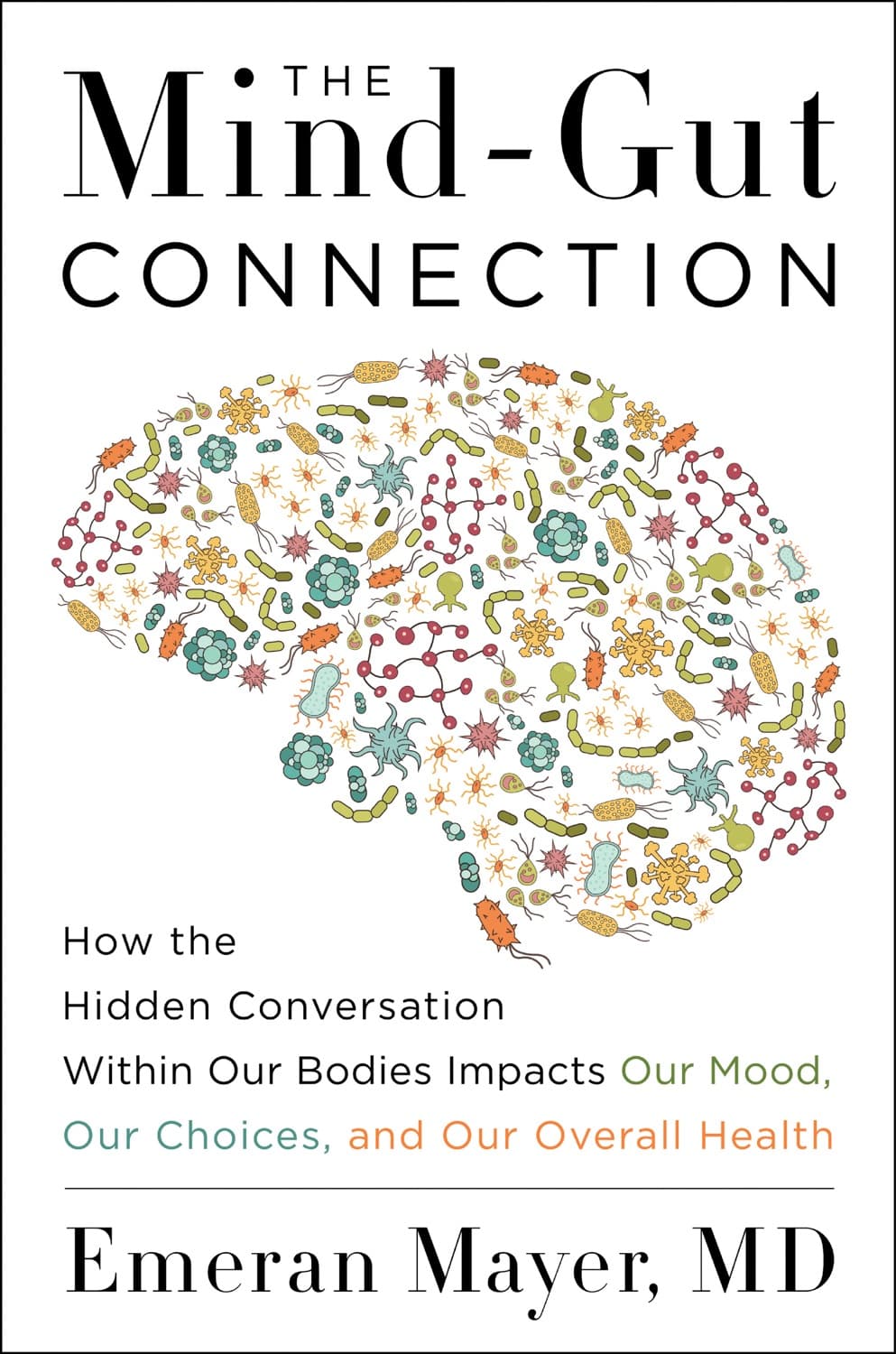
The Mind-Gut Connection
Emeran Mayer
Free download · 500+ book summaries
What is The Mind-Gut Connection about?
The 100 trillion microbes in your gut shape your mood, decisions, and long-term health. UCLA gastroenterologist Emeran Mayer pulls together decades of research on the gut-brain axis and shows how nutrition, stress, and the microbiome talk to each other constantly. Practical, scientific, and the book that made the microbiome mainstream.
Key ideas of The Mind-Gut Connection
The Gut as a Second Brain
The enteric nervous system contains up to 100 million nerve cells and can run digestion independently, making the gut far more than a passive food tube.
Microbiome and Mood
The 100 trillion microbes in your gut produce serotonin, dopamine, and other signaling molecules that directly shape your emotional state and mental health.
Diet as Information for Your Body
Every meal delivers instructions your gut reads through taste receptors, immune cells, and microbes, and processed food systematically breaks this communication.
Read an excerpt from the summary
The Mind-Gut Connection How the Hidden Conversation Within Our Bodies Impacts Our Mood, Our Choices, and Our Overall Health Emeran Mayer, 2016
---
A twenty-five-year-old who could not stop vomiting
Bill walked into Emeran Mayer's UCLA office with his mother. He was twenty-five, otherwise healthy, and desperate. For eight years he had been cycling through emergency rooms several times a week, doubled over with stomach pain and unstoppable vomiting. He had dropped out of college. He had moved back in with his parents. ER doctors handed him narcotics and labeled him a drug-seeker. Specialists ran endoscopies, CT scans, brain scans. Everything came back normal. Nothing made the symptoms stop.
His mother, a businesswoman with no medical training, had typed his symptoms into Google. "I think he has all the symptoms of cyclical vomiting syndrome," she told Mayer.
She was right. The diagnosis was simple. Mayer asked Bill three questions. Was he completely symptom-free between attacks? Yes. Did anyone in the family suffer migraines? His mother and grandmother both did. What did he feel in the fifteen minutes before an attack hit? Intense anxiety, sweating, cold hands, a pounding heart. The attacks always woke him up before sunrise.
Mayer recognized the pattern instantly. Bill's brain was producing huge surges of corticotropin-releasing factor, a stress molecule that peaks in the early morning hours. When CRF levels spike, the gut goes into emergency mode. The stomach reverses direction. The intestines secrete water and mucus. The colon contracts violently. Bill's gut was not broken. His brain was sending a five-alarm signal to it every night, and his gut was obeying.
Like it?
Continue in the appWho is it for?
- Anyone who suffers from IBS, chronic gut pain, or unexplained digestive symptoms their doctors cannot explain.
- Anyone who wants to understand the biological link between chronic stress, poor diet, and low-grade depression.
- Anyone curious about how the microbiome shapes mood, appetite, and long-term brain health.
- Anyone looking to make concrete dietary changes backed by clinical research rather than wellness marketing.
About the author: Emeran Mayer
Emeran Mayer is a German-trained gastroenterologist who has spent over forty years at UCLA studying the communication between the brain and the digestive system. He is the executive director of the G. Oppenheimer Center for Neurobiology of Stress and Resilience and a co-founder of the UCLA Microbiome Center.
Mayer has personally treated thousands of patients with IBS, cyclical vomiting syndrome, and chronic gut pain, and his research is funded by the NIH and published in peer-reviewed journals. He writes from clinical experience rather than from theory, grounding every chapter in real patients and primary literature.
Read it in 46 minutes
The summary of The Mind-Gut Connection and 500+ more books await in the BookBase app.