 English
 Magyar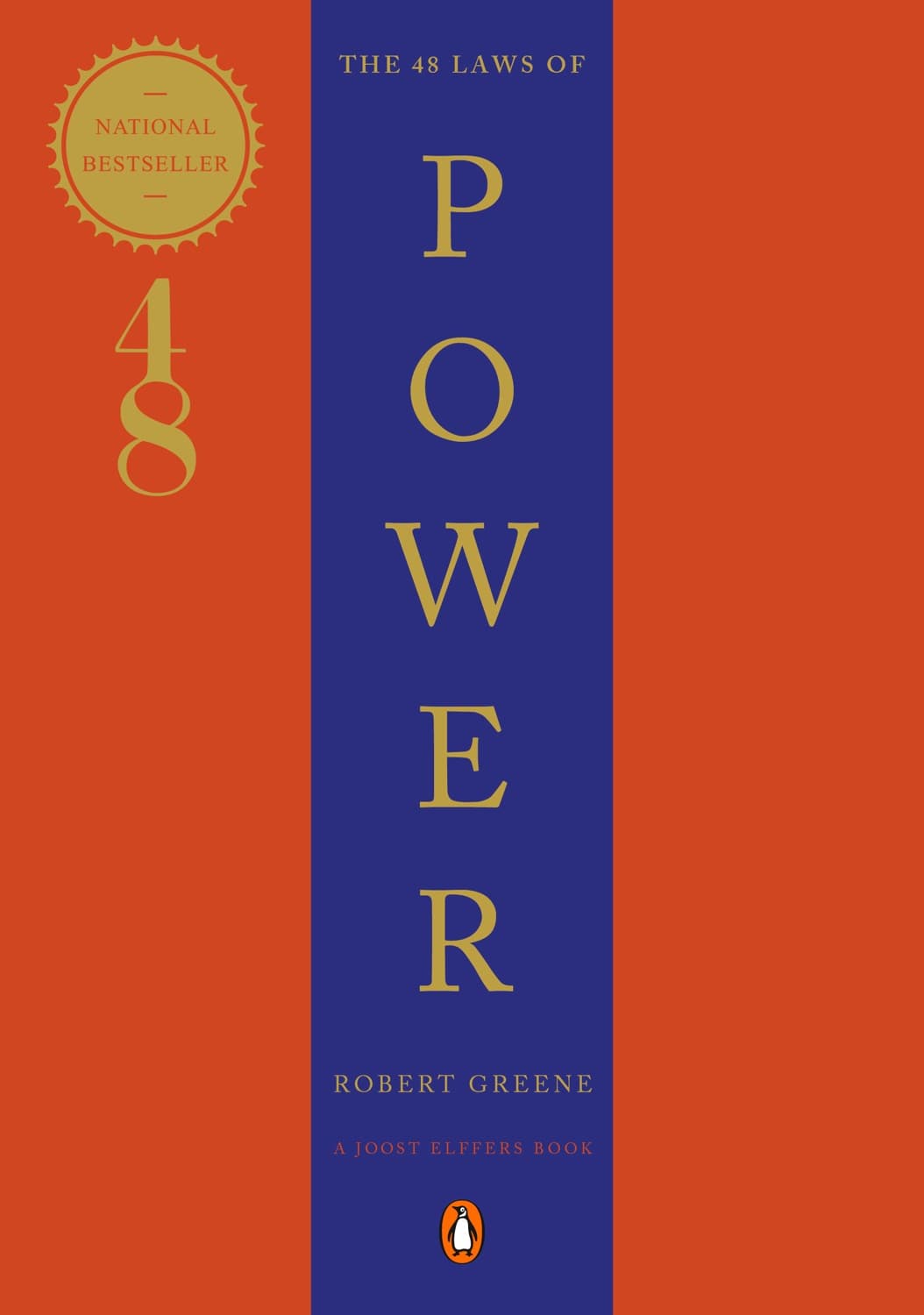
The 48 Laws of Power
Robert Greene
Free download · 500+ book summaries
What is The 48 Laws of Power about?
A 480-page playbook for navigating power. Robert Greene synthesizes thousands of years of historical case studies into 48 ruthless, often uncomfortable laws. Never outshine the master. Always say less than necessary. Recreate yourself. Dark, brilliant, and impossible to read without seeing the world differently.
Key ideas of The 48 Laws of Power
Never Outshine the Master
Displaying your success too visibly in front of a superior can trigger their insecurity and cost you everything, as Nicolas Fouquet's spectacular fall illustrates.
Perception Is the Territory
Power lives inside other people's minds, so controlling your image, managing attention, and shaping narratives matter as much as the work itself.
Patience and Timing as Weapons
Striking before your position is consolidated is the most common mistake of ambitious people, and learning to wait for the right moment separates capable strategists from great ones.
Read an excerpt from the summary
The 48 Laws of Power
*by Robert Greene (with Joost Elffers), 1998*
A summer night at Vaux-le-Vicomte
On the evening of August 17, 1661, Nicolas Fouquet threw the most spectacular party France had ever seen. He was the finance minister to the young Louis XIV, and he had built a château outside Paris called Vaux-le-Vicomte. Fountains ran with wine. Molière premiered a new play in the gardens. A seven-course dinner used golden plates the King himself did not own. Fireworks shaped like the royal monogram exploded above the lawns. Fouquet wanted to dazzle his sovereign and earn, that very night, the position of prime minister.
Three weeks later, Louis ordered him arrested by the captain of the musketeers, a young man named D'Artagnan. The trial dragged on for nearly three years. Fouquet died in a fortress in the Alps. His château was stripped. His artists, including the architect Le Vau and the gardener Le Nôtre, were absorbed into the King's own grand project at Versailles.
What had Fouquet done wrong? He had succeeded too visibly in front of a master who needed to feel he was the only sun in the sky. Louis XIV was twenty-three, insecure, surrounded by older nobles who had humiliated his mother during the Fronde rebellion, and Fouquet handed him a perfect excuse to crush a man who appeared, for one summer evening, to outshine him. The lesson Robert Greene draws from this episode opens his 1998 book and sets the tone for everything that follows: power has its own physics, and ignoring those laws gets people destroyed.
The story matters because most ambitious people, especially the talented ones, behave more like Fouquet than they would care to admit. They assume that excellent work, generous gestures, and visible wins will be rewarded by the people above them. Greene's argument, repeated across forty-eight laws and roughly five hundred pages, is that this assumption is dangerously naive. Power is a game played whether you choose to play or not. If you refuse to study the rules, you will still be a piece on the board. You just won't be moving yourself.
Like it?
Continue in the appWho is it for?
- Anyone who wants to understand how power actually operates in organizations, not how it is supposed to.
- Anyone who has been outmaneuvered by a less talented colleague and wants to understand why.
- Anyone navigating a high-stakes relationship with a boss, investor, or board where trust and perception both matter.
- Anyone interested in how historical figures from Bismarck to the Empress Wu turned patience and strategic concealment into lasting influence.
About the author: Robert Greene
Robert Greene studied classics at the University of California, Berkeley and the University of Wisconsin, then worked through decades of jobs in editing, journalism, and Hollywood screenwriting before writing this book. He collaborated with Dutch book packager Joost Elffers, who designed the volume's distinctive calligraphic format.
Greene went on to write several companion books, including Mastery and The Laws of Human Nature, developing a broader philosophy of self-knowledge alongside the strategic framework of The 48 Laws. He is widely regarded as one of the most influential and controversial writers in the modern self-help genre.
Read it in 44 minutes
The summary of The 48 Laws of Power and 500+ more books await in the BookBase app.