 English
 Magyar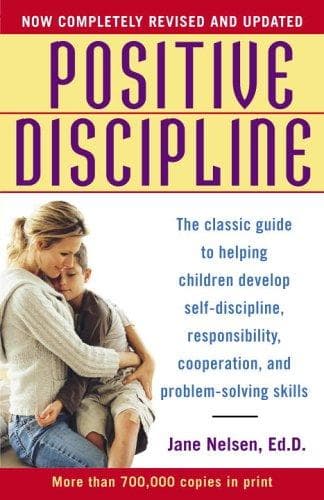
Positive Discipline
Jane Nelsen
Free download · 500+ book summaries
What is Positive Discipline about?
Obedience disappeared when hierarchy collapsed, but no one told parents what replaces it. Nelsen reveals why connection works better than fear, and how to lead people who don't have to listen. You'll learn what distinguishes real discipline from masked control: questions instead of orders, repairing your own mistakes without excuses, and teaching responsibility without shame. Concrete tools for every collision point, grounded in what kids (and colleagues) need to change.
Read an excerpt from the summary
Positive Discipline — Summary
One evening Jane Nelsen snapped at her eight-year-old daughter. Not gently. She said: "Mary, you are nothing but a spoiled brat." Mary, who already knew the Three R's of Recovery by heart, fired straight back: "Fine. But afterward don't come in here and tell me you're sorry!" Nelsen went one better. "Don't worry, there's no chance of that, because I'm not sorry at all." Then there was just a slammed door.
When the anger drained out of her, Nelsen went up to her daughter's room. Mary was sitting on the bed with a fat black marker in her hand, scribbling all over a first edition of Positive Discipline. In the margin she had written: "Nonsense!"
She wrote that book. She taught its courses all over the world. She raised seven children. She was a family counselor with a doctorate. And there she stood in front of a slammed door with the exact sentence on her lips that she herself had taught everyone else to avoid. Five minutes later Mary came back, hugged her and said: "Mom, I'm sorry." Nelsen answered that she was sorry too, because she had demanded something from her daughter that she could not manage herself in that moment: keeping control of herself.
Nelsen did not put that scene into her own book by accident. The difference between the two worlds of discipline sits exactly there. In one of them the goal is not to make mistakes. In the other it is to know what to do with your mistake once it has happened.
The book starts from a single question, and the question is uncomfortably precise: where did we ever get the crazy idea that to make someone behave better, we first have to make them feel worse? Three big threads run from there. Why automatic obedience disappeared almost overnight, and what came in its place. What the behavior we call bad is actually telling us. And which tools are left once you take punishment and permissiveness both off the table.
Like it?
Continue in the appRead it in 70 minutes
The summary of Positive Discipline and 500+ more books await in the BookBase app.