 English
 Magyar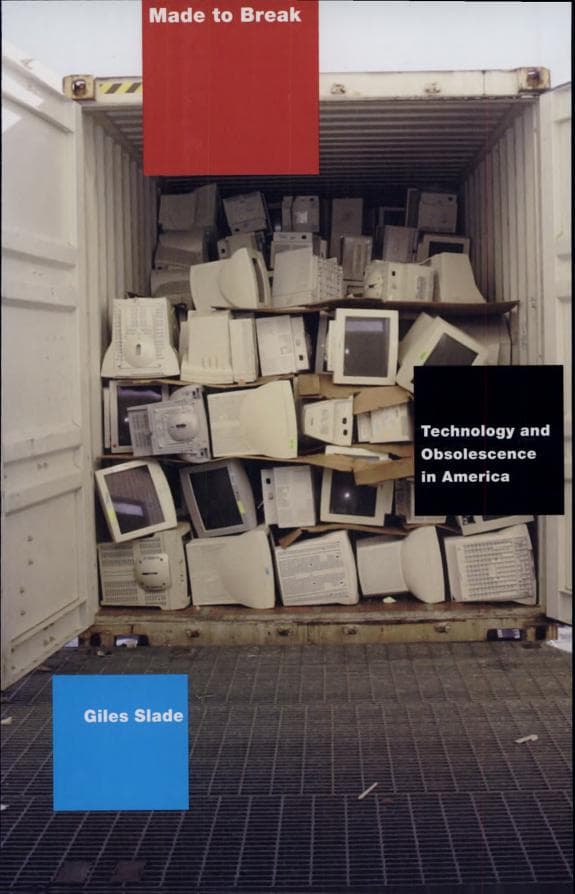
Made to Break
Giles Slade
Free download · 500+ book summaries
What is Made to Break about?
Cultural historian Giles Slade traces the deliberate engineering of obsolescence from the Model T era through the smartphone, exposing how American capitalism quietly turned shorter product lifespans into a strategic weapon. He follows the radio cartel, the lightbulb conspiracy, and the auto industry to show how planned failure became baked into how we make and buy. The result is a sober look at what disposable culture costs us in landfills, jobs, and trust.
Key ideas of Made to Break
Origins of Planned Obsolescence
American manufacturers deliberately engineered shorter product lifespans from the early 1900s to drive repeat purchases and solve chronic overproduction.
Psychological Style Change
General Motors, under Alfred Sloan and designer Harley Earl, taught consumers to feel ashamed of working products by making annual cosmetic changes the industry standard.
E-Waste and the Hidden Cost
A century of disposability has produced a global toxic waste crisis, with millions of phones and computers dumped annually, often processed under dangerous conditions abroad.
Read an excerpt from the summary
Made to Break — summary
A father, a son, and four thousand years of stone
Giles Slade tells a story that sticks with you. He took his ten-year-old son to a touring exhibit called Eternal Egypt. They walked among objects that had survived four thousand years: jewelry, tools, statues, papyrus scrolls. Egyptians built things to last. They built tombs to last forever. Slade looked around the gallery and felt something tighten in his chest. He thought about his own house, his car, his phone, his television, his son's toys. Almost nothing in his life would still be working in twenty years, let alone four millennia. The thought he could not shake was simple. The ancient Egyptians built monuments meant to outlive whole civilizations. We build things meant to break.
That moment is the seed of this book. Slade is a historian, not an environmental activist, and he is not arguing that the Egyptians had a better economy. He is asking how we got here. How did a country famous for Yankee thrift become the planet's largest garbage producer? Who decided that products should fail? When did we start measuring progress by how quickly we could throw the old version away? In 2003, sixty-three million working personal computers were dumped into American landfills. In 2005, more than one hundred million cell phones, fifty thousand tons of still-useful equipment, were tossed in a single year. Slade believes this is not an accident. He believes it is a hundred-year design decision, and most of us have never been told the story.
What this book actually answers
Slade promises three things, and he delivers all three. He explains how American manufacturers learned to manufacture desire, not just goods. He traces the exact moment when "obsolescence" stopped meaning natural decay and started meaning a corporate strategy. And he asks the question that haunts the whole book: now that we have built a civilization on disposability, can we live with the bill that is coming due?
Like it?
Continue in the appWho is it for?
- Anyone who wants to understand why their devices seem to slow down or become "obsolete" right on schedule.
- Anyone who is curious about the corporate decisions behind consumer culture and the origins of throwaway thinking.
- Anyone concerned about e-waste, toxic landfills, and the environmental cost of cheap electronics.
- Anyone interested in the history of American business, marketing, and how advertising reshaped ideas about thrift and value.
About the author: Giles Slade
Giles Slade is an American cultural historian and writer focused on technology, consumer culture, and the environmental consequences of industrial capitalism. He has taught at universities in Canada and the United States.
His research approach combines archival business history with cultural criticism, tracing how corporate decisions become embedded in everyday life. "Made to Break" is his most widely cited work and draws on decades of primary sources, court records, and trade literature.
Read it in 46 minutes
The summary of Made to Break and 500+ more books await in the BookBase app.