 English
 Magyar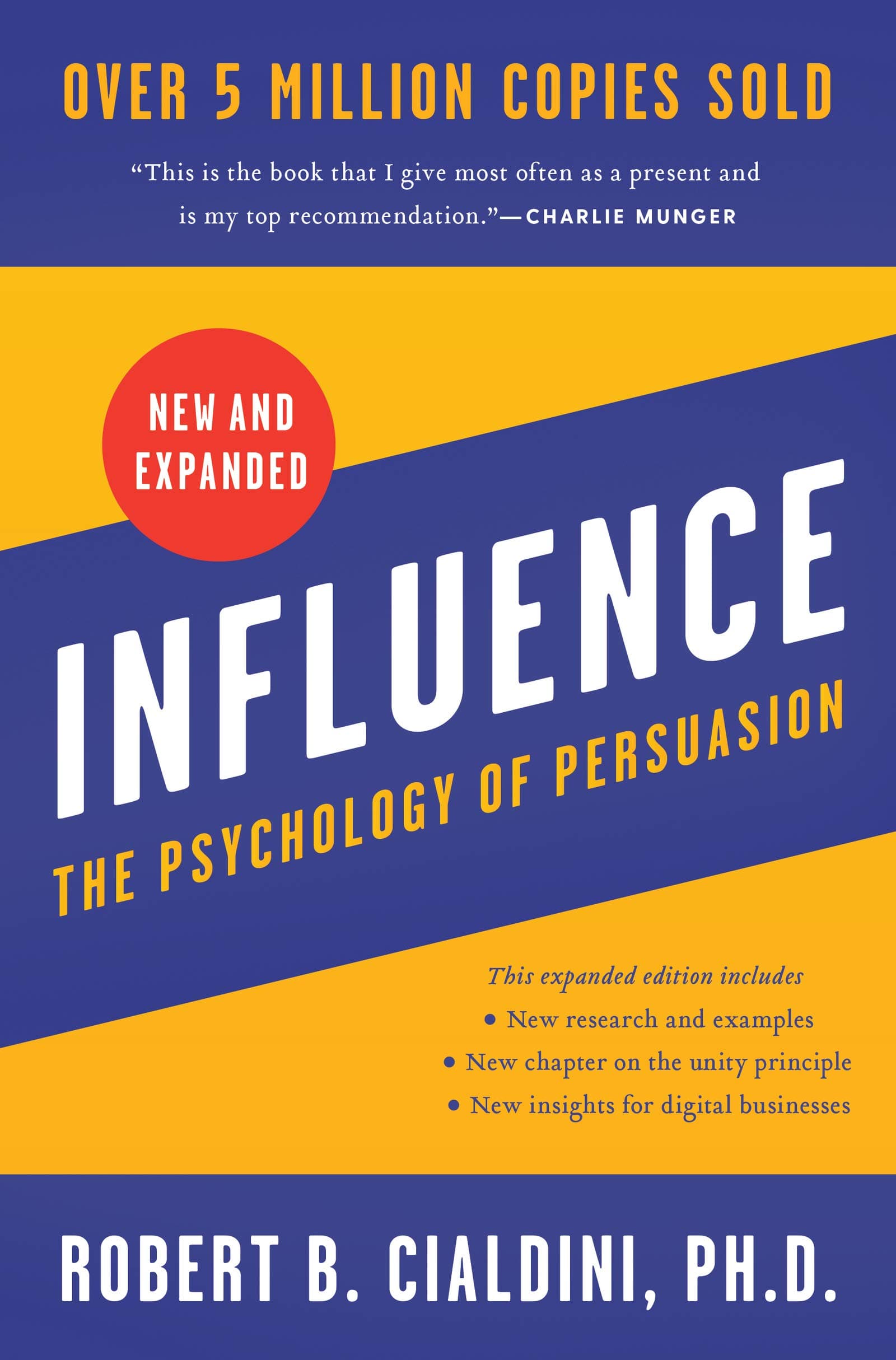
Influence
Robert Cialdini
Free download · 500+ book summaries
What is Influence about?
Robert Cialdini is Professor Emeritus at the University of Arizona. According to the social psychologist, the success of persuasion depends not on the message itself, but on the moment before the message is delivered. It is this moment, which is particularly conducive to change, that prepares recipients to be receptive to the message we are conveying. This volume is based on more than thirty years of academic work and, being the most frequently quoted psychologist in his field, makes his explanations and techniques relevant. He does not believe it is necessary to change the attitudes, beliefs and experiences of the other party. The communicator's sole task is to distract the listener before he acts. This volume teaches the psychological framing technique in which the message itself is delivered, and which is actually more important than the message itself. The book has been awarded the "Best Book of the Year by the Society for Personality and Social Psychology", which reflects the enormous and outstanding contribution he has made to science by making his work accessible to the common man.
Key ideas of Influence
Six Universal Compliance Levers
Reciprocity, commitment, social proof, liking, authority, and scarcity are the small set of psychological principles behind nearly every persuasion tactic.
Shortcuts That Backfire
Human cognitive shortcuts work reliably most of the time, but skilled manipulators exploit trigger features to redirect behavior without changing minds.
Defense Through Awareness
Spotting the moment a lever is being pulled, rather than debating the argument, is the only practical defense against engineered compliance.
Read an excerpt from the summary
Click, Whirr
A friend of Robert Cialdini owned an Indian jewelry store in Arizona. One summer a batch of turquoise pieces refused to sell. She tried everything. She moved the display to the center of the store. She told her staff to push them harder. Nothing worked. Before leaving on a buying trip, frustrated, she scribbled a note to her head saleswoman: "Everything in this display case, price times one-half." She came back to find the jewelry gone. Sold out. But not at half price. The saleswoman had misread the scrawl and doubled the price instead. The turquoise sold out at twice what it had failed to sell for the week before.
That story sits at the front of *Influence* for a reason. Most of us, encountering the punchline cold, would invent an explanation about a sudden surge in demand or a tourist with deep pockets. Cialdini's whole book is an answer to that explanation. There was no surge. There was no rich tourist. There was a price tag, and the price tag triggered something in everyone who walked past — a shortcut so old and so reliable that it overrode the actual quality of the stones. Expensive equals good. Click, whirr.
Cialdini spent about three years undercover to write this book. He enrolled in sales training at encyclopedia companies, vacuum-cleaner companies, portrait studios, dance studios. He infiltrated public relations firms and fundraising operations. He interviewed bunco squad officers and consumer protection people. He read the sales manuals that practitioners pass to each other like samizdat. What he found, across thousands of specific tactics, was a small set of psychological levers that kept appearing in different costumes: reciprocity, commitment and consistency, social proof, liking, authority, and scarcity. Six principles. The same six, again and again, in jewelry stores and recruitment drives, in car dealerships and political campaigns, in cults and in fundraising mailers.
Like it?
Continue in the appWho is it for?
- Anyone who wants to understand why they say yes when they intended to say no.
- Anyone who negotiates, sells, or fundraises and wants to understand what actually drives decisions.
- Anyone who has ever felt pressured into a purchase, commitment, or belief they later regretted.
- Anyone who manages a team or organization and wants to build environments where influence is used ethically.
About the author: Robert Cialdini
Robert Cialdini is a social psychologist and professor emeritus at Arizona State University, where he spent the bulk of his academic career studying persuasion and compliance. He spent years conducting undercover fieldwork inside sales organizations, fundraising operations, and public relations firms alongside his laboratory research, which gave his findings an unusual combination of experimental rigor and real-world grounding.
He is widely regarded as the leading scientific authority on the psychology of influence. Influence, first published in 1984, became one of the best-selling social science books of all time and is required reading in business schools, marketing programs, and policy courses worldwide.
Read it in 56 minutes
The summary of Influence and 500+ more books await in the BookBase app.