 English
 Magyar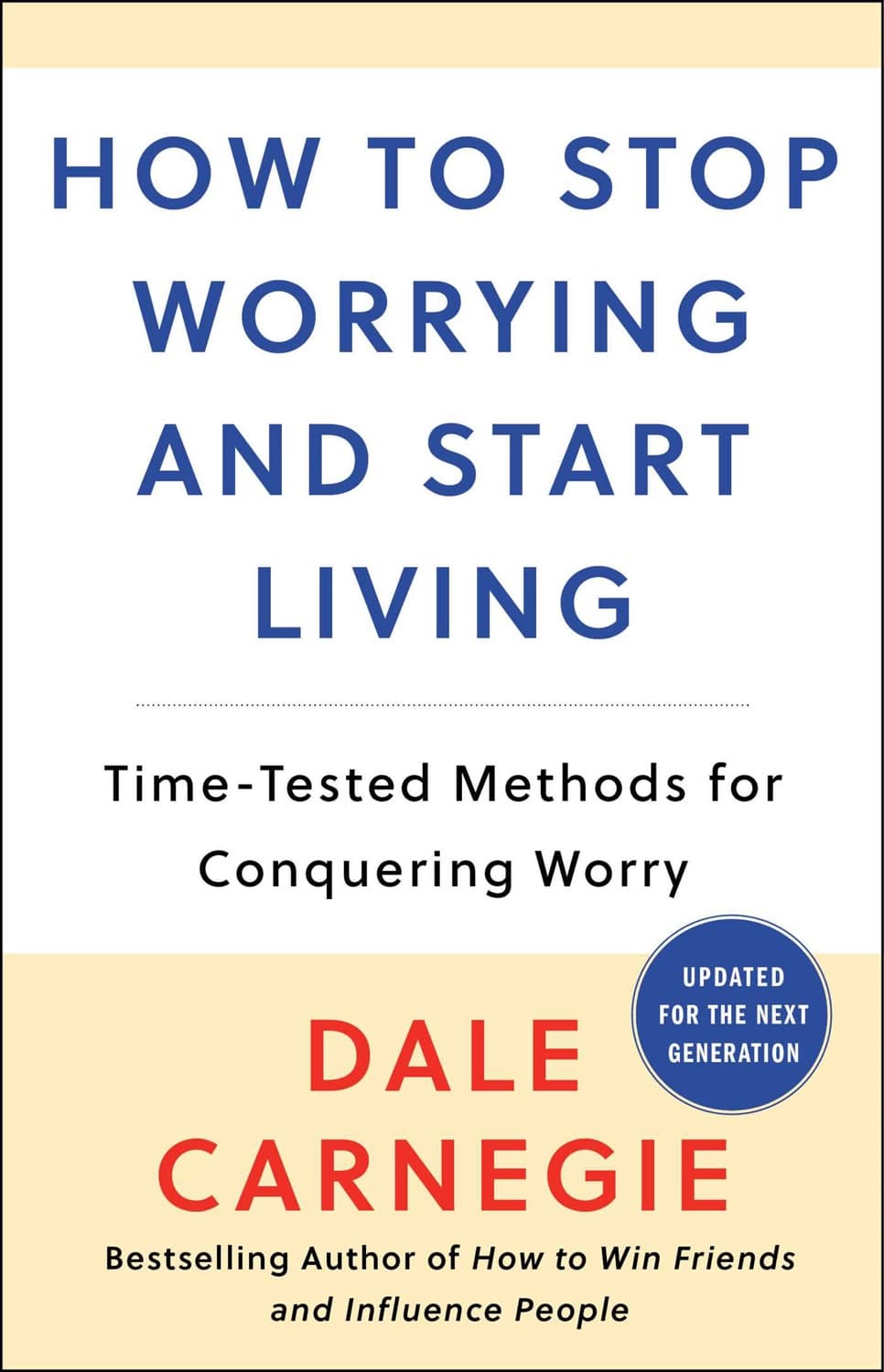
How to Stop Worrying and Start Living
Dale Carnegie
Free download · 500+ book summaries
What is How to Stop Worrying and Start Living about?
Practical, time-tested techniques for breaking the worry habit. Dale Carnegie collects the stories and methods of business leaders, scientists, and ordinary people who learned to live free of anxiety. A no-nonsense playbook for anyone whose mind won't stop spinning. Originally published in 1948 and still working today.
Key ideas of How to Stop Worrying and Start Living
Day-Tight Mental Compartments
Sealing off yesterday and tomorrow so that all available energy goes into today is the foundation of Carnegie's entire anti-worry system.
Carrier's Worst-Case Formula
Naming the worst realistic outcome, accepting it, and then acting to improve on it dissolves vague dread into concrete, solvable problems.
Action Interrupts Rumination
The brain cannot sustain deep, purposeful work and anxious rumination at the same time, making full engagement the most reliable antidote to worry.
Read an excerpt from the summary
How to Stop Worrying and Start Living
In the winter of 1912, a young engineer named Willis Carrier stood on a foggy train platform in Pittsburgh and stared at the problem that had been eating him alive for weeks. He was twenty-six years old. His new ventilation system at a printing plant in Buffalo had failed. The moisture content in the air had caused the paper to expand and contract, making the four-color inks misregister. The client was furious. The Buffalo Forge Company -- Carrier's employer -- faced a contract dispute, and the potential loss was close to $20,000, an enormous sum in an era when a skilled laborer earned less than a dollar a day. Carrier was responsible. And standing there in the fog, watching a train he had just missed disappear down the track, he felt the tight, cold grip of sustained dread.
Then something shifted. He later described it as a deliberate act of mental engineering, the same kind of systematic thinking he applied to his machines. He asked himself three questions in sequence. First: what is the worst that can realistically happen? The worst case, he admitted honestly, was that the company lost the $20,000 contract and possibly fired him. He was young, employable, and would survive. Second: could he accept that worst case if it happened? Yes. He could. He had stared at it clearly and it did not kill him. Third: given that acceptance, what could he do right now to improve on the worst case? That third question unlocked everything. He began mentally enumerating every possible technical fix for the moisture problem. By the time he boarded the next train, the panic had dissolved and systematic problem-solving had taken its place. The system he devised that week eventually solved the humidity problem, and Willis Carrier went on to invent modern air conditioning -- a technology that would reshape civilization. He credited his breakthrough not to genius, but to a method of facing fear head-on that he had discovered on a fog-wrapped train platform in 1912.
Like it?
Continue in the appWho is it for?
- Anyone who lies awake replaying future disasters that almost never arrive.
- Anyone who carries financial anxiety as a shapeless dread rather than a set of numbers on paper.
- Anyone who finds that old grudges and past regrets still consume daily mental energy.
- Anyone who wants a practical, case-tested method for breaking the worry habit rather than a motivational pep talk.
About the author: Dale Carnegie
Dale Carnegie was an American writer and lecturer best known for teaching practical communication and self-improvement skills to working adults. He developed his methods over decades of running adult education courses across the United States, drawing on thousands of direct conversations with students, executives, and ordinary people.
His earlier book, How to Win Friends and Influence People, published in 1936, became one of the best-selling self-help titles of the twentieth century. How to Stop Worrying and Start Living, published in 1948, grew out of the same teaching experience and research approach, applying the same evidence-gathering discipline to the problem of chronic anxiety.
Read it in 44 minutes
The summary of How to Stop Worrying and Start Living and 500+ more books await in the BookBase app.