 English
 Magyar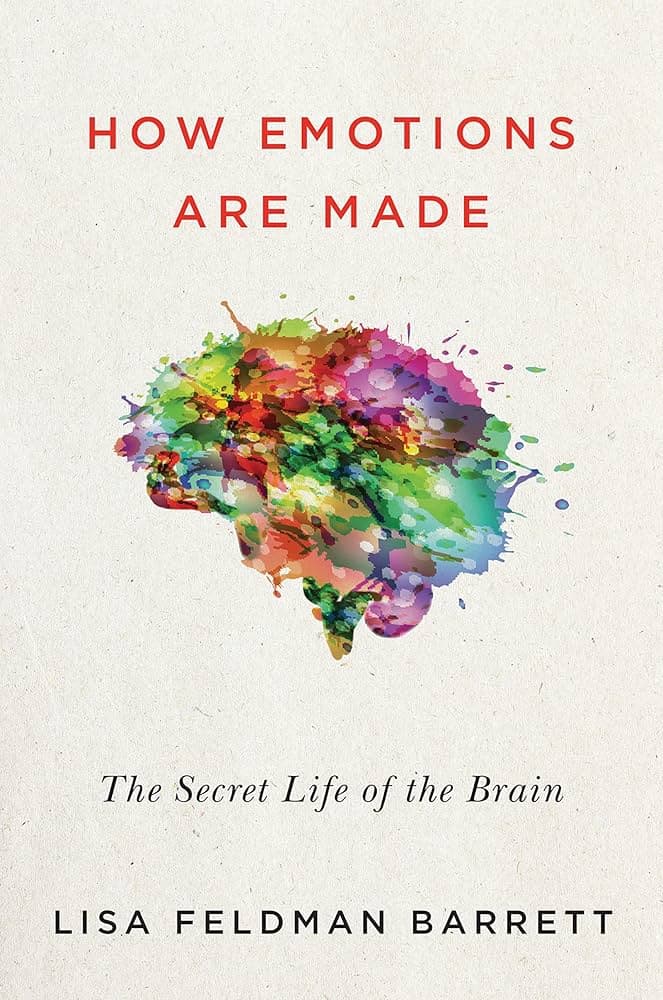
How Emotions Are Made
Lisa Feldman Barrett
Free download · 500+ book summaries
What is How Emotions Are Made about?
How Emotions Are Made challenges everything you thought you knew about emotions. You can learn how our brain identifies anger, fear, and joy, and how we can think about these emotions in a cultured way.
Key ideas of How Emotions Are Made
Emotions Are Constructed, Not Triggered
The brain predicts and builds emotions from past experience and concepts rather than passively reacting to external stimuli.
Emotional Granularity Changes Your Life
People with richer emotion vocabularies are healthier, more resilient, and better at managing stress than those with fewer emotion words.
No Universal Emotion Fingerprints
Decades of neuroscience and cross-cultural research fail to find consistent facial, bodily, or brain signatures for any basic emotion.
Read an excerpt from the summary
The Moment That Started This Book
On December 14, 2012, Connecticut Governor Dannel Malloy stood in front of a microphone after Adam Lanza had walked into Sandy Hook Elementary and killed twenty children and six adults. Halfway through the words "protecting students," his voice caught. Lisa Feldman Barrett, watching from her living room, felt her stomach knot, her eyes flood, the room around her dissolve. Across the country, people felt the same thing. We called it grief. We called it sadness. We assumed those words pointed to something real — a feeling that lived inside us, that the governor's broken voice had reached in and switched on.
Barrett spent the next decade explaining why almost everything in that paragraph is wrong.
She is not a contrarian for sport. She runs one of the largest affective neuroscience labs in the world, and she arrived at her conclusion because the data she kept collecting refused to behave. For two thousand years — from Plato to Freud to Steven Pinker — we have been told that emotions are essentially built-in. Each one (fear, anger, sadness, joy) is supposed to carry a unique fingerprint: a particular face, a particular pattern in the body, a particular circuit in the brain. Find the fingerprint, the story goes, and you have found the emotion. This is the classical view. It runs Pixar movies, FBI training, and an entire emerging industry called "emotion analytics." It runs the way we talk about ourselves.
It is also, in Barrett's account, a beautiful and tenacious mistake. Emotions are not triggered. They are constructed. Your brain is not waiting for the world to flip a switch; it is constantly guessing what is about to happen and building a feeling out of what it finds. This sounds abstract until you notice what it means in practice. Heart attacks in older women keep getting misread as anxiety. An Apache helicopter gunner in July 2007 mistook a journalist's camera for a weapon and killed eleven people in Baghdad. The TSA spent nine hundred million dollars on a program that trained agents to spot terrorists by facial expressions and never caught one. Saddam Hussein's half-brother misread the faces of American negotiators and reported back that the United States was bluffing; one hundred and seventy-five thousand Iraqis died.
Like it?
Continue in the appWho is it for?
- Anyone who wants to understand why their feelings seem to arise without warning or rational cause.
- Anyone who works in law enforcement, medicine, or policy where reading emotions accurately has real consequences.
- Anyone interested in how language and culture shape the inner life we take for granted.
- Anyone looking for practical, science-backed strategies for managing anxiety, stress, or emotional reactivity.
About the author: Lisa Feldman Barrett
Lisa Feldman Barrett is a neuroscientist and psychologist best known for her theory of constructed emotion. She directs a large affective neuroscience laboratory and holds appointments at Northeastern University and Massachusetts General Hospital.
Her research spans psychology, neuroscience, and philosophy of mind. She has published widely in peer-reviewed journals and is a recipient of a National Institutes of Health Director's Pioneer Award, one of the most competitive individual research grants in the United States.
Read it in 51 minutes
The summary of How Emotions Are Made and 500+ more books await in the BookBase app.