 English
 Magyar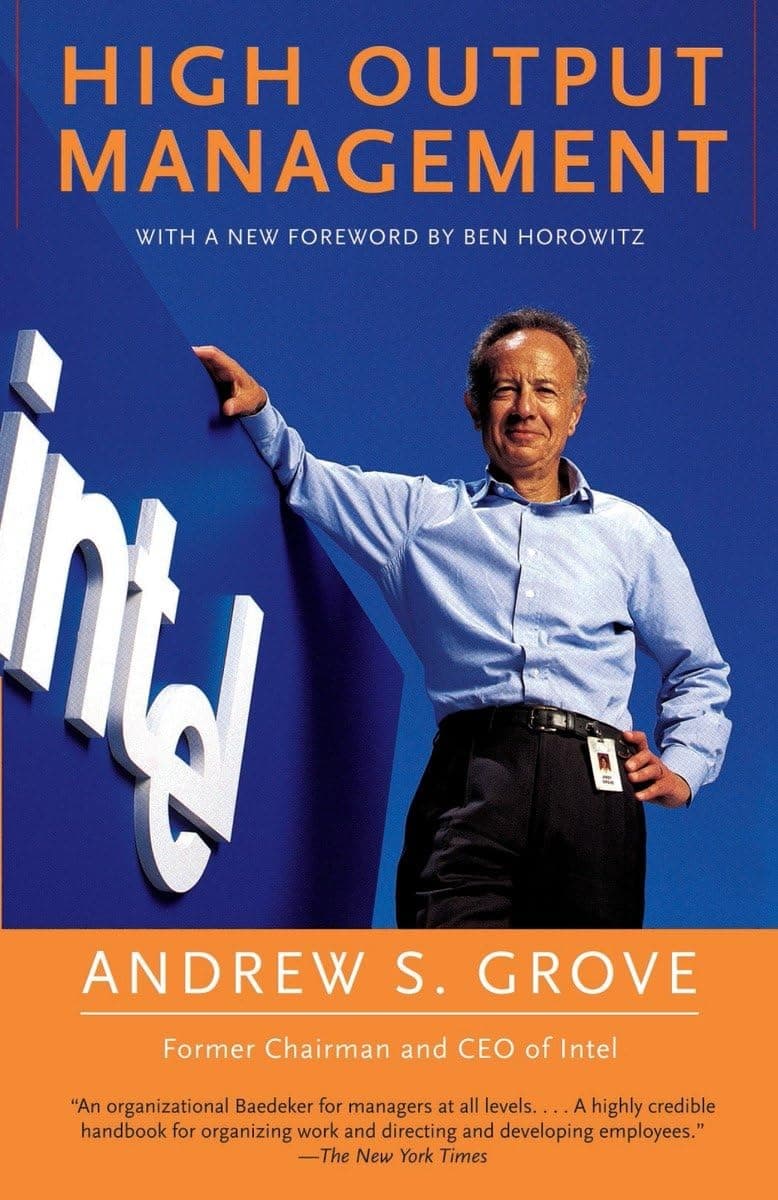
High Output Management
Andrew S. Grove
Free download · 500+ book summaries
What is High Output Management about?
High Output Management is a practical handbook for navigating real business scenarios and a powerful management blueprint capable of revolutionizing our work.
Key ideas of High Output Management
Manager Output Is Team Output
A manager's real output is what his team produces, not the tasks he personally completes each day.
Leverage and Meeting Discipline
High-leverage activities, including well-run one-on-ones, multiply a manager's impact far beyond the hours invested.
Task-Relevant Maturity
The right management style depends on how experienced a person is with their specific task, not their general seniority.
Read an excerpt from the summary
High Output Management by Andrew S. Grove
The One Sentence That Changes Everything
Most managers, if you ask them what they actually produce, will give you a list of verbs. They make decisions. They allocate resources. They attend meetings, write reports, coach people, negotiate deals. Andrew Grove heard all of these answers when he asked middle managers to define their output, and he found them all wrong. Those are activities, not output. A surgeon spends the day scrubbing, cutting, and suturing, but the output is a healed patient. The activity is not the point.
Grove ran Intel through one of the hardest corporate transformations in history, walking away from the memory business it had invented and betting the company on microprocessors. He had emigrated from Hungary in his twenties with no money and barely any English, earned a PhD at Berkeley, and helped build what became the largest semiconductor maker on earth. And the lesson he wanted to pass on was almost insultingly simple. He put it in one sentence and called it the single most important idea in the book.
The output of a manager is the output of the organizational units under his supervision or influence.
Sit with that. Your output is not what you do. It is what your team does, plus what the teams next to you do because of your influence. A wafer plant manager's output is finished, high-quality silicon, even though he never touches a wafer. A school principal's output is educated students ready to advance. If you grasp this fully, the whole job rearranges itself in front of you. The question stops being "How much work did I get through today?" and becomes "How much did the people around me produce, and how much of that traces back to me?"
Like it?
Continue in the appWho is it for?
- Anyone who manages people and wants a concrete, engineering-minded framework for getting more done through a team.
- Anyone who struggles with delegation, meeting overload, or knowing which work to prioritize each day.
- Anyone who is new to a management role and wants practical tools for hiring, reviewing, and developing their reports.
- Anyone who leads knowledge workers and needs to align individual accountability with team and organizational goals.
About the author: Andrew S. Grove
Andrew S. Grove was a co-founder and longtime CEO of Intel Corporation, where he led the company through its transformation from a memory chip maker into the dominant force in microprocessors. He emigrated from Hungary as a young man, earned a PhD in chemical engineering from UC Berkeley, and helped build Intel into one of the most influential technology companies in history.
Grove is widely credited with shaping modern management practices in the technology industry. He taught a management course at Stanford Graduate School of Business for many years. High Output Management, first published in 1983, draws directly from his experience running one of the world's largest semiconductor manufacturers.
Read it in 44 minutes
The summary of High Output Management and 500+ more books await in the BookBase app.