 English
 Magyar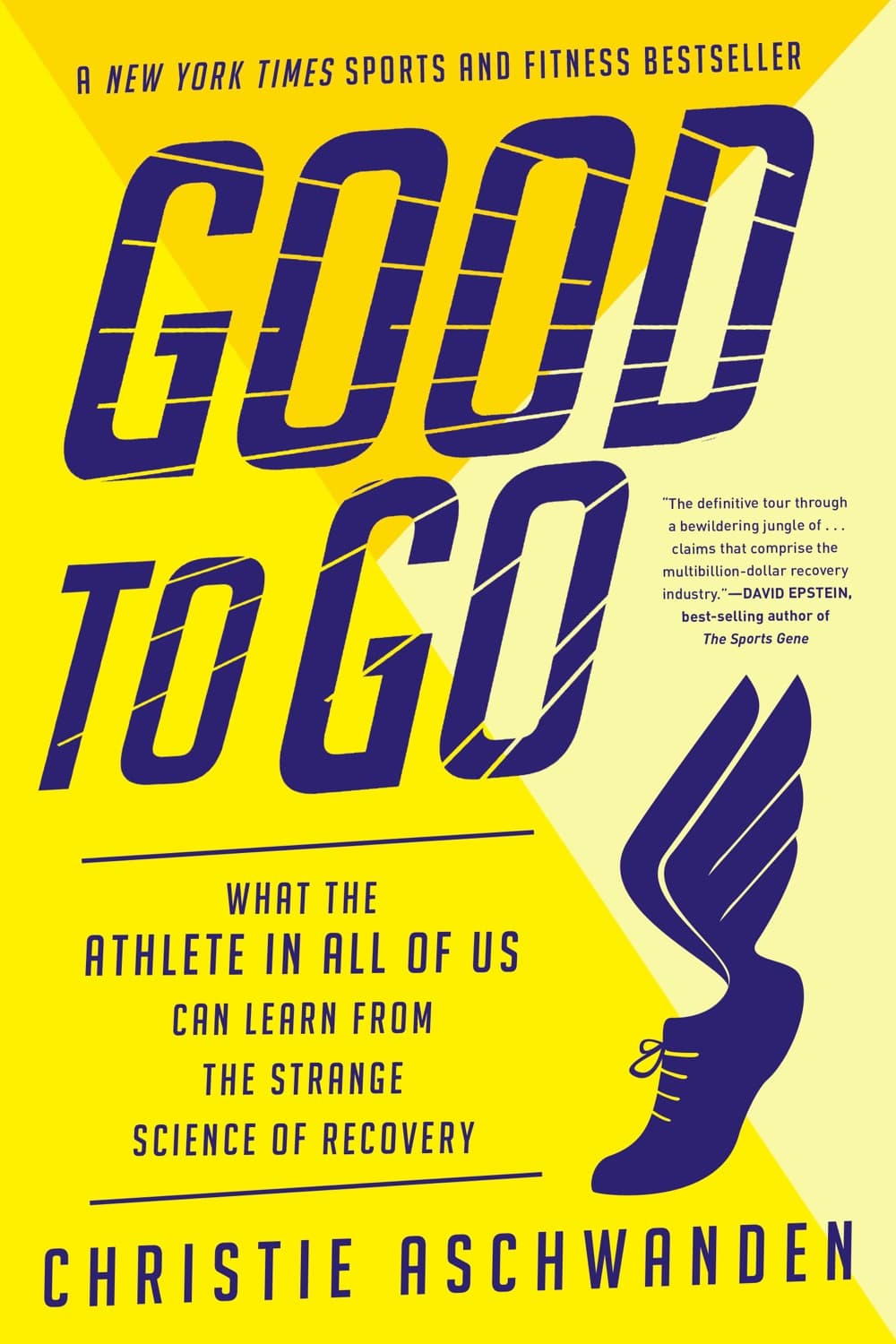
Good to Go
Christie Aschwanden
Free download · 500+ book summaries
What is Good to Go about?
Science journalist Christie Aschwanden takes a hard look at the booming recovery industry. From cryotherapy and float tanks to compression gear and protein shakes, she examines what the research really says about what helps athletes bounce back, and what amounts to expensive ritual. The science of recovery, demystified.
Key ideas of Good to Go
Recovery Industry Mostly Pseudoscience
Most popular recovery gadgets and rituals have little measurable effect and are driven by celebrity endorsements and small, poorly designed studies.
Sleep Is the Only Non-Negotiable
Research consistently shows that adequate sleep outperforms every recovery product on the market, improving strength, speed, accuracy, and immune function.
Body Stress Totals Are What Matter
Physical training stress and life stress draw on the same hormonal system, so ignoring work, sleep, and anxiety defeats even the best training plan.
Read an excerpt from the summary
Good to Go — summary
A bathtub full of red wine and the question nobody asked
In 2015, NBA star Amar'e Stoudemire posted a selfie from inside a bathtub filled with red wine. He called it his "recovery day." The internet lost its mind. Google searches for "vinotherapy" jumped 90 percent in a week. A year later, swimmer Michael Phelps walked onto the pool deck at the Rio Olympics with circular purple bruises all over his shoulders, the calling card of a Chinese practice called cupping. Within hours, suction cups were sold out across the United States. Nobody, anywhere, stopped to ask the obvious question: does any of this actually work?
That is the question journalist Christie Aschwanden, a serious recreational athlete in her forties, decided to investigate. She visited an entire industrial park outside Denver dedicated to "recovery": pneumatic boots that squeezed her legs, electric stimulation pads stuck on her hamstrings, vibration plates promising to flush her lactic acid. She spent more than an hour recovering from a 45-minute beer run. She climbed naked into a steel chamber pumped with liquid nitrogen at minus 210 degrees Fahrenheit. She tried Tom Brady's $200 infrared pajamas. She drifted in a sensory deprivation tank in San Francisco. Then she did something almost no athlete bothers to do anymore: she opened the actual research and asked whether the science backed any of it.
Her conclusions, in her book Good to Go, are bracing and a little funny. The recovery industry has ballooned into hundreds of millions of dollars on the back of stories, celebrity selfies, and studies with eight male volunteers. Most of the gadgets do nothing measurable. Some are actively counterproductive. And the one tool that genuinely works, the one with mountains of evidence behind it, costs nothing and is available to everyone. We will get there. First, we have to understand why we ever stopped trusting our own bodies.
Like it?
Continue in the appWho is it for?
- Anyone who spends money on recovery supplements, gadgets, or services and wants to know what the science actually says.
- Anyone who trains regularly and suspects their sleep, stress, or diet matters more than their recovery gear.
- Anyone curious about how marketing shapes sports science and why so many popular health claims fall apart under scrutiny.
- Anyone who has pushed too hard for too long and wants an honest framework for understanding overtraining and real rest.
About the author: Christie Aschwanden
Christie Aschwanden is a science journalist who has covered health, fitness, and sports science for outlets including FiveThirtyEight, The Washington Post, and Wired. She is a longtime competitive athlete, which gives her reporting a grounded, first-person dimension that distinguishes it from purely academic treatments of the subject.
Her approach throughout Good to Go combines personal experimentation, interviews with leading exercise scientists, and rigorous scrutiny of the research literature. She is known for translating complex study design questions into plain language without losing scientific honesty.
Read it in 57 minutes
The summary of Good to Go and 500+ more books await in the BookBase app.