 English
 Magyar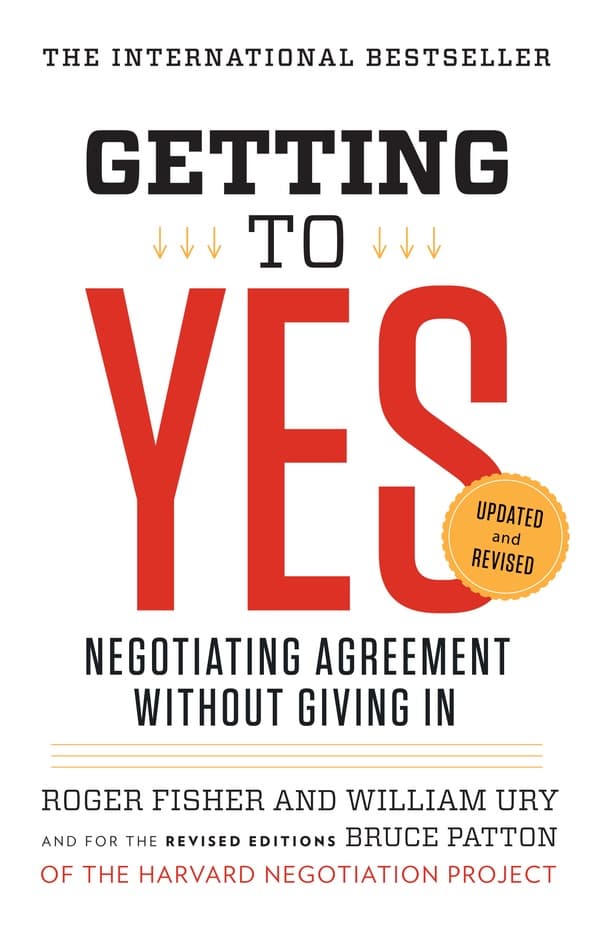
Getting to Yes
Roger Fisher
Free download · 500+ book summaries
What is Getting to Yes about?
Negotiation by principle, not position. Harvard Negotiation Project founders Roger Fisher and William Ury introduced the concept of principled negotiation: separate people from problems, focus on interests not positions, invent options, use objective criteria. The 1981 classic that quietly rewired how lawyers, diplomats, and business leaders negotiate.
Key ideas of Getting to Yes
Interests Behind Positions
Asking why someone holds a position reveals the underlying need, which often unlocks deals that positional bargaining never could.
BATNA as Real Leverage
Your best alternative to a negotiated agreement determines what you should accept, and building that alternative before talks begin is your most powerful move.
Objective Criteria Over Haggling
Anchoring disputed terms to external standards like market data or precedent replaces a contest of wills with a joint search for the right answer.
Read an excerpt from the summary
Getting to Yes: Negotiating Agreement Without Giving In
A scene that changed negotiation forever
September 1978. Camp David. President Jimmy Carter sits between Egyptian President Anwar Sadat and Israeli Prime Minister Menachem Begin. Two men who hate each other. Two countries that have fought four wars in thirty years. The point of conflict is the Sinai Peninsula. Israel occupied it in 1967. Egypt wants every inch back.
For thirteen days the talks stall. Each side digs into a position. Israel says it must keep part of Sinai for security. Egypt says every grain of sand belongs to Egypt. Compromise looks impossible. A line drawn anywhere on the map insults somebody. The drafts pile up. Begin and Sadat refuse to be in the same room. Carter shuttles between cabins carrying paper.
Then the negotiators try something different. They stop arguing about the line. They start asking why. Why does Israel want to keep Sinai? Not because Israelis love the desert. They want security. They do not want Egyptian tanks parked on their border like in 1967. Why does Egypt want all of Sinai? Sovereignty. National pride. Sinai has belonged to Egypt since the time of the pharaohs. Sadat cannot return home with anything less than the full peninsula and survive politically.
Once you ask why, the deal becomes obvious. Egypt gets full sovereignty over Sinai. Israel gets a demilitarized zone wide enough to spot any tank movement weeks before it could reach the border. Egyptian flag flies over the desert. No Egyptian armor within striking distance of Tel Aviv. Both sides win on what actually mattered to them. They lost only on what never mattered in the first place. The Camp David Accords were signed on September 17, 1978. Sadat and Begin shared the Nobel Peace Prize. The peace has held for almost five decades, through wars, intifadas, the Arab Spring, and three Egyptian governments.
Like it?
Continue in the appWho is it for?
- Anyone who negotiates salaries, contracts, or business deals and wants to stop leaving value on the table.
- Anyone who finds themselves stuck in arguments where both sides dig in and no one moves.
- Anyone who needs to reach agreement with people who have more power, more patience, or more options.
- Anyone who handles family disputes, co-founder conflicts, or customer conversations where the relationship also matters.
About the author: Roger Fisher
Roger Fisher taught negotiation at Harvard Law School for four decades and founded the Harvard Negotiation Project in 1979. He advised the U.S. government during the Iran hostage crisis and contributed to peace processes in South Africa and Northern Ireland. He died in 2012 at the age of 90.
William Ury, Fisher's student and partner, holds a PhD in social anthropology from Harvard and has spent fifty years studying how cultures handle conflict. He later wrote Getting Past No and The Power of a Positive No, extending the framework into harder situations. Bruce Patton co-founded the Harvard Negotiation Project with Fisher and joined the book as a co-author in the 1991 second edition.
Read it in 48 minutes
The summary of Getting to Yes and 500+ more books await in the BookBase app.