 English
 Magyar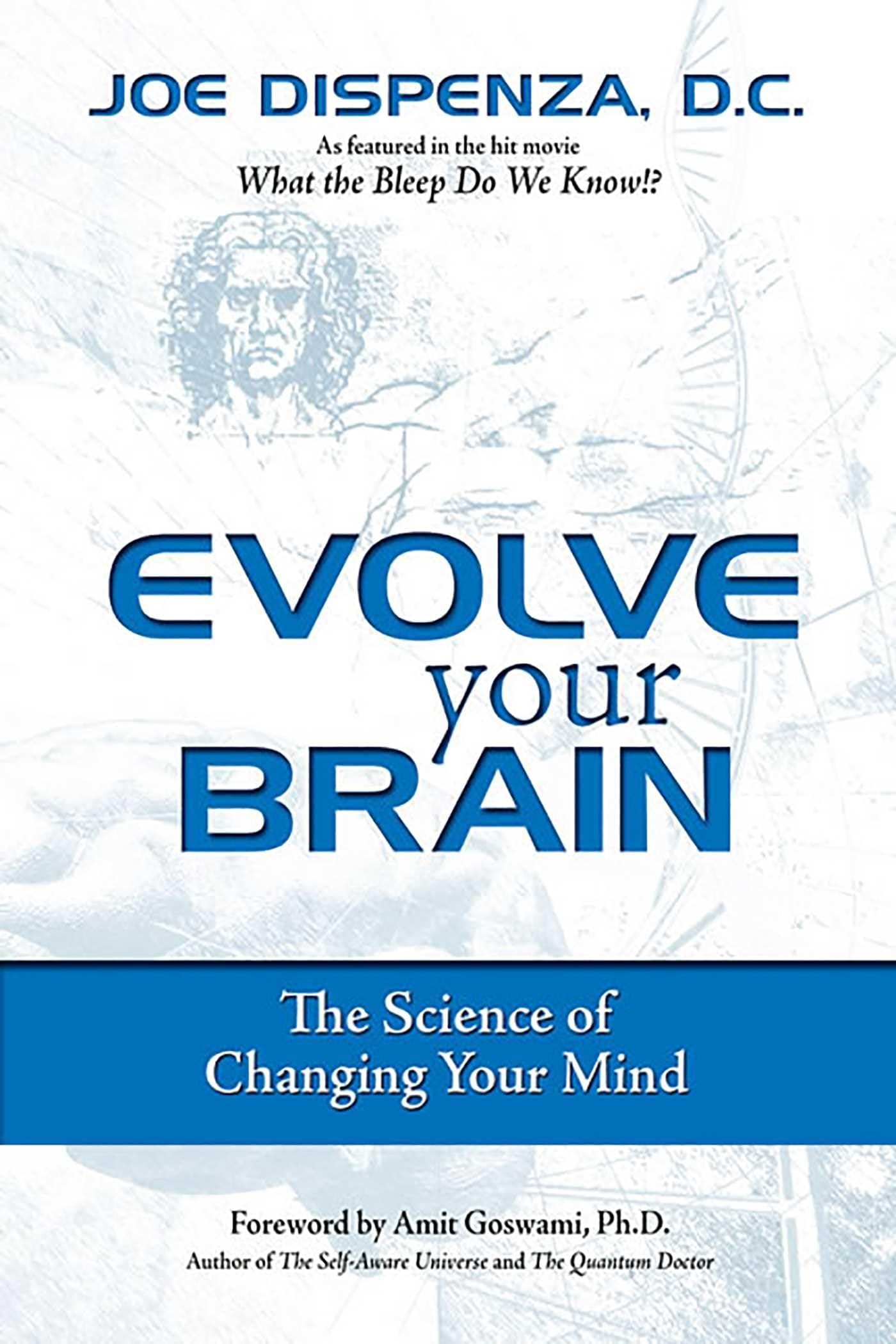
Evolve your Brain
Joe Dispenza
Free download · 500+ book summaries
What is Evolve your Brain about?
Evolve Your Brain delves deeply into the human brain and its structure. It explores the power of neuroplasticity, thought, and behavior.
Key ideas of Evolve your Brain
Thoughts Reshape Brain Tissue
Every thought triggers real chemical and electrical changes in the brain, and repeated thoughts physically rewire neural circuits over time.
Neuroplasticity Never Stops
The adult brain continues forming new neurons and connections throughout life, meaning identity and habits can be deliberately rebuilt at any age.
Mental Rehearsal Rewires Identity
Vivid, emotionally engaged mental rehearsal of a new behavior produces nearly the same neural changes as physically practicing that behavior.
Read an excerpt from the summary
Evolve Your Brain: The Science of Changing Your Mind
A Crushed Spine and a Choice
In April 1986, on a curved stretch of road outside Palm Springs, a red SUV traveling fifty-five miles an hour caught a twenty-three-year-old chiropractor named Joe Dispenza on the bike leg of a triathlon. He flew off his frame, landed on his backside, and skidded for about twenty feet on the asphalt. While he lay there waiting for the ambulance, he felt warm blood pooling inside his rib cage. Twelve hours of imaging at JFK Hospital produced the verdict: multiple compression fractures of the thoracic spine, with T-8 collapsed by more than sixty percent, and bone fragments resting against the spinal cord. The orthopedic surgeon told him he needed a complete thoracic laminectomy with Harrington rods — stainless steel braces fastened with screws from the base of his neck to the base of his spine. A neurologist gave him better than even odds of never walking again if he refused. He had four days to decide before calcium would begin laying down in the broken bone and complicate the operation. The surgeon's closing line was the one doctors save for situations they consider settled. "If you were my son, you would be on the operating table right now."
Dispenza refused anyway. That refusal is the seed of this book. Not because he wanted to be a martyr or because he distrusted his colleagues — he had eight chiropractors and his father standing in the room when the surgeon delivered the warning — but because he believed something the surgeon did not. He believed the same intelligence that had assembled his body from a single fertilized egg could put it back together if he stopped getting in its way. Over the next ten weeks, alone in a borrowed bed, he held one image in his mind for three hours a day, in three sessions, morning, noon, and evening. A perfectly healed spine. He did not visualize a fragment of it. He visualized the whole thing, vertebra by vertebra, with the precision he had spent years studying in chiropractic college. He ate raw food in small amounts so that his digestion would not steal energy from his repair. He received twice-daily laying-on-of-hands sessions from friends, patients, family, and total strangers. He built himself a custom incline board and tilted his body up by a single degree at a time. At six weeks, he was at sixty degrees, pain free, on the timeline the medical profession had reserved for "still in bed." At eight weeks he was crawling on dry land. At ten weeks he was back at work. Twenty years later he still rarely experiences back pain, in a country where eighty percent of adults say they do.
Like it?
Continue in the appWho is it for?
- Anyone who feels stuck in repeating the same emotional patterns or behaviors year after year.
- Anyone who wants to understand the neuroscience behind habits, stress, and lasting personal change.
- Anyone curious about how attention, meditation, and mental rehearsal can produce measurable brain changes.
- Anyone recovering from illness or injury and interested in the mind-body connection as a complement to medical care.
About the author: Joe Dispenza
Joe Dispenza is a chiropractor, researcher, and lecturer whose work focuses on the intersection of neuroscience, epigenetics, and the mind-body connection. His interest in how the brain shapes health began after he recovered from severe spinal injuries following a triathlon accident in 1986, choosing mental practice over surgery.
He has spent decades studying cases of spontaneous remission and teaching workshops on how directed thought and meditation can change brain structure. He is the author of several books on consciousness and neuroplasticity and lectures internationally to both general and scientific audiences.
Read it in 44 minutes
The summary of Evolve your Brain and 500+ more books await in the BookBase app.