 English
 Magyar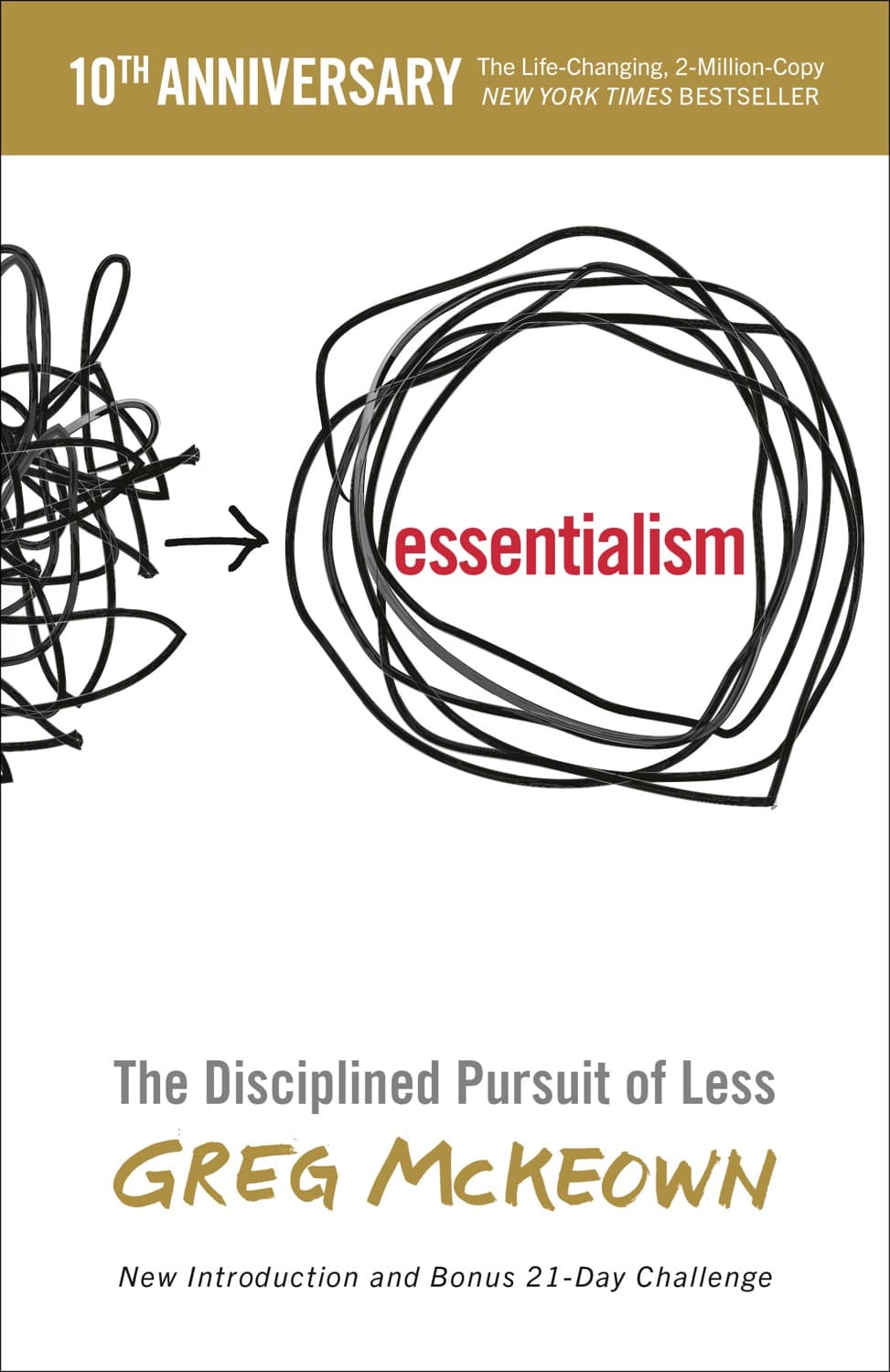
Essentialism
Greg McKeown
Free download · 500+ book summaries
What is Essentialism about?
Most of us say yes to too much, do too much, and end up depleted, scattered, and forgettable. Greg McKeown argues the answer isn't time management. It's deciding what truly matters and ruthlessly cutting everything else. A disciplined approach to focus, contribution, and the quiet power of less.
Key ideas of Essentialism
The Paradox of Success
Focused effort creates success, but that success attracts more demands, fragmenting the very attention that produced the results.
Disciplined Trade-offs
Every yes is a no to something else, and accepting that trade-offs are permanent is the foundation of Essentialist decision-making.
The 90 Percent Rule
Score every opportunity on a single key criterion and automatically decline anything scoring below 90 to protect space for truly exceptional work.
Read an excerpt from the summary
Essentialism: The Disciplined Pursuit of Less, Greg McKeown
Sam Elliot is a capable executive in Silicon Valley. His company was acquired recently by a larger, bureaucratic organization, and he decided to be a good citizen about it. He started saying yes. He said yes to meetings he didn't need to attend. He said yes to the Nigerian sales team call. He said yes to a presentation deck for the new division head who had only just taken over. He said yes to a friendly favor for a colleague on another team, and then another, and then one more after that.
None of these yeses felt wrong in the moment. That's the point. Each one came with a face attached, someone he didn't want to disappoint, a relationship he wanted to protect, a future he didn't want to close off. The calculus seemed reasonable each time it happened. Saying no is awkward. Saying yes is easy. And in an organization where he was new, where proving himself felt important, where visible activity seemed like the appropriate response to uncertainty, yes was the default. Every single time.
By Thursday evening he was staring at ten open email tabs and wondering why he felt simultaneously overworked and useless. The stress was going up. The quality of his work was going down. He was, as McKeown puts it, "majoring in minor activities." The core product strategy he had been hired to lead, the actual work that mattered, was quietly rotting in the background. Not because of one bad decision. Because of dozens of small good ones.
Then the company offered him an early retirement package. He was in his early fifties and had no interest in fully retiring. He went to speak with a mentor, who gave him one piece of surprisingly counterintuitive advice: stay, but do only what you would do as an outside consultant. Say no to everything that doesn't qualify. And don't tell anyone.
Like it?
Continue in the appWho is it for?
- Anyone who feels busy all the time yet struggles to point to work that genuinely matters.
- Anyone who wants a principled framework for saying no without damaging professional relationships.
- Anyone who has been promoted or grown a business and feels their original focus slipping away.
- Anyone who suspects their calendar reflects other people's priorities more than their own.
About the author: Greg McKeown
Greg McKeown is a British author and leadership strategist who studied at Stanford and built a consulting practice in Silicon Valley working with companies including Apple, Google, and Pixar.
He published Essentialism in 2014 and it has remained a long-running New York Times bestseller. He also wrote Multipliers, which examines how effective leaders draw out the intelligence of the people around them.
Read it in 46 minutes
The summary of Essentialism and 500+ more books await in the BookBase app.