 English
 Magyar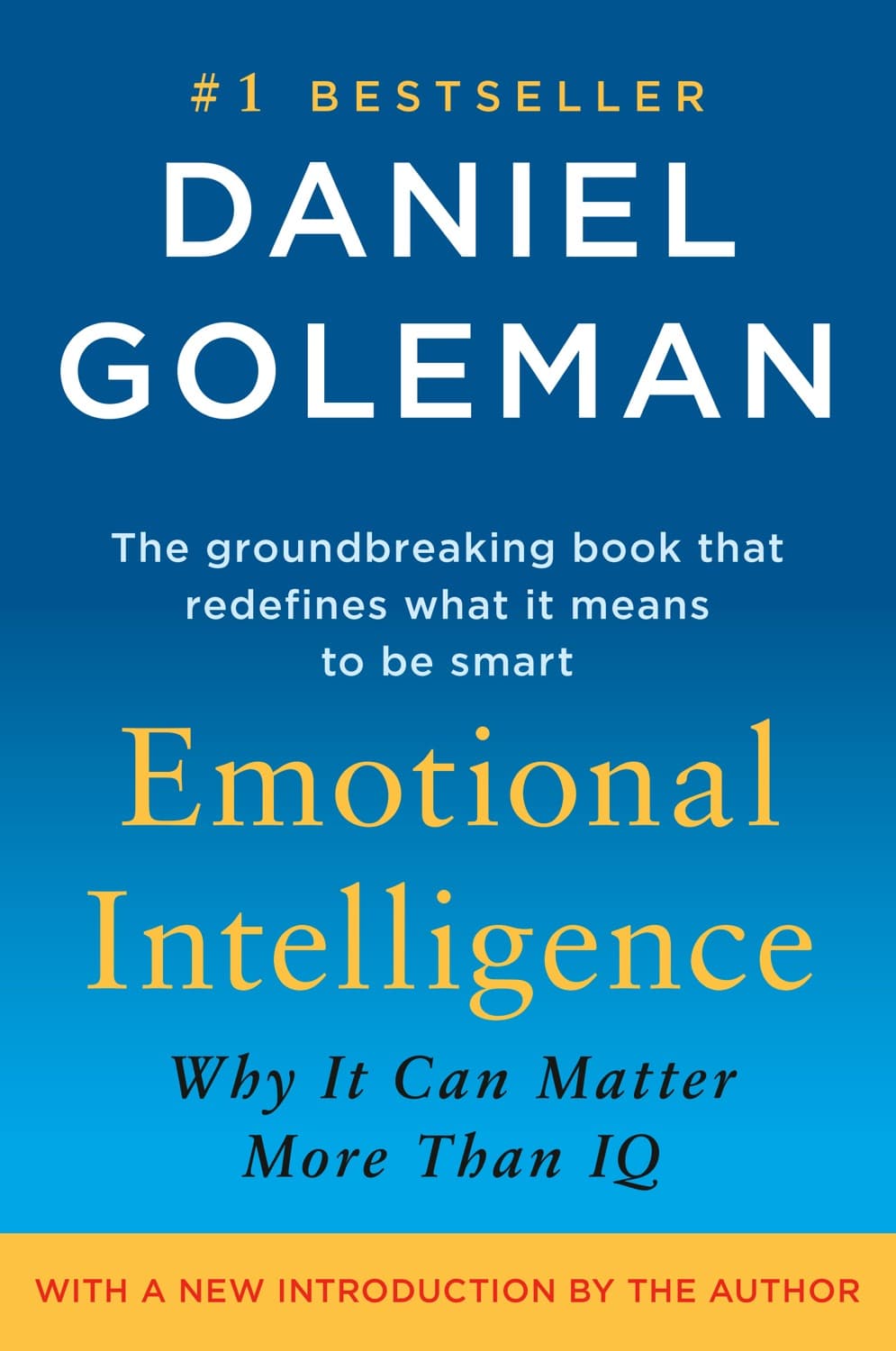
Emotional Intelligence
Daniel Goleman
Free download · 500+ book summaries
What is Emotional Intelligence about?
The book that introduced EQ to a mass audience. Daniel Goleman synthesizes brain research and workplace data to argue that self-awareness, self-regulation, motivation, empathy, and social skill predict life outcomes more reliably than IQ. The 1995 classic that reshaped how leadership and education are taught.
Key ideas of Emotional Intelligence
Emotions Outrank IQ
Research shows IQ accounts for roughly 20 percent of life success, while emotional skills drive the remaining 80 percent.
The Amygdala Hijack
A neural shortcut lets the brain's alarm center trigger emotional reactions before the thinking mind has a chance to intervene.
Emotional Skills Are Learnable
Self-awareness, impulse control, and empathy are trainable capacities that can be developed at any age through deliberate practice.
Read an excerpt from the summary
Emotional Intelligence
*Daniel Goleman*
On a sweltering August afternoon in New York City, a city bus pushed through the gridlocked streets of Manhattan. The passengers were doing what passengers do in a heat wave: glaring at the floor, pressing themselves against the windows, radiating the collective misery of people who had nowhere cooler to be. Then the driver spoke. Not a reprimand, not a mechanical announcement. He started talking -- pointing out a gallery exhibit on one block, commenting on a new restaurant, weaving a running narration of the neighborhood like an enthusiastic tour guide who just happened to be piloting a bus. One by one, the passengers looked up. A few smiled. By the last stop, people were chatting with strangers, waving as they stepped off. A single person in a good mood had infected an entire busload of strangers.
Daniel Goleman remembered that bus driver for over twenty years. Not because the man was remarkable in any conventional sense -- he would never appear in a business magazine, never win an award, never get mentioned in a psychology textbook. But he had done something quietly extraordinary. He had walked into a room full of hostile energy and turned it around, using nothing but his own emotional intelligence. And he had done it so naturally that most passengers probably didn't notice anything had happened at all.
That story sits at the heart of a book that, when it appeared in 1995, changed how millions of people thought about the mind. Goleman's central claim was both simple and explosive: IQ alone does not predict how well we do in life. The qualities that determine whether we thrive -- whether our careers flourish, our relationships survive, our health holds -- depend far more on a different set of capacities. The ability to know what we're feeling. The ability to manage those feelings rather than being managed by them. The drive to motivate ourselves through setbacks. The skill to read emotions in other people. The art of handling relationships without creating wreckage. These were not soft skills, not personality quirks, not the province of therapists and life coaches. They were, Goleman argued, a form of intelligence -- and in many ways, the more important one.
Like it?
Continue in the appWho is it for?
- Anyone who wants to understand why smart people so often fail at work and in relationships.
- Anyone who struggles with anger, anxiety, or impulsive reactions and wants practical tools to manage them.
- Anyone leading a team who suspects that emotional climate matters more than raw talent.
- Anyone raising or teaching children and looking for evidence-based ways to build resilience and social skill.
About the author: Daniel Goleman
Daniel Goleman is a science journalist and psychologist who spent years covering behavioral and brain sciences for The New York Times before writing Emotional Intelligence in 1995. The book drew on decades of neuroscience and psychological research to bring the concept of EQ to a mainstream audience.
Goleman has written widely on psychology, leadership, and the mind. He has lectured at Harvard and consulted with organizations on how emotional competence shapes performance and well-being.
Read it in 47 minutes
The summary of Emotional Intelligence and 500+ more books await in the BookBase app.