 English
 Magyar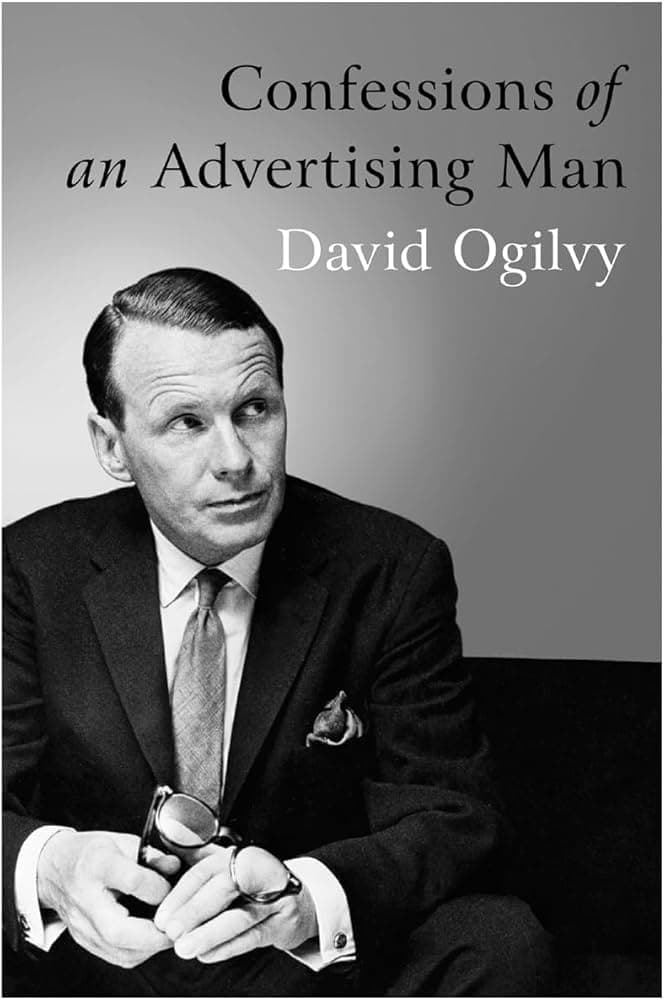
Confession of an Advertising Man
David Ogilvy
Free download · 500+ book summaries
What is Confession of an Advertising Man about?
David Ogilvy was considered the "father of advertising" and by many of the world's biggest global brands, a creative genius. His groundbreaking book, first published in 1963, revolutionized the world of advertising and became the bible for the advertising generation of the 1960s. It also became an international bestseller, translated into 14 languages. The book, vibrant with Ogilvy's pioneering ideas and inspiring philosophy, not only touches on advertising but also on how to treat people, corporate ethics, and office politics, forming a fundamental blueprint for best practices in business.
Key ideas of Confession of an Advertising Man
Research-Driven Copy Rules
Ogilvy built his creative principles on consumer research, not intuition, showing that headlines, long copy, and story-appeal images consistently outsell clever wordplay.
Brand Image Consistency
Every advertisement is a contribution to a brand's long-term image, and short-term promotions that ignore this erode consumer esteem and undermine lasting sales.
Hiring and Managing Talent
Running a great agency means hiring people capable of succeeding you, praising rarely and on purpose, and refusing to let committees write anything that matters.
Read an excerpt from the summary
The Man Who Wanted to Buy Everything
Max Beerbohm once leaned in to S. N. Behrman and said, "My dear, nothing in this world is worth buying." David Ogilvy spent his life proving the opposite. He wanted to buy almost everything he saw advertised — Hathaway shirts, Steuben candlesticks, Rolls-Royces fueled with Super Shell, Schweppes tonic mixed with Puerto Rican rum — and he believed it was his job to make you want them too.
That belief, more than anything else, is what Confessions of an Advertising Man is about. The book came out in 1963, when Ogilvy had built one of the great agencies of the postwar era out of a shoestring, a borrowed name, and his own ferocious appetite for work. By the time he sat down to write it he had nineteen clients, fifty-five million dollars in yearly billings, and nearly five hundred employees. He also had an opinion about almost everything that crossed the desk on Madison Avenue. He had lived enough lives to write the book honestly. He had cooked in a Paris hotel kitchen, sold stoves door-to-door in Edinburgh, done social work in slums, conducted polling for Dr. Gallup, worked for British intelligence under Sir William Stephenson, and farmed tobacco in Pennsylvania with the Amish. When he opened his agency in 1948 he was, as he liked to say, an obscure tobacco farmer in his late thirties with no American clients, no American capital, and no good reason to expect anyone to hire him.
The day after he opened, he wrote down five blue-chip targets — General Foods, Bristol-Myers, Campbell Soup, Lever Brothers, Shell — and went after them with what he called an act of mad presumption. All five eventually became clients. The book is, in part, the story of how that happened. It is also the story of what Ogilvy learned along the way about managing creative people, keeping demanding clients, writing copy that sells, illustrating advertisements, making television commercials, and growing old in a business that consumes its young. Above all it is a confession in the original sense: a profession of faith, by a man who believed advertising could be honest, useful, occasionally beautiful, and almost always profitable if you took the trouble to do it properly.
Like it?
Continue in the appWho is it for?
- Anyone who works in marketing, advertising, or copywriting and wants a frank, experience-based framework for what actually sells.
- Anyone who manages a creative team and needs a clear-eyed guide to setting standards, building culture, and getting the best work out of people.
- Anyone who runs a business and wants to understand how to brief an agency, evaluate creative work, and use advertising as a long-term brand investment.
- Anyone who is curious how one of the most celebrated advertising careers of the twentieth century was built from scratch with no clients and no capital.
About the author: David Ogilvy
David Ogilvy founded Ogilvy and Mather in New York in 1948, beginning with no American clients and no American capital. Before advertising he had worked as a chef in Paris, a door-to-door salesman in Scotland, a pollster for George Gallup, and a tobacco farmer in Pennsylvania with the Amish. That breadth of practical experience shaped his approach to consumer psychology and became the backbone of his professional philosophy.
By the time he wrote this book in 1963, his agency billed over fifty million dollars a year and counted Shell, Schweppes, Hathaway, and Rolls-Royce among its clients. He is widely regarded as one of the most influential figures in the history of advertising.
Read it in 43 minutes
The summary of Confession of an Advertising Man and 500+ more books await in the BookBase app.