 English
 Magyar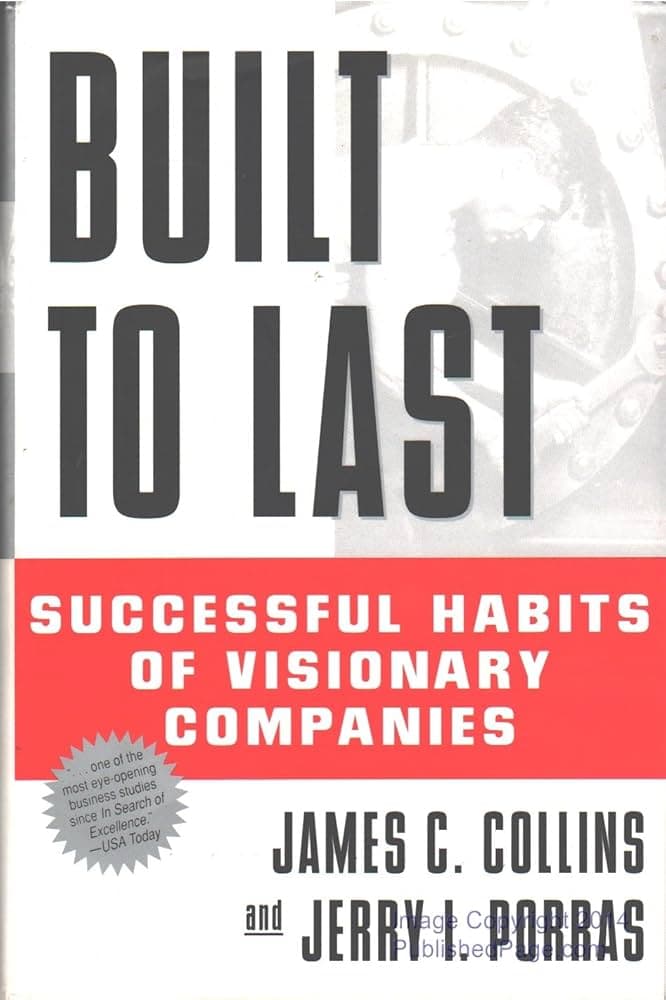
Built to Last
Jim Collins
Free download · 500+ book summaries
What is Built to Last about?
Built to Last examines 18 extraordinary and admirable companies to determine what made them thrive for decades, in some cases nearly two centuries. This groundbreaking study reveals the simple yet inspiring differences that set these visionary companies apart from their less successful competitors.
Key ideas of Built to Last
Clock Building Over Time Telling
Visionary companies are built as self-sustaining institutions, not around a single great idea or charismatic founder.
Preserve the Core, Change Everything Else
Enduring companies hold their core ideology sacred while relentlessly adapting strategy, products, and practices around it.
Big Hairy Audacious Goals
Commitments so bold they look slightly insane from outside galvanize organizations and pull them forward across generations.
Read an excerpt from the summary
The Question Behind the Book
Pick any company you admire and try to explain why it has survived for a hundred years. The honest answer is almost never the one people give. Most explanations reach for a single charismatic founder, a brilliant product, a moment of perfect market timing. Jim Collins and Jerry Porras spent six years at Stanford trying to figure out whether those stories actually hold up, and the answer they came back with is one of the more unsettling claims in business literature. The companies that endure for a century or more share almost nothing in common with the romantic founder story we keep telling ourselves. What they share is something much less glamorous and much more useful, which is that someone, very early on, decided to build a clock instead of telling the time.
Built to Last is the book where that distinction gets made. Published in 1994, it studies eighteen companies that were widely admired by knowledgeable executives, founded before 1950, still industry premier institutions, and had already survived multiple generations of CEOs and multiple product life cycles. Companies like Hewlett-Packard, 3M, Sony, Disney, Boeing, Procter and Gamble, Merck, Johnson and Johnson, Wal-Mart. Then Collins and Porras did the thing most management books refuse to do. They picked a direct competitor for each one — a company founded around the same time, in roughly the same business, with similar starting odds. Norton against 3M. Zenith against Motorola. Kenwood against Sony. Burroughs against IBM. Howard Johnson against Marriott. They went through more than three thousand documents, sixty thousand pages of company history, and stock data back to 1926, asking a single relentless question. What was essentially different about the companies that became great?
Like it?
Continue in the appWho is it for?
- Anyone who wants to understand what separates companies that last a century from those that fade out after a decade.
- Anyone who is building a company and wants to design an institution rather than just deliver a product or idea.
- Anyone leading a team or organization who needs a framework for preserving culture while driving real change.
- Anyone curious why some companies keep producing great leaders and decisions long after their founders are gone.
About the author: Jim Collins
Jim Collins is a business researcher and author best known for studying what makes companies great and durable. He taught at the Stanford Graduate School of Business before leaving to run his own research laboratory in Boulder, Colorado.
Built to Last, co-authored with Jerry Porras, was the result of six years of research at Stanford comparing eighteen visionary companies against direct competitors. Collins later extended this work in Good to Great and other books that have become standard references in business and management.
Read it in 50 minutes
The summary of Built to Last and 500+ more books await in the BookBase app.