 English
 Magyar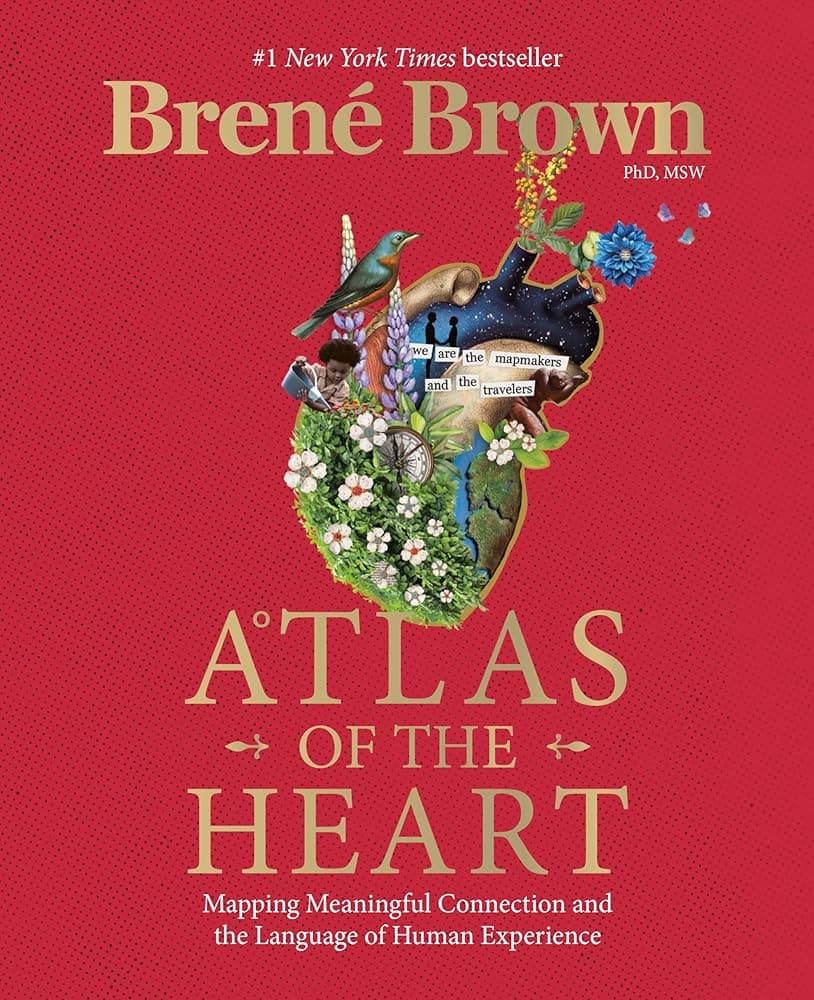
Atlas of the Heart
Brené Brown
Free download · 500+ book summaries
What is Atlas of the Heart about?
The Atlas of the Heart is written for people who want to explore all eighty-seven of their human emotions, beyond the six basic feelings.
Key ideas of Atlas of the Heart
Emotional Vocabulary Expands Self-Understanding
Most adults navigate life with only three or four emotion words, and naming feelings precisely gives you more control over them.
Emotions Cluster Into Distinct Experiences
Shame, guilt, humiliation, and embarrassment feel similar but produce completely different outcomes and require different responses.
Connection Requires Emotional Honesty
Meaningful connection with others can only go as deep as the honest, language-equipped relationship you have with yourself.
Read an excerpt from the summary
Atlas of the Heart — Brené Brown
When Three Words Are All You've Got
For five years Brené Brown ran a workshop exercise where she asked people to list every emotion they could recognize and name in themselves in real time. More than seven thousand adults went through it. The average answer came back to three: happy, sad, angry. That is the working emotional vocabulary most of us are carrying around. Three words to describe everything that happens between our ribcage and our throat in the course of a day. Brown thinks this is roughly why so many of us feel stuck, lonely, or quietly furious without knowing why.
Atlas of the Heart is her attempt to fix that. The book is a map of eighty-seven emotions and experiences, grouped into thirteen places we go — places like uncertainty, comparison, hurt, falling short, an open heart, feeling wronged. Each chapter draws careful lines between feelings we tend to mash together. Shame and guilt. Envy and jealousy. Empathy and sympathy. Joy and happiness. Embarrassment and humiliation. The argument under the whole project is that naming what you feel with more precision does not give the feeling more power over you. It gives you more power over the feeling. You can't process, regulate, or communicate something you can't name. You can't ask for help with a feeling you have mislabeled as fine.
Brown is a research professor at the University of Houston who has spent twenty years studying shame, vulnerability, courage, and connection. Her earlier books — Daring Greatly, Rising Strong, Braving the Wilderness, Dare to Lead — built a vocabulary for one corner of emotional life. This one is the reference grammar. She borrows a phrase from Harvard psychologist Susan David and calls the skill emotional granularity. People who can tell the difference between a wide range of emotions, David's research shows, manage ordinary life noticeably better than people who treat the whole inner world as either fine or terrible. Brown quotes Wittgenstein on the first page of her introduction for the same reason: the limits of my language mean the limits of my world.
Like it?
Continue in the appWho is it for?
- Anyone who often feels stuck, lonely, or frustrated without being able to explain why.
- Anyone who wants to communicate more clearly in close relationships or at work.
- Anyone who confuses emotions like envy and jealousy, or shame and guilt, and wants sharper distinctions.
- Anyone who feels their emotional range is narrow and wants practical tools to expand it.
About the author: Brené Brown
Brené Brown is a research professor at the University of Houston who has spent more than twenty years studying shame, vulnerability, courage, and human connection. She is the author of several bestselling books including Daring Greatly, Rising Strong, and Dare to Lead.
Her research is grounded in qualitative interviews and survey data gathered over decades. She is known for translating social-science findings into practical frameworks that general readers can use in everyday life.
Read it in 53 minutes
The summary of Atlas of the Heart and 500+ more books await in the BookBase app.