 English
 Magyar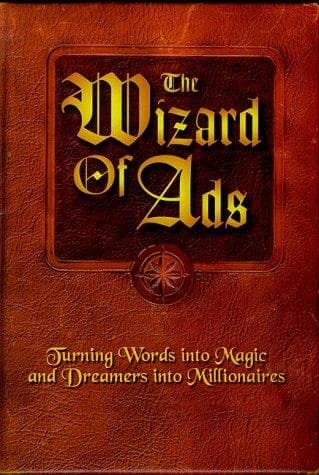
The Wizard of Ads
Roy H. Williams
Free download · 500+ book summaries
What is The Wizard of Ads about?
The product itself rarely wins. What sells is the story people want to tell about it. Drawing from thirty years writing radio ads, Roy H. Williams discovered a simple truth: people's attention isn't captured by volume, but by something genuinely interesting. Learn why emotions decide first and logic follows, and how to speak to what your audience actually wants—not what they claim to need.
Read an excerpt from the summary
The Wizard of Ads: Summary
The mousetrap nobody wanted
In 1928, a manufacturer named Chester M. Woolworth decided to build the perfect mousetrap. He built it. The old trap was flimsy, single-use, and cost five cents. Woolworth's was durable, cleaner, a cleverer piece of engineering. He asked twelve cents for it. Then he sat back and waited for the line to form outside his gate.
Nobody came. It turned out that nobody wants to wash a dead mouse out of an expensive device when the cheap one can be thrown away with the mouse still in it. The better product failed. The worse one stayed on the market.
Everybody knows the line people quote at moments like this: build a better mousetrap and the world will beat a path to your door. It is attributed to Ralph Waldo Emerson. Except Emerson never wrote it. An ad writer named Elbert Hubbard composed it twenty-eight years after the philosopher died, and deliberately hung Emerson's name on it to give it authority. The real Emerson line sits in his journal, February 1855, and it reads like a market price list: corn, wood, boards, pigs, chairs, knives, crucibles, church organs. Hubbard cut the whole inventory, kept one image, and moved the strongest words to the end.
Today half the world quotes Hubbard's version in Emerson's name. The thought belonged to the philosopher. The wording belonged to the ad man. And the wording is what survived.
The better product doesn't win. The one people can talk about better does.
Roy H. Williams's book is a hundred short pieces, two or three pages each, all pointing the same direction. How do you get a person to listen at all? Why does the heart decide first and the head second? And why do most campaigns fail, not because they reach the wrong people, but because they have nothing to say to them?
Like it?
Continue in the appRead it in 67 minutes
The summary of The Wizard of Ads and 500+ more books await in the BookBase app.