 English
 Magyar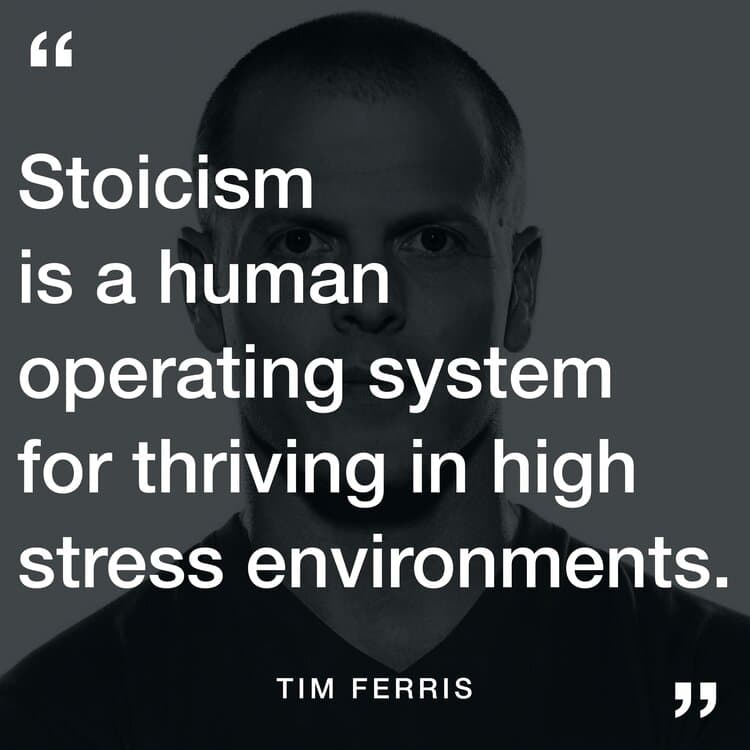
A practical guide to stoicism
Tim Ferriss
Free download · 500+ book summaries
What is A practical guide to stoicism about?
Bestselling author and investor Tim Ferris is one of the most quoted exponents of Stoicism. For years he has been increasing the value of philosophy, whether it's through his widely read blog, which is read by millions, his podcast, which has been downloaded by more than 200 million people, or his TED talks. In his books, he writes about how he incorporates the practices of Stoicism into his daily life to become less stressed.
Key ideas of A practical guide to stoicism
Dichotomy of Control
Dividing any situation into what is and is not up to you directs effort toward the only place it can actually change outcomes.
Fear-Setting Practice
Writing out your worst fears in precise, specific columns reveals that downside is bounded and the cost of inaction is usually far greater.
Daily Stoic Exercises
Short, repeatable routines like premeditatio malorum and the evening review build the attention and resilience that reading alone cannot provide.
Read an excerpt from the summary
Why Ancient Philosophy Showed Up in Silicon Valley
For two decades, Tim Ferriss has done one thing professionally more than anything else. He asks accomplished people what makes them tick. Investors, four-star generals, Navy SEALs, Olympians, novelists, chess prodigies, scientists, comedians. Different domains, different temperaments, different routes to the top. He records the conversations, transcribes them, and reads back through the answers looking for patterns. Most of the patterns are unsurprising. Successful people read a lot. They sleep poorly. They work on their relationships. They overestimate themselves on Mondays.
But one pattern surprised him. A name kept showing up in the answers, and it was not the name of a meditation app or a supplement protocol. It was Seneca. Or Marcus Aurelius. Or Epictetus. Smart, well-resourced, demonstrably effective people, on every continent, kept describing a two-thousand-year-old ethical system as the operating system running underneath everything they did. They mentioned it in the same matter-of-fact tone they would use for compound interest.
Ferriss noticed. Then he tried it. Then he wrote about it, podcasted about it, produced audiobooks of the original sources, and built it into nearly everything he teaches. This book is the consolidated version. It is not a history of Stoicism. It is not a defense against academic critics. It is a working manual, written in plain English, for people who want to use Stoic ideas the way you would use a tool.
Ferriss insists on the tool framing because he wants to strip the philosophy of the marble-bust associations that scare modern readers off. Stoicism is not stoicism in the lowercase, stiff-upper-lip sense. It is not a recommendation to suppress emotion. It is not a religion or a personality type. It is a set of cognitive techniques and ethical commitments that, in his words, give you the highest return on attention of anything he has ever found. He has used it through company failures, public attacks, a long bout of severe depression, and the kind of personal crisis he has talked about openly on his podcast. He treats it as load-bearing.
Like it?
Continue in the appWho is it for?
- Anyone who wants a practical, no-nonsense introduction to Stoic philosophy grounded in real exercises.
- Anyone who struggles with anxiety, avoidance, or decisions they keep postponing.
- Anyone who has read about Stoicism before but never built a consistent daily practice.
- Anyone who wants a mental toolkit drawn from Marcus Aurelius, Epictetus, and Seneca without wading through ancient texts.
About the author: Tim Ferriss
Tim Ferriss is an author, investor, and podcaster best known for The 4-Hour Workweek. His podcast has been downloaded more than 200 million times and regularly features top performers across business, sports, science, and the arts.
Ferriss has written and spoken extensively about how Stoic philosophy, particularly the works of Marcus Aurelius, Epictetus, and Seneca, forms the practical foundation of how he manages stress, makes decisions, and recovers from setbacks. He is widely credited with introducing Stoicism to a large modern audience.
Read it in 46 minutes
The summary of A practical guide to stoicism and 500+ more books await in the BookBase app.