 English
 Magyar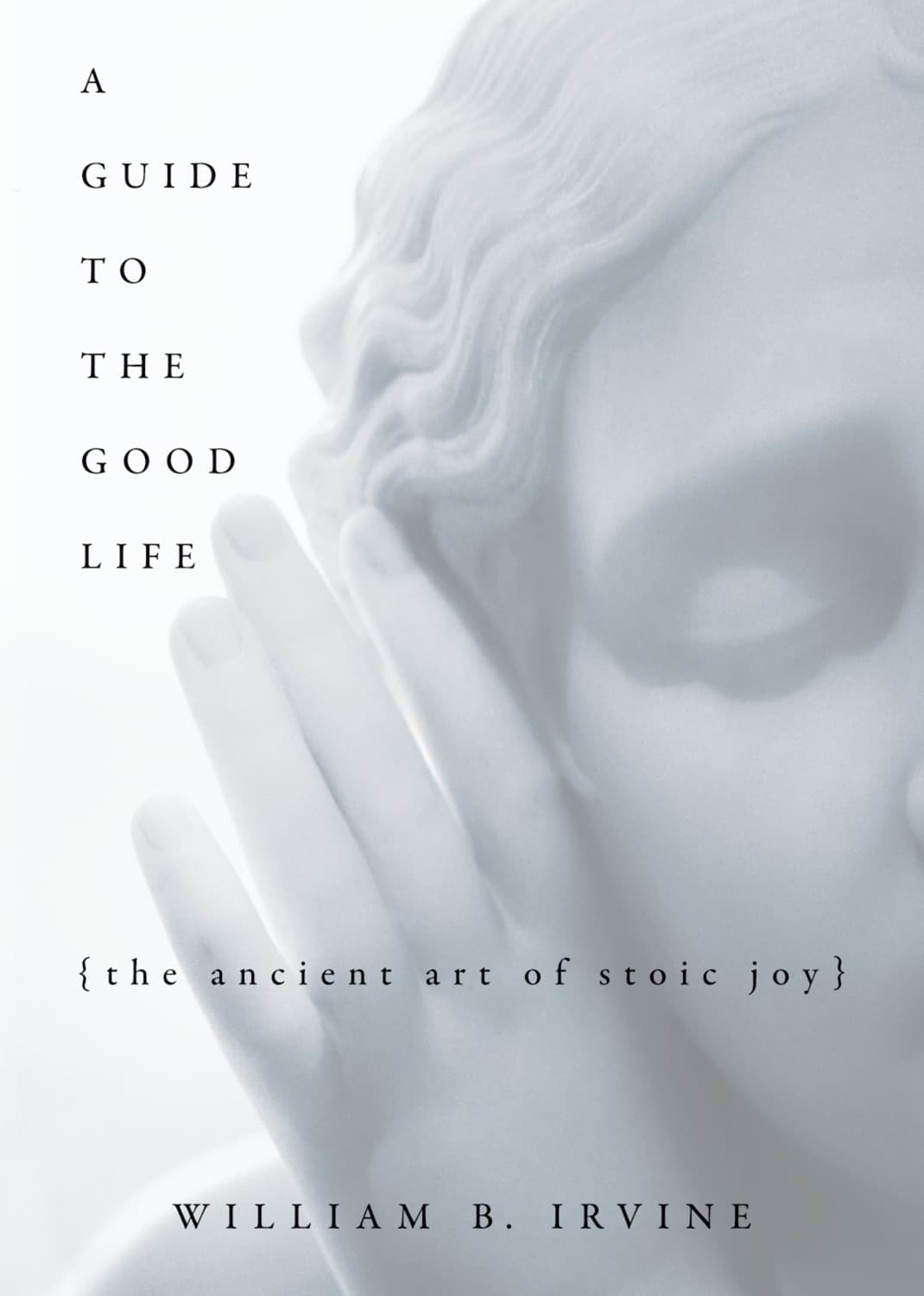
A Guide to the Good Life
William B. Irvine
Free download · 500+ book summaries
What is A Guide to the Good Life about?
A practical, modern handbook for Stoic philosophy. William Irvine, a working philosopher, walks through the techniques the ancient Stoics used to handle anxiety, anger, and the constant pull toward more. Negative visualization, the dichotomy of control, voluntary discomfort. The clearest entry point into a 2,000-year-old operating system.
Key ideas of A Guide to the Good Life
Dichotomy of Control
Separating what you can influence from what you cannot lets you direct energy productively and shed anxiety about outcomes that depend on others.
Negative Visualization
Regularly imagining the loss of what you have counteracts hedonic adaptation and restores genuine appreciation for ordinary life.
Voluntary Discomfort
Deliberately exposing yourself to minor hardship builds resilience, revives pleasure in everyday comforts, and proves your independence from them.
Read an excerpt from the summary
A Guide to the Good Life: The Ancient Art of Stoic Joy — William B. Irvine (2008)
William Irvine is in his fifties when he first opens Epictetus's *Handbook*. He is a philosophy professor at Wright State University in Dayton, Ohio. He has spent two decades teaching the history of ideas, walking students through Plato and Aristotle, Descartes and Kant. He knows philosophy the way a carpenter knows building codes: thoroughly, professionally, from the outside.
Then he sits in his office with the small book and reads the opening sentence: "Some things are in our control and others not." He pauses. He looks out at the faculty parking lot, at the ordinary machinery of a weekday morning, and something shifts. He begins counting, roughly, the things he has worried about in the past year. Career setbacks and family frictions, health fears and financial anxieties, small embarrassments and large uncertainties. The number runs somewhere around fifty thousand items. Then he counts how many of those were actually within his control.
The answer is somewhere around ten.
That parking-lot moment is the seed of this book. Irvine spent the next several years reading everything the Stoics wrote, experimenting with their practices in his daily life, and eventually writing what became one of the best modern introductions to Stoic philosophy. Published in 2008 by Oxford University Press, *A Guide to the Good Life* is not an academic reconstruction of ancient texts. It is a practitioner's manual: honest, concrete, and written by someone who tried the philosophy first and reported his findings second.
Like it?
Continue in the appWho is it for?
- Anyone who feels persistent background anxiety despite outward professional success.
- Anyone who wants a practical, daily-use introduction to Stoic philosophy without academic prerequisites.
- Anyone who struggles with anger, insults, or losing composure under pressure at work.
- Anyone who senses that chasing more achievements is not producing the sense of meaning they expected.
About the author: William B. Irvine
William B. Irvine is a professor of philosophy at Wright State University in Dayton, Ohio. His academic research focused on desire and how wisdom traditions counsel its management, which led him to study both Zen Buddhism and Stoicism before concluding that Stoicism fit his analytical temperament better.
He is not primarily a historian of ancient philosophy but a practitioner who tested Stoic techniques in his own daily life before writing about them. That applied stance is what distinguishes this book from academic commentaries on the same texts.
Read it in 44 minutes
The summary of A Guide to the Good Life and 500+ more books await in the BookBase app.