Ch. 1free to read
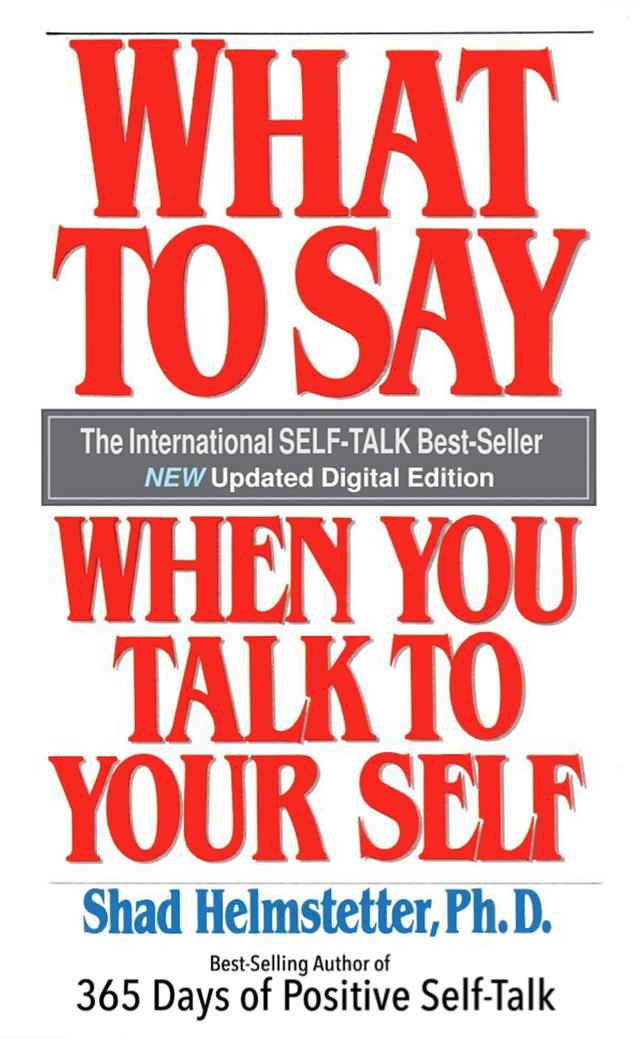
What to Say When You Talk to Yourself
What It’s About
The first popular book on self-talk as a programmable system. Shad Helmstetter argues you have an internal narrator running 50,000 thoughts a day, most of them negative, and walks through the 5 levels of self-talk that rewrite the script. The 1980s classic behind every modern affirmation, manifestation, and inner-coach framework.
Three Key Ideas
Programming Drives All Results
Every outcome traces back to your subconscious programming, so changing behavior durably requires changing the language you feed your mind first.
Five Levels of Self-Talk
Helmstetter ranks self-directed language from destructive "I can't" statements up to constructive "I am" declarations, and teaches you to live at Level IV.
Intentional Repetition Rewrites Habits
Present-tense, first-person scripts repeated daily for three weeks gradually replace old negative patterns with new automatic behaviors.
Read a Sample
What to Say When You Talk to Your Self
*Shad Helmstetter, 1990 (orig. 1986). The book that put "Self-Talk" on the self-help map and helped shape modern affirmation practice.*
A KönyvKlub English summary for working professionals who want a clearer head, better habits, and language they can actually use on themselves on a Tuesday.
---
A waitress drops a tray in Las Vegas
Who It’s For
- Anyone who wants to understand why positive thinking alone has never produced lasting change for them.
- Anyone who struggles with self-doubt, imposter syndrome, or a relentlessly critical inner voice.
- Anyone who wants a concrete, daily practice for building better habits and a stronger self-image.
- Anyone who manages or coaches others and wants to understand how inner language shapes performance.
About the Author: Shad Helmstetter
Shad Helmstetter is a behavioral researcher and writer who spent more than two decades studying why self-improvement programs fail to produce lasting change. He worked as a consultant, speaker, and trainer inside the success and self-help industry before writing this book in the mid-1980s.
He went on to found the Self-Talk Institute and wrote about a dozen books on the subject. This debut title became his defining work and has quietly shaped the affirmation and inner-coaching frameworks that followed it.