Ch. 1free to read
The Virgin Story
What It’s About
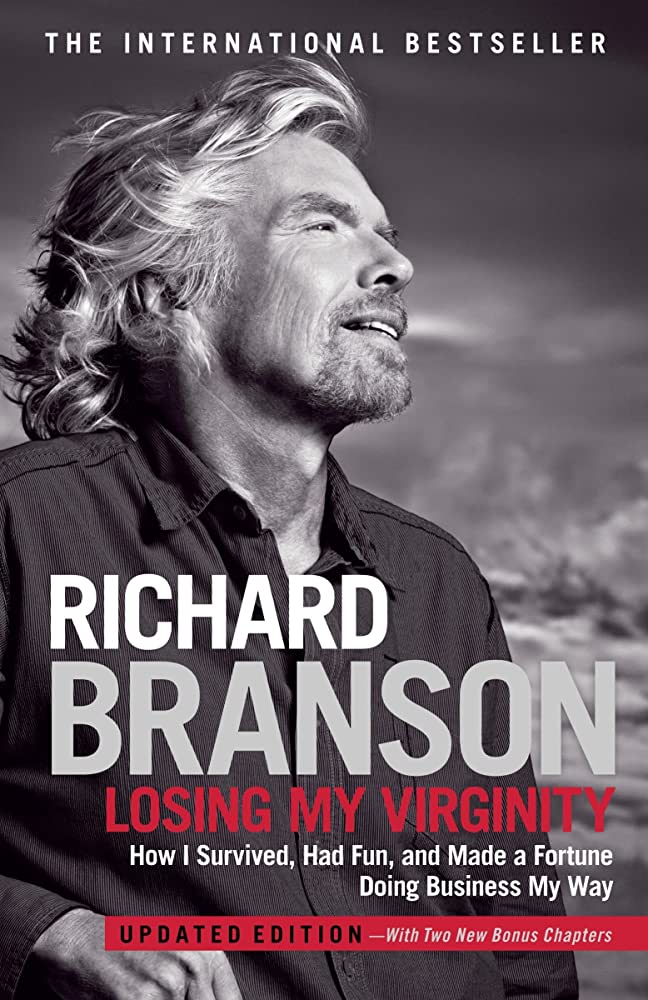
The story tells a large part of the writer's personal and business life. Richard Branson is a multi-billionaire and founder of the Virgin Group. But what many people don't know about him is that he was expelled from high school at 16 and suffers from dyslexia. In the forty years that have passed, he has never stepped down. Not even when he had to compete with big powers like British Airways and Coca-Cola. He won some competitions, lost some, but regardless of the outcome, he learned a lot about business.
Three Key Ideas
Listening as a Leadership Tool
Branson argues that active, disciplined listening is the single most underrated skill a leader can have, and that it is quietly disappearing.
Learning Through Failure
Every failed Virgin venture, from Virgin Cola to Virgin Brides, was treated as tuition, never a reason to stop attempting bold new things.
People Before Profits
Branson insists that staff come before customers and customers before shareholders, because loyalty and performance flow in exactly that order.
Read a Sample
The Virgin Way: Everything I Know About Leadership, by Richard Branson
The Sailor's Charts
Picture Richard Branson at the wheel of a powerboat. The throttle's wide open, and he's threading his way through the jagged rocks that ring Necker Island. Everyone on board is reading the same charts. The water's the same water, and the rocks sit exactly where they've always been. Yet most skippers will follow the marked channel, drop anchor in the same crowded bay as every other boat and call it a day. Branson doesn't. He uses those same charts to find the gaps nobody else bothers to look for, and he steers for the empty beach on the far side.
That image, more or less, is the whole book. For Branson, leadership isn't about having secret information. It's about what you do with the information everyone already has. Most people in business are dealt the same hand: the same market, the same customers, the same rulebook. And most of them end up in the same safe, forgettable place. A leader's job is to look at the familiar chart and ask a different question. Where's the beach nobody's reached yet, and what would it take to get there in one piece?
Branson's upfront about what this book isn't. It isn't a textbook. He admits, with some glee, that when he searched Amazon for the word "leadership," he found more than ninety thousand books on the subject, and he hadn't read a single one. He's dyslexic. He struggled in school, and he learns by doing rather than by reading. So you won't find a framework dressed up with footnotes and bibliographies here. What you get is the hard-won wisdom of a man who built one of the world's most recognizable brands across airlines, music, mobile phones, trains, spaceflight and a lot more. And he wrote it the way he thinks, which means in stories.
Who It’s For
- Anyone who leads a team and wants a practical, story-driven alternative to conventional management theory.
- Anyone who struggles with formal education or traditional career paths and is looking for proof that unconventional routes work.
- Anyone who wants to build a company culture where people genuinely enjoy their work and take creative risks.
- Anyone who is curious how one brand name stretched credibly across airlines, music, gyms, banking, and spaceflight.
About the Author: Richard Branson
Richard Branson is a British entrepreneur and the founder of the Virgin Group, which has grown to encompass more than 400 companies across industries including aviation, music, telecommunications, financial services, and commercial spaceflight. He left school at sixteen and launched his first business, Student magazine, shortly after.
He is widely known for his unconventional leadership style, his willingness to take on established competitors, and his public advocacy for social and environmental causes. Branson is dyslexic, and he has spoken openly about how that shaped his habits of listening, note-taking, and insisting on simplicity in business.