Ch. 1free to read
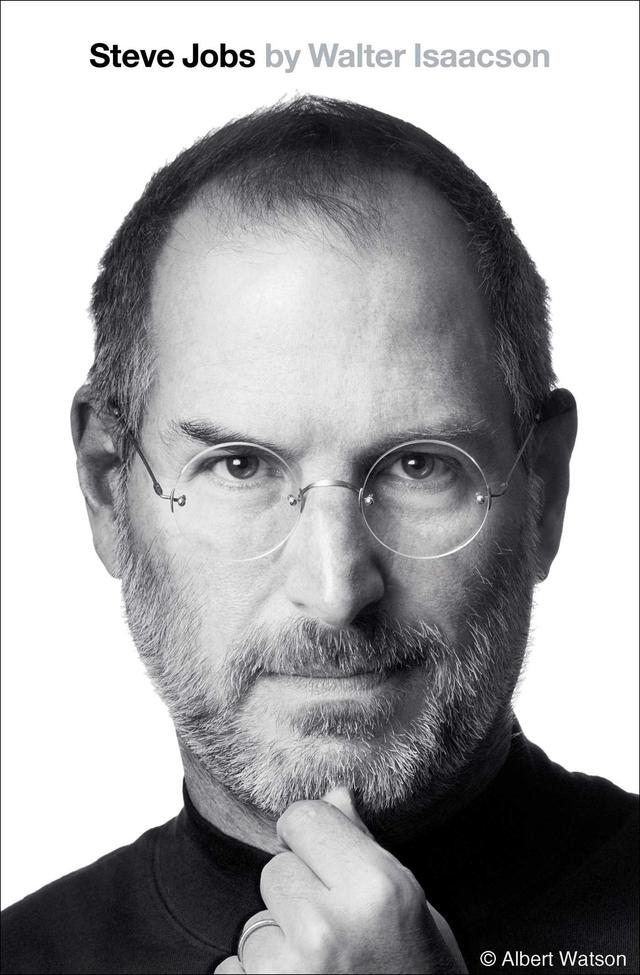
The Steve Jobs Biography
What It’s About
In a world where societies are building the economy of the digital age, Jobs is the greatest role model. Recognizing that the most effective way to create value in the 21st century is to combine creativity and technology, he has created a company that combines boundless imagination with unparalleled engineering excellence.
Three Key Ideas
Perfectionism as a System
Jobs's demand for hidden craftsmanship, from circuit board layouts to packaging corners, shaped every Apple product from the Apple II to the iPhone.
Reality Distortion and Leadership
Jobs convinced engineers to do the seemingly impossible by refusing to accept the world's limits, producing results that outlasted the pain he caused.
Focus by Subtraction
Cutting Apple's product line from forty items to four, and stripping every device to its essential experience, was the strategic move that saved the company.
Read a Sample
A Garage in Mountain View
Walter Isaacson's biography of Steve Jobs opens not with a triumph but with a chore. Paul Jobs, an engine mechanic who never finished high school, is showing his adopted son how to build a fence in their Mountain View yard. He tells the boy that the back of the fence, the side nobody will see, needs to be as carefully made as the front. "He loved doing things right. He even cared about the look of the parts you couldn't see." Fifty years later, an aging Steve Jobs would run his hand along that same fence and tell the story again. It is the lesson he would impose, year after year, on the engineers who designed Macintosh circuit boards, iPod packaging, and the unseen interiors of every Apple product.
That image, a perfectionist father teaching a perfectionist son about hidden craft, is Isaacson's way of telling you what the book is actually about. Yes, it is the story of six industries reshaped by one man: personal computing, animated movies, music, phones, tablets, and digital publishing. But the deeper argument is that Steve Jobs cannot be separated from his contradictions. He was thoughtful and callous, generous and cruel, almost mystical in his intuitions and brutally crude in his rejections.
The same conviction that made him insist on milled aluminum and rounded corners also made him deny paternity of his first daughter in front of a state court. You don't get one without the other. The biography is Isaacson's attempt to look at the whole person without flinching.
Three ideas from it are worth keeping a week from now. First, the man and the products can't be pulled apart: the intensity that left employees in tears is the same intensity that put a thousand songs in your pocket. Second, there's the fence itself, craft that cares about the side nobody sees. Third, Jobs refused to accept the world's report on what could be done, and that refusal produced both impossible results and real damage. These are a listening aid, not the book's own structure.
Who It’s For
- Anyone who wants to understand how design obsession and business strategy can reinforce each other.
- Anyone who is building a product and wants to see what uncompromising quality standards actually look like in practice.
- Anyone curious about the personal costs and contradictions behind Silicon Valley's most celebrated career.
- Anyone interested in how Apple was built, nearly collapsed, and came back to reshape the music, phone, and tablet industries.
About the Author: Walter Isaacson
Walter Isaacson is an American author and journalist best known for his in-depth biographies of transformative figures. He served as chairman and CEO of CNN and as editor of Time magazine before turning to full-time writing.
His subjects have included Albert Einstein, Benjamin Franklin, Leonardo da Vinci, and Elon Musk. For the Jobs biography he conducted more than forty interviews with Jobs directly and spoke to over a hundred friends, family members, rivals, and colleagues, making it one of the most extensively reported business biographies of its era.