Ch. 1free to read
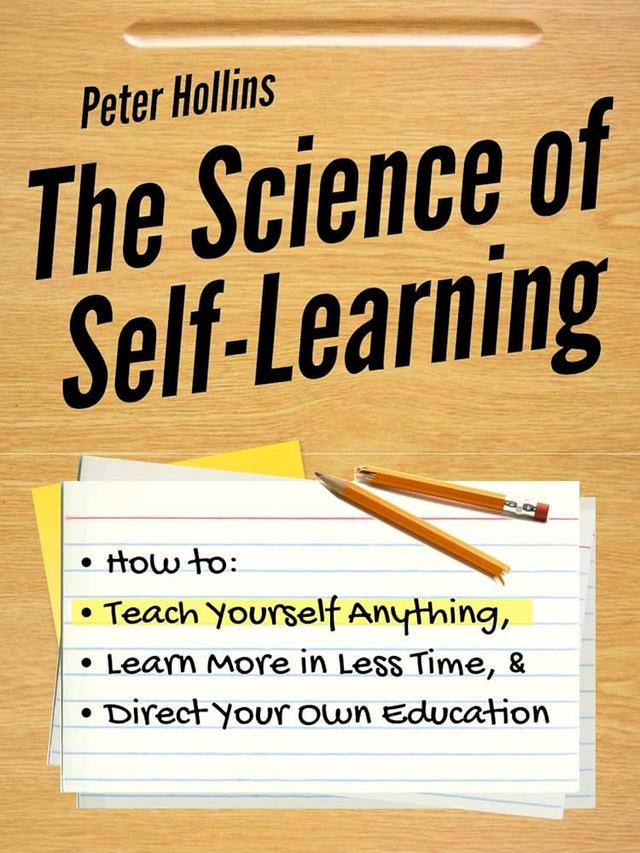
The Science of Self-Learning
What It’s About
To be a successful self-educating learner, you need discipline, motivation, as well as a well-defined approach and goal. Peter Hollins, a bestselling author, provides a guide that prepares the reader for the self-education journey, offering tools and tactics that make the process easier and more enjoyable.
Three Key Ideas
Self-directed Learning Advantages
Learning on your own terms removes institutional constraints, letting you study any subject as deeply or broadly as you choose.
The SQ3R Reading Method
Surveying, questioning, reading, reciting, and reviewing gives self-learners a structured roadmap for processing and retaining new information.
Growth Mindset and Motivation
Intrinsic motivation built on autonomy, mastery, and purpose sustains self-education far more effectively than external pressure does.
Read a Sample
The book in 3 sentences: It shows you how to stay motivated when learning wears you out. How well you can learn decides whether you sink or swim. The SQ3R method helps you learn to process different kinds of information. Favorite quotes: “Remember, the goal is not to be able to answer the questions, but to see what you can't answer.” “Self-discipline is needed in large doses because self-education is inherently not an enjoyable activity. It’s work.” “The whole world is my school, and all of humanity is my teacher.”
Self-directed learning offers many more advantages than traditional learning.
Formal education is about accreditation: you jump through institutional hoops to get a piece of paper that says you're qualified for a job. Schools follow set curriculums. You might be more interested in something else, but there's no time to dig deeper. When you teach yourself, though, you learn exactly what you want, as much as you want! As self-education grows more popular, the internet lets you learn almost anything.
To become an "autodidact" (someone who teaches themselves), you need discipline and a strategy. People often give up because they don't know where to start or because they feel overwhelmed. Both obstacles, though, can be overcome.
> This book guides you through the steps of finding inspiration for learning, planning, creating positive habits, and taking control of your own learning. >
Who It’s For
- Anyone who wants to learn new skills outside a formal classroom setting.
- Anyone who struggles to stay motivated when studying without deadlines or assignments.
- Anyone who reads slowly and wants practical techniques to absorb material faster.
- Anyone who feels overwhelmed starting a self-education project and needs a clear system.
About the Author: Peter Hollins
Peter Hollins is a bestselling author who writes practical self-help and personal development books. His work focuses on psychology, productivity, and applied learning strategies for everyday readers.
Hollins draws on research in cognitive science and behavioral psychology to offer straightforward, actionable guidance. He has published numerous titles aimed at helping people build discipline, sharpen their thinking, and take control of their own growth.