Ch. 1free to read
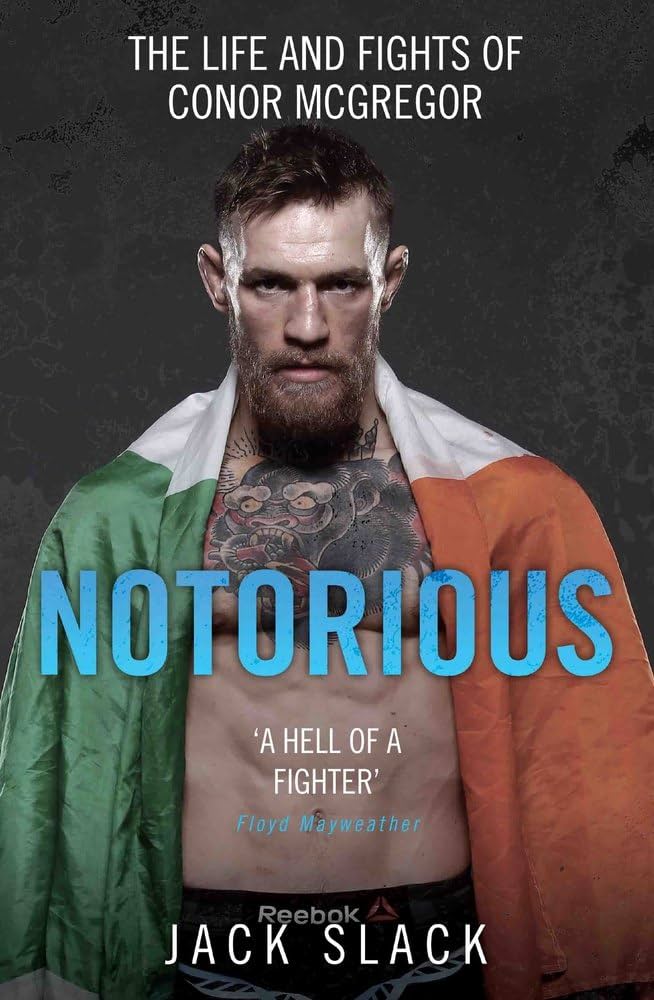
The Notorious
What It’s About
Conor McGregor is the brightest star in combat sports. In three years, he achieved more in the Ultimate Fighting Championship than anyone else in the organization’s twenty-year history. In 2013, he became the first to hold two world championship titles simultaneously, with a series of knockouts that shook the world first in featherweight and then in lightweight. But no matter how effortless McGregor’s feats may have seemed, his journey was far from smooth, and his success was by no means guaranteed.
Three Key Ideas
Geometry of the Southpaw Stance
McGregor's rear left hand sat down the open centre line of a southpaw-orthodox match-up, making it a near-unblockable counter from the start.
Counter-Punching as a System
McGregor built his entire offense around drawing strikes then landing simultaneously, turning opponents' aggression into the most dangerous moment for them.
Psychology and the Art of the Sell
Calculated trash talk served to make opponents fight on emotion and abandon their game plans, turning marketing into a tactical weapon inside the cage.
Read a Sample
Thirteen Seconds
Picture the loudest arena in combat sports, December 2015, and a man who had not lost a fight in a decade. José Aldo was, by common agreement, the greatest featherweight who had ever lived. He had ruled the division for six years. He had broken wrestlers, dismantled strikers, and absorbed everything the sport could throw at him. Then the bell rang, the Irish fighter in front of him threw a single left hand, and thirteen seconds later Aldo was face down on the canvas. The whole reign, gone in less time than it takes to read this sentence.
How does that happen? How does a plumber's apprentice from a working-class corner of Dublin, a man who spent years collecting welfare checks and bumming rides to the gym, end up flattening the best fighter on the planet and then becoming the richest man in the sport?
Jack Slack sets out to answer that question in *Notorious*. And here is the first thing to understand about the book: it is not really a biography in the usual sense. Slack barely touches McGregor's love life or his childhood scrapes except where they explain something. What he gives you instead is a technical autopsy of every important fight McGregor ever had, wrapped inside the story of how one stubborn young man dragged an entire sport up the mountain behind him. It is part fight manual, part history lesson, part character study. By the end you don't just know what McGregor did. You understand, punch by punch, why it worked.
Three ideas are worth carrying through all those fights. First, McGregor's gift was never raw athleticism. It was understanding: the geometry of stances and angles, of distance, and of the counter punch. Second, there's the mantra from his coach's gym that followed him for the rest of his career: we win or we learn. Third, there's his mouth. McGregor said his trash talk existed only to push the fight and push the numbers, and Slack writes that its real goal is to make an opponent fight on emotion.
Who It’s For
- Anyone who wants to understand the technical geometry behind elite striking and why stances matter at the highest level.
- Anyone who is curious how a working-class kid with no resources built a world-championship career through obsessive craft.
- Anyone who wants to see how personal branding and athletic performance can be engineered together rather than kept separate.
- Anyone who enjoys sports writing that uses one fighter's story to teach the full history and mechanics of a combat sport.
About the Author: Jack Slack
Jack Slack is a combat sports analyst and writer known for detailed technical breakdowns of mixed martial arts and boxing. He is best known for his long-running series of fight analyses that dissect footwork, stance geometry, and strike selection in a way accessible to general readers.
He writes from a practitioner's perspective and draws on the history of boxing, wrestling, and kickboxing to explain what happens inside the cage. His work on fighters including Georges St-Pierre and Anderson Silva established him as one of the most respected technical voices in MMA writing.