Ch. 1free to read
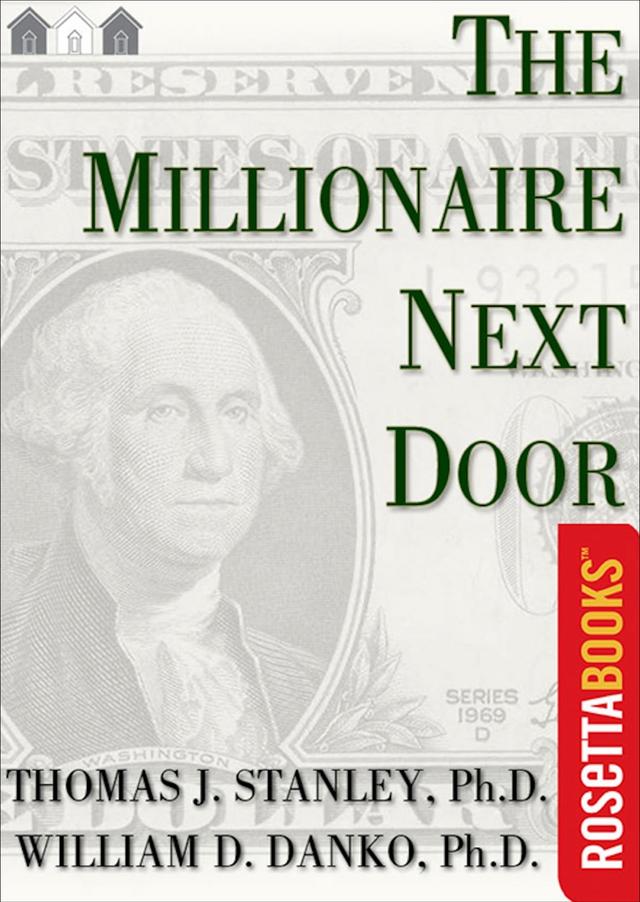
The Millionaire Next Door
What It’s About
Most American millionaires don't look like millionaires. Thomas Stanley's classic study reveals the actual habits, neighborhoods, and spending patterns of self-made millionaires, and how they differ from the lifestyle-fueled high earners we usually picture. Frugal, methodical, surprisingly ordinary. The book that quietly shaped modern personal finance advice.
Three Key Ideas
Income Does Not Equal Wealth
High earners who spend to signal status consistently accumulate far less than modest earners who save and invest first.
Frugality as an Active Choice
Millionaires in the study lived well below their means not from necessity but because they valued financial independence over social appearance.
Equity Over Labor Income
Small business owners who built ownership stakes in unglamorous industries reliably outpaced high-salary professionals with no equity.
Read a Sample
The Millionaire Next Door
Picture the kind of millionaire a marketing professor named Thomas Stanley kept finding in his research on wealthy Americans. He wears a scuffed pair of work boots. His jeans are faded. His truck, parked outside, is a used pickup with a lot of miles on it. His net worth runs into the millions.
He has never taken a luxury vacation. He has never owned a boat. He drives himself to work each day in that truck, which he paid for in cash. He has no patience for financing a depreciating asset. He isn't retired, and he doesn't plan to retire soon. He runs a small business installing commercial HVAC units and has done so for decades. He can tell you what he paid for every suit he owns, and it was never much. He has never paid attention to watches.
Stanley had interviewed hundreds of people like him. And hundreds of others who were nothing like him: physicians driving German cars, and attorneys whose mahogany home offices cost more than the HVAC contractor's first house. The contrast was the point. Stanley and his research partner William Danko had spent more than twenty years studying where wealth actually lives in America. They had conducted more than 1,000 in-depth interviews, run dozens of focus groups, and analyzed questionnaires sent to households identified as likely millionaires through proxy indicators: neighborhood data, business ownership records, asset filings. What they found turned most assumptions about money and success completely upside down.
The Millionaire Next Door was published in 1996. It went on to sell more than four million copies, spent over a hundred weeks on bestseller lists, and is still regularly assigned in personal finance courses three decades after publication. Its central argument is deceptively simple: the behaviors that produce wealth and the behaviors that signal wealth are almost perfectly opposed. The people most Americans assume to be wealthy (the ones living in the right zip codes, driving the right cars, wearing the right clothes) are frequently not. And the people who are genuinely wealthy are, in most cases, completely invisible. They live next door. They drive used pickups. They are, statistically, far more likely to be welding-supply business owners than investment bankers.
Who It’s For
- Anyone who earns a good income but wonders why their savings never seem to grow.
- Anyone who wants to understand the real habits and lifestyles of self-made millionaires.
- Anyone who is deciding between building a business and climbing a corporate career ladder.
- Anyone who questions whether the lifestyle they are working toward is actually producing wealth.
About the Author: Thomas Stanley, William Danko
Thomas Stanley was a marketing professor at Georgia State University who spent more than two decades researching the actual financial behaviors of wealthy Americans. He conducted over a thousand interviews and focus groups to produce the data behind this book. He died in 2015.
William Danko taught at the University at Albany, SUNY, and co-led the research with Stanley. Stanley's daughter Sarah Stanley Fallaw continued their work and published a follow-up volume in 2018 confirming that the core findings had held across the changed economic landscape.