Ch. 1free to read
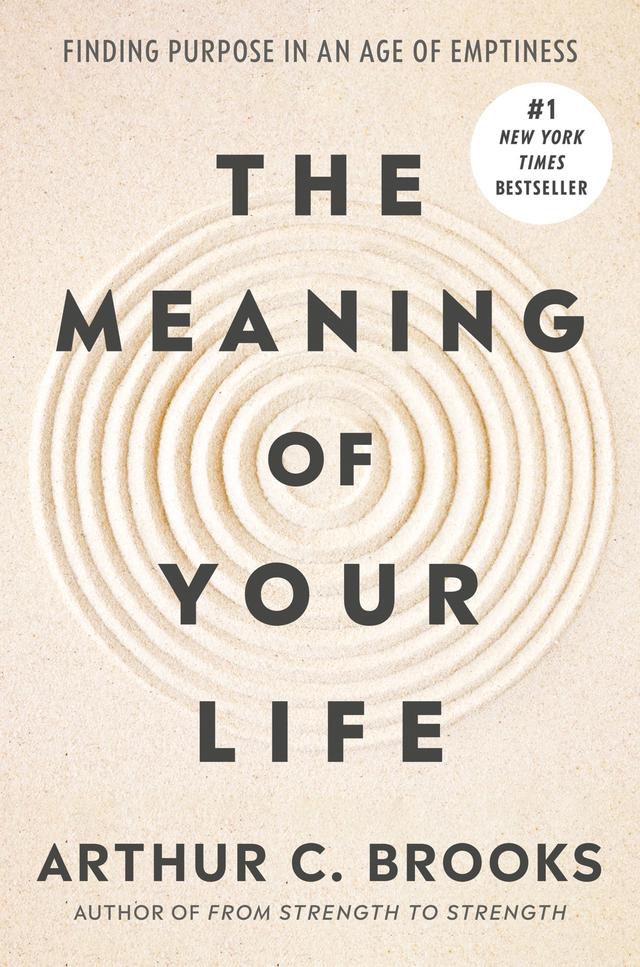
The Meaning of Your Life
What It’s About
Arthur C. Brooks diagnoses "the age of emptiness": young adults check every box of success on paper, yet feel hollow inside. The protein of happiness is missing, and that protein is meaning. Brooks breaks meaning into three components — coherence, purpose, significance — and offers concrete practices to find your own why. Closes with seven rules and a "Start here" set of actions for tomorrow morning.
Three Key Ideas
Three Pillars of Meaning
Meaning rests on coherence, purpose, and significance, and the collapse of the third drives the modern epidemic of emptiness among high achievers.
Left Brain Dominance Crisis
Modern life has handed control to the problem-solving left hemisphere, starving the right hemisphere that handles love, beauty, and meaning.
Beauty and Service as Antidotes
Actively cultivating moral beauty, nature, art, and genuine service to others are concrete practices that restore a sense that life matters.
Read a Sample
The Meaning of Your Life
A repairman who never fixed his own sink
Marc is 32, exactly the kind of person magazines like to put on the page. College degree, hard worker, athletic, eats clean. Data analyst at a large company. He pulled himself up alone (parents divorced early, poor childhood) and yet here he is, financially stable. On paper, all good.
Then one evening he goes on a date with a woman from an app. Over dinner she mentions her kitchen garbage disposal is jammed. Marc drives over that night and fixes it. It's late when he gets home, but something has stirred in him. For weeks he chews on the feeling that washed over him when she thanked him. What made him happy wasn't being a repairman for an evening. It was being needed by someone.
A year later, Marc's own disposal jams. It doesn't even occur to him to fix it. He stands in the kitchen, stares at the drain, and thinks how empty everything feels. Fifty dates later, still nobody in his life. He works from home; his coworkers are Zoom tiles. He often goes days without speaking to anyone in person. He listens to podcasts of other people talking. He whispers a phrase he made up: "social pornography."
Who It’s For
- Anyone who has checked every box of career success and still feels hollow inside.
- Anyone who wants a research-backed framework for understanding why modern life feels like a simulation.
- Anyone who is ready to trade dopamine-driven busyness for relationships, beauty, and genuine purpose.
- Anyone who senses that phones and social media are symptoms of a deeper problem worth diagnosing.
About the Author: Arthur C. Brooks
Arthur C. Brooks is a social scientist, professor at Harvard Business School and Harvard Kennedy School, and a contributing writer at The Atlantic. His work focuses on happiness, human flourishing, and the intersection of social science and lived experience.
Before moving into academia and writing, Brooks led the American Enterprise Institute for a decade. He has authored multiple books on happiness and meaning, and he draws on years of research and personal stories to translate complex findings into practical guidance.