Ch. 1free to read
The Good Life
What It’s About
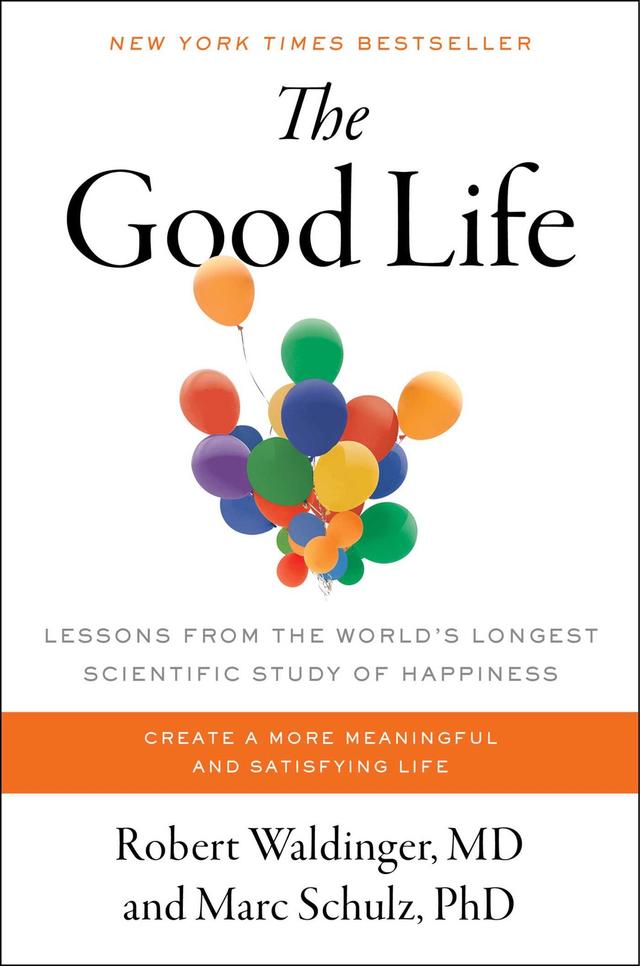
A Harvard study has followed people for 84 years and found one truth: good relationships make us happier and healthier. Not money, not career, but the people around us. You'll discover why we drift away from real connection and what you can do tomorrow to build a richer life.
Three Key Ideas
Relationships Predict Health and Happiness
People most satisfied with their relationships at fifty were the healthiest at eighty, in both body and mind.
Loneliness Is a Health Risk
Chronic loneliness raises mortality risk to a level comparable to smoking fifteen cigarettes a day, affecting hundreds of millions.
Social Fitness Requires Deliberate Practice
Like muscles, neglected relationships waste away, and tending them demands the same consistent effort as physical exercise.
Read a Sample
The Good Life: Summary
On a rainy day in 1941, two researchers climbed three flights of stairs in the grimy stairwell of a Boston tenement. They knocked on the door of an apartment with no running water and asked a fourteen-year-old boy, Henry Keane, whether he'd take part in a scientific study. His parents were suspicious, but in the end they said yes. Nobody could have guessed what would become of this boy. He'd turn out to be one of the central figures in the longest scientific study in the world. And eighty years later, his life would help answer one of the oldest human questions: what makes a life good?
Ask a hundred young people today what they want most, and most of them will give you the same answer: money and fame. In a 2007 survey, three quarters of young adults said their top goal was to get rich, and half of them wanted to be famous. It sounds logical. There's just one problem. According to the most thorough study ever done, these things tell us almost nothing about whether you'll be happy. The single most reliable discovery of the longest scientific study is that good relationships make us healthier and happier. That's it. Not wealth, not career, not fame. The people around us.
This book grew out of a study that has been running for eighty-four years, following the lives of more than thirteen hundred people across three generations. Robert Waldinger and Marc Schulz, the study's current directors, share what they've learned from these lives. You'll get answers to three big questions. Why do relationships matter more than anything else? How did we drift so far from what actually makes us happy? And most important, what can you do tomorrow morning to make your life richer, no matter how old you are right now?
Who It’s For
- Anyone who suspects that career success and money have not brought the happiness they expected.
- Anyone who feels disconnected or lonely despite being surrounded by people in daily life.
- Anyone who wants a science-backed framework for improving their closest relationships at any age.
- Anyone who has drifted from old friends or family and is wondering whether it is too late to rebuild those bonds.
About the Author: Robert Waldinger, Marc Schulz
Robert Waldinger is a psychiatrist at Harvard Medical School and the current director of the Harvard Study of Adult Development, one of the longest-running studies of adult life ever conducted. He is also a Zen priest and a practicing clinician whose work focuses on the science of well-being and human connection.
Marc Schulz is a psychologist and associate director of the same Harvard study. He teaches at Bryn Mawr College and researches how people regulate emotions and navigate close relationships across the lifespan. Together, Waldinger and Schulz draw on decades of longitudinal data to show what genuinely makes a life go well.