Ch. 1free to read
The Choice
What It’s About
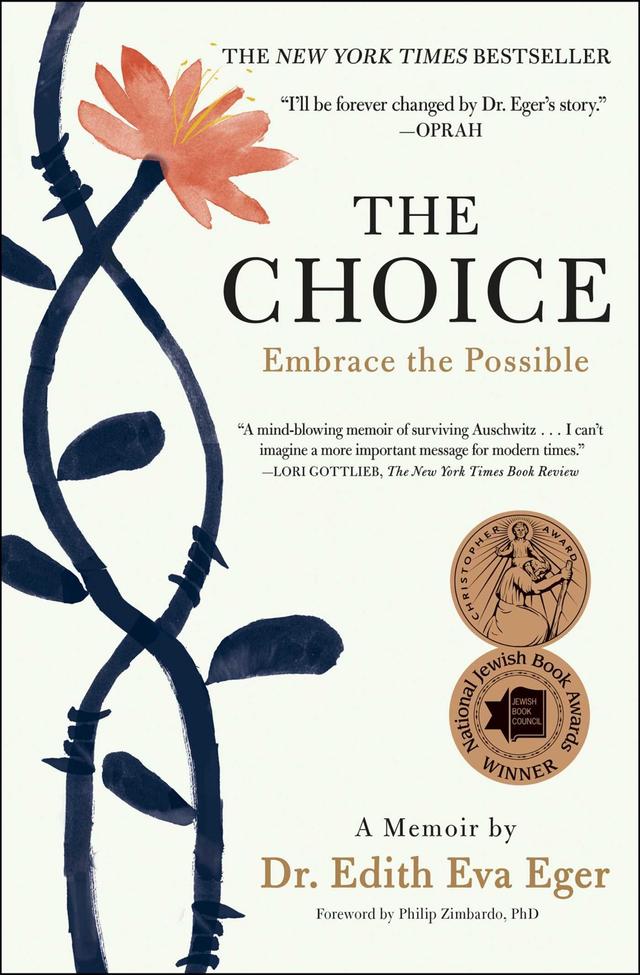
Holocaust survivor and psychologist Edith Eger shares her extraordinary journey from Auschwitz to becoming a pioneering trauma therapist, weaving memoir with hard-won wisdom on healing. A profound exploration of how we choose freedom over victimhood, finding agency even in our darkest moments and turning suffering into a path toward meaning.
Three Key Ideas
Victimization Versus Victimhood
Being harmed is something that happens to you, but choosing to live inside victimhood is a decision you can, over time, unmake.
Choice as a Daily Practice
Freedom is not a single grand decision but a continuous habit of small choices, each one rebuilding the muscle the next larger choice will need.
Self-Forgiveness as the True Key
The most stubborn prison is survivor's guilt, and genuine healing requires forgiving yourself for surviving, not forgiving those who hurt you.
Read a Sample
The Choice: summary
A loaded gun, a frozen captain, and a 53-year-old therapist who refused to be afraid
In 1980, an Army captain named Jason Fuller walked into Edith Eger's office in El Paso. He sat down, said almost nothing and stared past her. Under his shirt he had a loaded service weapon. Eger could sense something was wrong, the way you feel a storm coming on the back of your neck. She didn't ask the standard intake questions, and she didn't reach for the panic button. She stood up and said, "We're going for a walk." She put a leash on her white poodle, took the captain by the elbow and led him into a public park. There, a man with a gun is less likely to shoot a woman, because too many strangers are watching.
By the end of the afternoon Jason Fuller had started to talk. Years later Eger learned that if she hadn't reached him that day, he would have driven home and killed his wife, and almost certainly ended up on death row. What gave a small Hungarian woman the nerve to walk a stranger and his hidden gun into a public park? She had survived Auschwitz. On her first night there, the same night her mother was gassed, she had danced for Josef Mengele and discovered that even in hell a person could choose where to put her mind. By the time Jason Fuller sat down in her office, she had spent decades turning that one discovery into a life's work.
This summary takes you through the book Eger wrote about that work. It tries to answer three questions she's been asking patients and audiences for fifty years. What's the difference between being a victim and choosing victimhood? Where exactly is the door out of the prison of your own past? And what does a person actually do, on some ordinary Tuesday morning, once they've decided to stop being run by something that's already happened?
Who It’s For
- Anyone who has survived trauma and wonders why healing feels harder than it should.
- Anyone who wants to understand how psychology and memoir can teach the same lesson at once.
- Anyone who feels trapped by the past and is looking for a practical, honest path toward agency.
- Anyone who has read Viktor Frankl or Bessel van der Kolk and wants a warmer, more personal companion to those books.
About the Author: Edith Eva Eger
Edith Eva Eger is a Hungarian-born psychologist and Holocaust survivor who was deported to Auschwitz at sixteen. After liberation she emigrated to the United States, earned a doctorate in psychology, and built a clinical practice in El Paso, Texas, working with trauma patients including military veterans and combat survivors.
She has lectured widely at military bases, prisons, and universities, and is one of the most recognized voices on the psychology of choice, resilience, and recovery from trauma. She completed her doctoral degree in her forties while raising three children, and her first book was published when she was in her late eighties.