Ch. 1free to read
The Art of War
What It’s About
The 2,500-year-old book that still defines strategy. Sun Tzu's military treatise distills warfare into 13 chapters on positioning, deception, terrain, and timing. The lessons translate directly to negotiation, leadership, competition, and any context where you face an opponent. The shortest, densest strategy book ever written.
Three Key Ideas
Plan Before You Fight
Thorough calculations and intelligence-gathering before any engagement determine the outcome more than strength or courage on the battlefield.
Win Without Fighting
The highest form of strategy is defeating an opponent by disrupting his plans or exploiting undefended ground, so direct conflict never becomes necessary.
Adapt to Terrain and Timing
There are no universal tactics, the commander who reads each situation accurately and changes approach accordingly is the one who survives.
Read a Sample
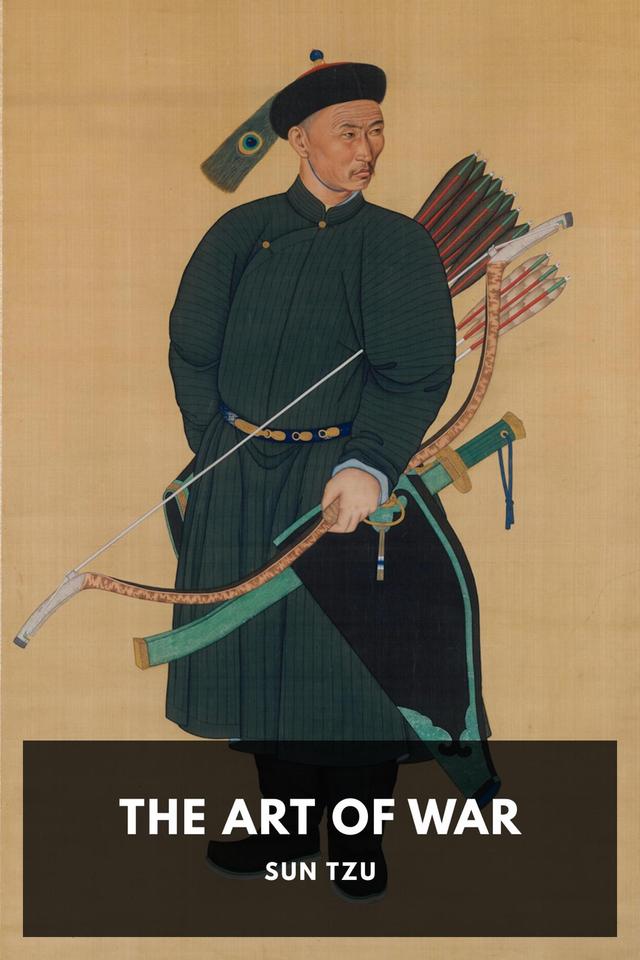
The Art of War
By Sun Tzu, translated by Lionel Giles (1910). Barnes & Noble Classics edition with editorial commentary, introduction and notes by Dallas Galvin.
The day Sun Tzu executed the king's two favorites
The story is the founding myth of strategic thinking, and like most founding myths, it has the grain of cruelty that makes it stick.
Sun Tzu, then a wandering military adviser in the state of Wu, had written down his thirteen chapters and sent them to King Ho Lu. The king read them, was intrigued, and summoned the author. He wanted a demonstration. Could Sun Tzu, the king asked, drill any group of people into a disciplined army? Sun Tzu said yes. The king, with the sly humor of a sovereign who has already decided how to make a point, offered him the women of his own harem. One hundred and eighty concubines. Sun Tzu accepted.
Who It’s For
- Anyone who competes in a market where the larger, better-resourced side usually wins.
- Anyone who wants a sharper framework for knowing when to engage and when to walk away.
- Anyone who leads a team and needs to balance discipline with care without sliding into either harshness or sentimentality.
- Anyone who has read the popular quotes and wants to understand what the actual book argues.
About the Author: Sun Tzu
Sun Tzu is the honorific title for Sun Wu, a military adviser born around 544 BC in the Chinese state of Chi. He served as a general for King Ho Lu of Wu from around 510 BC and is credited with writing the thirteen chapters that make up The Art of War during the Spring and Autumn period, a brutal era in which more than a hundred small Chinese states ground each other down over generations.
Authorship has been debated by scholars, and some argue the text was compiled over time by a military clan rather than a single person. What is not disputed is the text's antiquity. A copy buried around 140 BC was excavated in Shantung province in 1972. The English translation most readers know, and from which nearly all business and popular quotations derive, was published in 1910 by the British sinologist Lionel Giles.