Ch. 1free to read
Supercommunicators
What It’s About
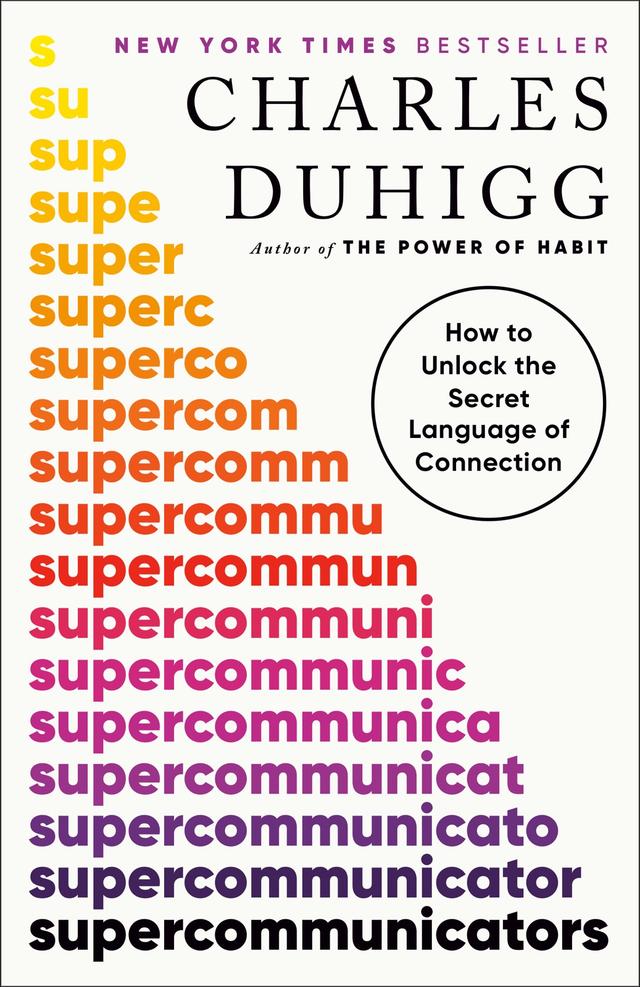
You think you're having a conversation with someone, but you're often talking past each other. Charles Duhigg reveals that most conflicts happen because people are having different conversations at the same time: one person seeks solutions while the other needs comfort; one wants understanding while the other craves safety. Learn to align with the person across from you, and suddenly the wall comes down. This book shows that great communication isn't a talent you're born with—it's a skill set anyone can master.
Three Key Ideas
Three Simultaneous Conversations
Most communication failures happen because people are having different conversations at once, practical, emotional, or identity-based, without realizing it.
Neural Synchrony and Connection
When people genuinely connect, their brains physically synchronize, and the most effective communicators achieve this by asking questions and adjusting their style.
Vulnerability as the Catalyst
Sharing honest, personal truths creates the safety that dissolves resistance, as demonstrated by real cases from CIA recruiting to vaccine hesitancy.
Read a Sample
Supercommunicators: Summary
A young CIA officer is sitting at a table in a European restaurant, and he knows he's about to lose everything. Across from him sits Yasmin, an official from a Middle Eastern ministry who was willing to help him only days ago. Then he admitted that he actually worked for American intelligence. Her eyes went wide, she gripped the tablecloth, and she shook her head as she cried. "People get murdered for this." The connection is dead. Still, Jim Lawler gets one last dinner. He jokes, he tells stories, he tries to lighten the mood. None of it works. Silence settles over the table.
That's when Lawler stops trying. No more jokes, no more stories. Instead he does something that goes against every textbook: he talks honestly about his own failures. How the KGB nearly recruited him, instead of the other way around. How afraid he is of getting caught. How ashamed he feels. This isn't manipulation, because she's already said no. All that's left is two people setting two truths side by side. After a long silence, Yasmin speaks: "I can do this. I can help you." For two decades she was one of the best sources in the region, and she was never discovered. Years later, when someone asked her why she'd changed her mind, even she couldn't say exactly. She'd suddenly felt safe.
That's what Charles Duhigg's book is about: the moment a conversation stops being an exchange of words and becomes a real connection, and the surprising news that this isn't an inborn talent. It can be learned. The book goes after three big questions. Why do we talk right past each other even when we never stop talking? What do exceptionally good communicators do by instinct? And how can anyone, including you, learn to do it, starting tomorrow morning?
Who It’s For
- Anyone who often feels misunderstood despite talking at length with others.
- Anyone who leads teams, manages conflict, or needs to persuade people with different values.
- Anyone who wants to have more meaningful conversations instead of surface-level exchanges.
- Anyone who has ever struggled to connect across political, cultural, or personal divides.
About the Author: Charles Duhigg
Charles Duhigg is a Pulitzer Prize-winning journalist and bestselling author best known for The Power of Habit. He spent years at The New York Times covering business, science, and human behavior before turning his focus to what makes communication and decision-making work in practice.
His books translate complex psychological and neuroscientific research into practical, story-driven guidance. Supercommunicators continues his signature approach of grounding big ideas in vivid real-world examples drawn from medicine, law enforcement, and everyday relationships.