Ch. 1free to read
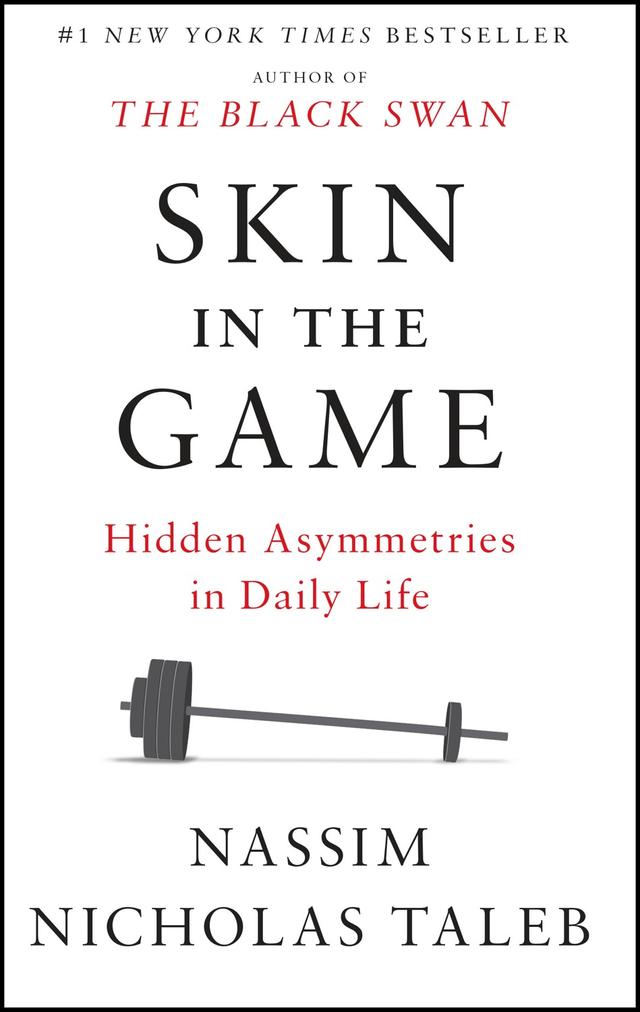
Skin in the Game
What It’s About
Nassim Taleb argues that decisions are honest only when the decider shares the downside, and dishonest the moment risk and reward are decoupled. From bureaucrats and macro forecasters to surgeons and city planners, he names the people who get the upside while someone else absorbs the loss. Provocative, occasionally rude, and oddly liberating once you internalize the lens.
Three Key Ideas
The Bob Rubin Trade
When decision-makers collect the upside but offload losses onto others, their judgment corrupts because they face no personal penalty for being wrong.
The Minority Rule
A small, inflexible minority can impose its preferences on a much larger flexible majority, making history driven by the most intransigent, not the most numerous.
Ergodicity and Irreversible Ruin
Risks that can produce permanent, unrecoverable harm must be avoided even when the expected value looks positive, because ensemble averages do not apply to individual trajectories.
Read a Sample
Skin in the Game
The news came on a Sunday in November 2008. Robert Rubin, former U.S. Treasury Secretary, was then a senior advisor at Citigroup when the federal government announced a rescue of the bank. It brought the government's capital injections into the bank to $45 billion, plus guarantees on about $306 billion of assets. Citigroup had gorged itself on mortgage-backed securities. The bets had curdled. Taxpayers would foot the bill. Rubin had collected more than $120 million in pay from Citigroup over the preceding decade. He would not be asked to return a dollar of it.
Nobody went to prison. Nobody got clawed back. The people who caused the damage walked away with their winnings intact, and the losses were distributed to strangers who had never signed up to play. A trader at a hedge fund who is wrong loses his job and possibly his shirt. A senior banker who is catastrophically wrong gets a government bailout and keeps his mansion in Connecticut. This asymmetry (reward without risk, upside without downside) is what Nassim Nicholas Taleb spent a career identifying as one of the most corrosive forces in modern civilization.
Skin in the Game, published in 2018 as the fifth entry in Taleb's Incerto series, is his attempt to systematize that intuition into a philosophy. It follows Fooled by Randomness, The Black Swan, The Bed of Procrustes, and Antifragile. The dedication page offers two names: Ron Paul, "a Roman among Greeks," and Ralph Nader, "Greco-Phoenician saint." The pairing is deliberate. Paul and Nader agree on almost nothing politically. But both have spent decades fighting for accountability, for the idea that the people making decisions about your life ought to have something personal riding on the outcome. That convergence across the political spectrum is itself a hint that the principle Taleb is after cuts below ideology.
Who It’s For
- Anyone who wants a sharper framework for evaluating whose advice to trust and whose to ignore.
- Anyone who has wondered why credentialed experts keep getting things wrong without any consequences to their careers.
- Anyone who makes investment, business, or policy decisions and wants to understand hidden asymmetries in risk.
- Anyone who is curious about how small, committed minorities shape social outcomes that look like majority consensus.
About the Author: Nassim Nicholas Taleb
Nassim Nicholas Taleb is a former derivatives trader turned scholar and author best known for his Incerto series, which includes Fooled by Randomness, The Black Swan, Antifragile, and Skin in the Game. He spent decades working in quantitative finance before turning to writing and research full time.
His work focuses on probability, uncertainty, and how individuals and institutions misunderstand risk. He is a Distinguished Professor of Risk Engineering at New York University's Tandon School of Engineering. His ideas on tail risk, fragility, and the limits of statistical models have influenced finance, policy, and public health.