Ch. 1free to read
Permission Marketing
What It’s About
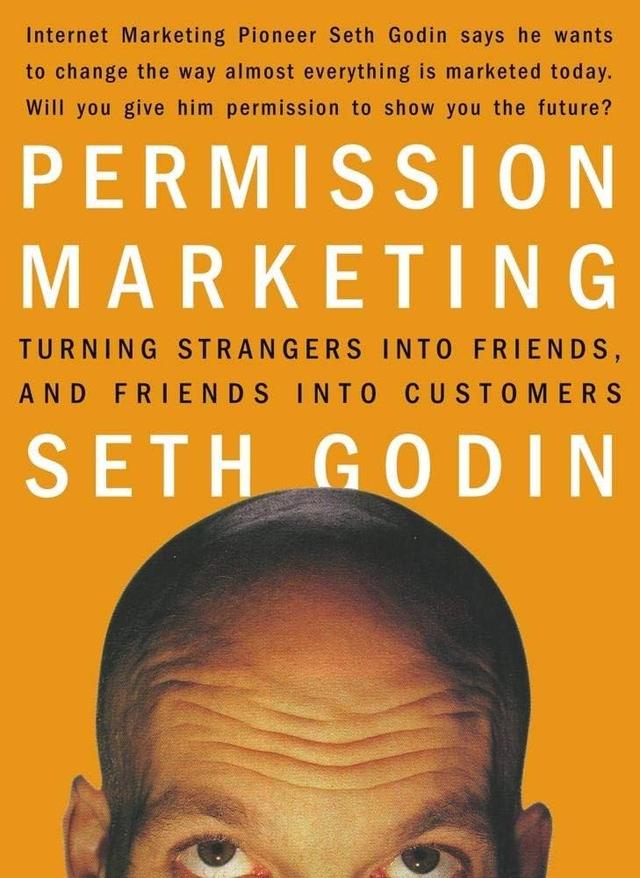
Permission Marketing confronts the conflicts and challenges that modern marketers face in the digital age, offering a viable alternative through this book. It explains how advertising space becomes saturated and how this makes traditional advertising ineffective. The author suggests that savvy marketers should no longer simply interrupt consumers, but instead invite them to voluntarily dedicate their time and become active participants in the marketing process.
Three Key Ideas
Permission vs. Interruption Marketing
Traditional advertising forces itself on strangers, while permission marketing builds dialogue only with people who have invited contact.
Anticipated, Personal, Relevant
Every effective permission message meets three criteria: the recipient expects it, it speaks to them individually, and it addresses something they already care about.
Permission as a Scalable Asset
Standing invitations from customers compound over time, enabling low-cost frequency and deeper sales without chasing new strangers.
Read a Sample
The Cost of Being Ignored
Three thousand. That's how many marketing messages the average person waves away between waking up and going to bed, or about a million a year. By the time you've finished this sentence, half a dozen more have tried to grab your sleeve, and you've batted them away without a thought. That's the world Seth Godin was looking at in 1999 when he sat down to write "Permission Marketing," and things have only gotten more acute since.
His case is blunt. The whole machinery of modern advertising rests on one rude assumption: that strangers owe you their attention. That goes for the Super Bowl spot, the highway billboard, the radio jingle, and the catalog you tossed straight into the recycling bin. They don't, and they never did. It's gotten so expensive to pretend otherwise that the system is buckling under its own weight, and the book is Godin's proposal for what to build in its place.
What he's proposing isn't a tactic, a clever spin on copywriting, or a new media channel. It's a redesign of the entire relationship between a company and the person it wants as a customer. You stop ambushing strangers and start dating them. You earn the right to keep talking. You measure your asset in standing invitations, not in eyeballs. By the time he's done, the cozy assumptions of the old advertising business look more like a dying industry than a healthy one. A quieter, slower, far more profitable model has taken its place.
The Catch-22 That Broke Mass Advertising
Who It’s For
- Anyone who runs digital marketing campaigns and finds ad spend delivering diminishing returns.
- Anyone who wants to build a loyal customer base rather than constantly hunting for new buyers.
- Anyone who manages email lists, newsletters, or subscription products and wants to deepen engagement.
- Anyone who is launching a new brand or product and needs a cost-effective alternative to mass advertising.
About the Author: Seth Godin
Seth Godin is an American entrepreneur and author who built his reputation as one of marketing's most influential thinkers. He founded Yoyodyne, an early email marketing company, which was acquired by Yahoo in 1998, and later launched Squidoo. He writes one of the most widely read marketing blogs on the internet.
Godin has written more than twenty books on marketing, leadership, and the spread of ideas. Permission Marketing, published in 1999, was his first major bestseller and laid out a framework that shaped how an entire generation of marketers thought about customer relationships and the internet.