Ch. 1free to read
Making Great Relationships
What It’s About
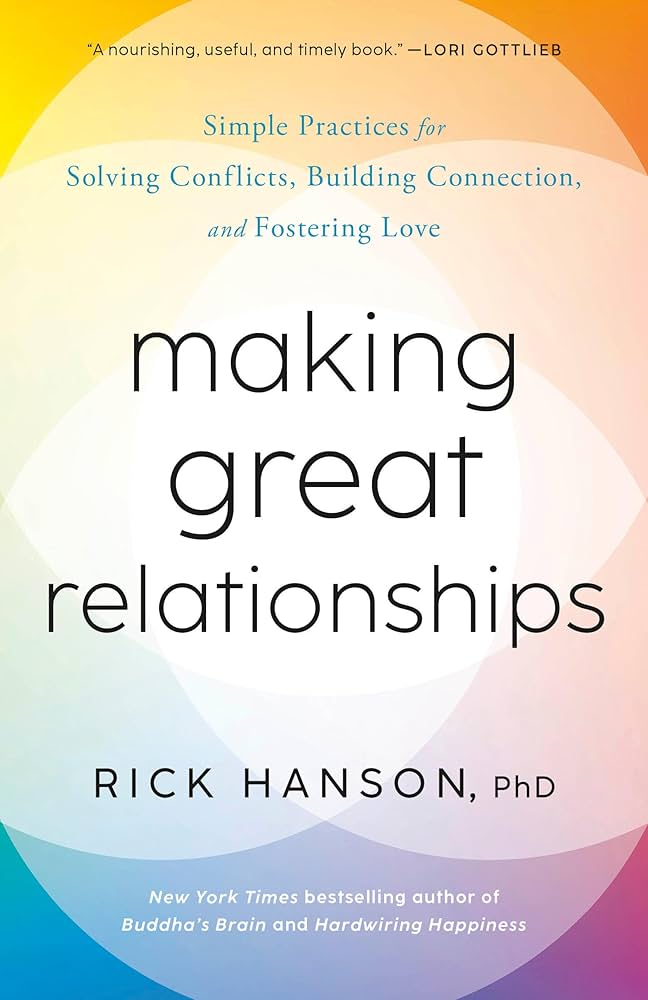
In the book Making Great Relationships, we explore how building a better relationship with yourself lays the foundation for better relationships with others, as well as proven methods for handling challenging relationships and effective communication techniques for resolving conflicts.
Three Key Ideas
Inner Work Comes First
Building a loyal, self-compassionate relationship with yourself is the foundation that makes every other relationship more stable and generous.
Green Zone vs. Red Zone
The nervous system's safety, satisfaction, and connection needs drive whether you respond to others with calm openness or reactive defensiveness.
Wise Speech Repairs Relationships
Choosing words that are true, well-timed, and not harsh does more to repair lasting bonds than any single grand gesture or apology.
Read a Sample
The Two Wolves
A Cherokee elder once told her granddaughter that two wolves lived in her heart, a wolf of love and a wolf of hate, and that everything in her life depended on which one she fed each day. Rick Hanson opens *Making Great Relationships* with that small story because it's the book's whole argument in a single image. Relationships aren't handed to us by luck, chemistry or the family we grew up in. We make them, one fed wolf at a time. We make them with what we say at the kitchen table and with what we let ourselves feel in our chest when someone we love walks into the room. And we make them with what we keep telling ourselves in the dark.
Hanson's been a clinical psychologist for more than forty years, and unlike most self-help writers, he's willing to admit how late he came to most of this. He was a shy, awkward kid. He entered adulthood, he says plainly, numb from the neck down. He's been married to the same woman for four decades and raised two children with her, and for years he watched himself fumble through the same arguments. That humility is what the book is built on. He isn't writing as a guru. He's writing as someone who's had to learn relationships the hard way, translating neuroscience, attachment theory and twenty-five hundred years of contemplative tradition into things you can actually try on Tuesday.
You'll find roughly fifty practices in the book, grouped into six movements: befriend yourself, warm the heart, be at peace with others, stand up for yourself, speak wisely, and love the world. The order matters. You can't give what you don't have. The first eleven chapters are inner work, because Hanson is convinced that the most important relationship in your life is the one between you and the person who carries your name. Everything else flows from it.
Who It’s For
- Anyone who wants to improve their closest relationships but is not sure where to start.
- Anyone who finds themselves reacting with more anger or defensiveness than they intend.
- Anyone who struggles with self-criticism and suspects it is bleeding into how they treat others.
- Anyone who wants practical, research-backed tools for handling conflict without damaging trust.
About the Author: Rick Hanson
Rick Hanson is a clinical psychologist and bestselling author who has spent more than four decades studying the intersection of neuroscience, attachment theory, and contemplative practice. He is known for translating findings from brain science into concrete everyday habits, and his previous books include Hardwiring Happiness and Buddha's Brain.
Hanson draws openly on his own history of shyness and emotional difficulty, which gives his writing an unusual candor alongside the research. He has been married for four decades and speaks from lived experience as much as from the clinic.