Ch. 1free to read
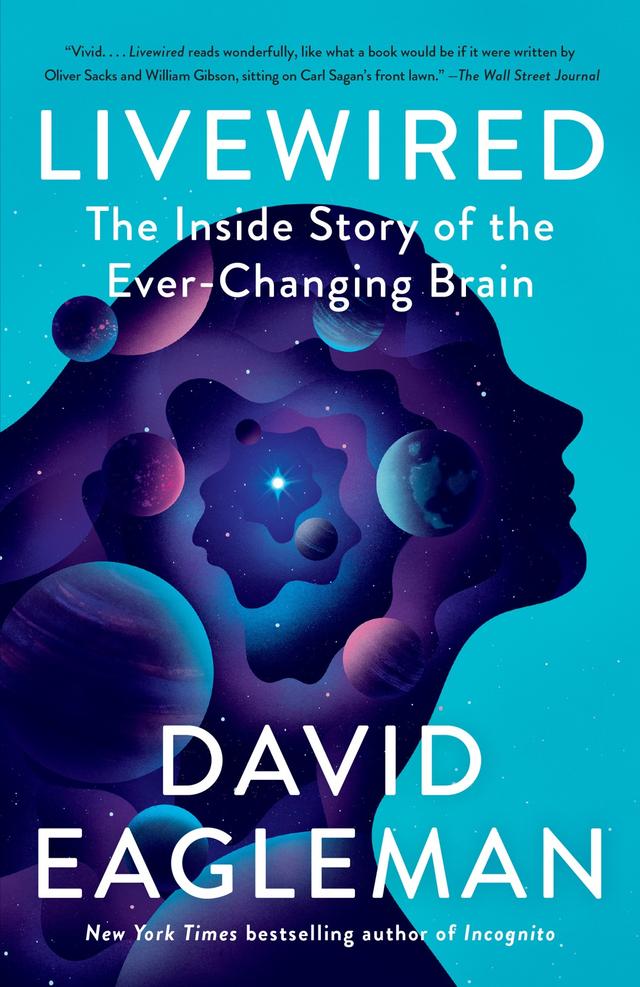
Livewired
What It’s About
Your brain isn't a hardwired circuit locked inside your skull. It's a living city that redraws its streets every single day based on where you go, what you do, and who you meet. You can learn to inhabit any body, develop entirely new senses, and revive what seems permanently rigid by deliberately choosing what flows into you. In the end, you become what you've built yourself from.
Three Key Ideas
The Brain Rewires Itself
Experience physically reshapes neural connections throughout life, so your brain is literally built from what you pay attention to and practice.
Sensory Substitution and New Senses
The brain accepts data from any channel, allowing people to see with their tongues, hear with their skin, and gain entirely new senses through technology.
Motivation Drives Rewiring
Practice alone does not change the brain, the molecule acetylcholine only triggers lasting rewiring when the activity genuinely matters to you.
Read a Sample
Livewired: summary
The boy who is missing half his brain
Matthew was three years old when the seizures started coming every couple of minutes. A rare inflammation was slowly eating away one half of his brain, and for three years his small body ended up in the hospital about ten times a year. The doctors in Albuquerque had tried everything. There was one option left, and it sounded so brutal that his parents could barely say it out loud: remove half of the boy's brain. Not a sliver. The entire left or right hemisphere.
After the surgery in Baltimore, Matthew couldn't walk, couldn't speak, couldn't control his bladder. Then came daily therapy, and three months later he was exactly where any child his age should've been. Today he works at a restaurant, takes phone calls, talks to customers, and handles their requests. People who meet him have no idea there's only one hemisphere inside his skull. His mother once put it simply: if you didn't know, you'd never know.
History offers a lovely parallel. After the Second World War, Japan was left with thousands of military engineers who'd been trained for combat. Tokyo didn't let them go to waste. It put the designers of fighter planes to work on the Shinkansen bullet train, and the masters of streamlined aircraft started building streamlined railcars. The city beat its swords into plowshares. That's exactly what the brain does when it redistributes the resources it already has to match its goals.
Who It’s For
- Anyone who wants to understand why habits, skills, and personality are shaped more by environment than genetics.
- Anyone who is curious about brain-computer interfaces, sensory substitution devices, and the future of human perception.
- Anyone who is learning a new skill and wants to know how to make that learning actually stick.
- Anyone who has wondered why childhood is such a critical window for language, music, or other abilities.
About the Author: David Eagleman
David Eagleman is a neuroscientist and adjunct professor at Stanford University. He is known for translating complex brain science into accessible writing and has authored several books on perception, consciousness, and the nature of the mind.
He is also the creator and host of the PBS television series "The Brain with David Eagleman" and has founded companies working on sensory substitution technology, including wearable devices that let deaf users perceive sound through vibration on the skin.