Ch. 1free to read
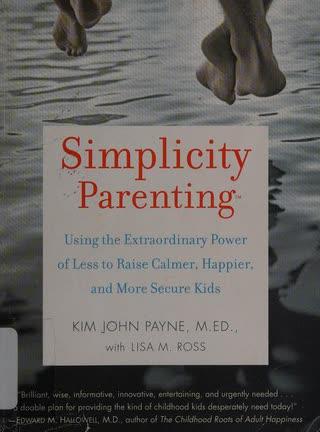
Simplicity Parenting
What It’s About
Small stresses compound in ways trauma doesn't. Payne shows that when you simplify the environment, your child's anxiety dissolves on its own. Fewer objects, choices, adult worries, and constant rushing. Your child starts building, playing, connecting again. Their panic, sleep troubles, even stomach aches fade without intervention. It's not therapy. It's just giving them back what modern life took: quiet.
Read a Sample
Simplicity Parenting: Summary
Kim John Payne spent years working in refugee camps in Asia, with children who had lived through war, loss, and starvation. Then he moved to England, trained as a Waldorf teacher, and opened a private practice outside London. Plenty of the families who came to him had, on the face of it, nothing wrong. Two parents, a warm house, a good school, a bedroom crammed with toys.
And he kept seeing the same thing.
The same watchful, anxious eyes. The same rigidity, the same constant alertness, as though something might happen at any second. Only now he was seeing it in children whose lives had never held anything terrible. Payne spent years looking for the explanation, and what he found is uncomfortably simple. In the refugee camp, one enormous trauma had overloaded those children's nervous systems. In England, several thousand tiny ones had. None of them was serious on its own. Together they weighed just as much.
This book is about those several thousand small things. It answers four big questions. Why is a child full of stress even when nothing's wrong with him? Why does his behavior improve when there's less stuff around him? How do you bring rhythm to a day that keeps falling apart? And how much of the adult world should we let in? If you don't have children, don't put this down yet. Payne's four too-muches are exactly what pulls your own day to pieces.