Ch. 1free to read
Digital Gold
What It’s About
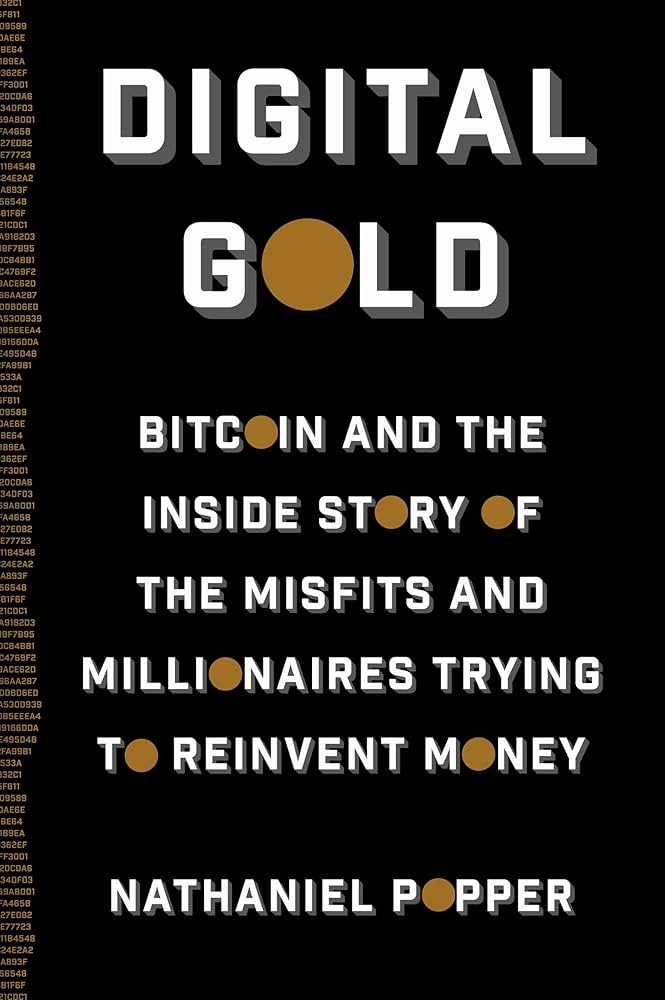
Digital Gold provides a detailed account of Bitcoin's beginnings, including how it was developed, why the early years were challenging, how many people contributed to its rise, and how it has already changed our world and will continue to do so for a long time.
Three Key Ideas
The Double-Spending Solution
Satoshi Nakamoto solved the core digital cash problem by replacing central authority with a shared, cryptographically secured public ledger.
Protocol vs. People
The blockchain itself never failed, but every disaster from Mt. Gox to BitInstant came from trusting intermediaries rather than the math.
Crisis-Driven Adoption
Bitcoin found its early believers almost entirely among people who had personally witnessed governments destroy savings through inflation or seizure.
Read a Sample
A Poker Game at Lake Tahoe
Picture a Lake Tahoe living room in early 2014. Six players sit around a poker table at the home of Dan Morehead, a hedge fund manager who has been buying Bitcoin in serious size. The crowd is odd. Among them are a former Walmart executive from China whose grandparents fled Mao with only the gold they could carry, and a twenty-nine-year-old named Erik Voorhees, who eighteen months earlier was unemployed in New Hampshire and buried in credit card debt.
Voorhees got into Bitcoin when a coin cost a few dollars. He spent two hundred and twenty-five dollars on a gambling website called SatoshiDice and sold it a year later for around eleven million. He owns a fortune in coins.
Just weeks before the Tahoe gathering, Mt. Gox, the largest Bitcoin exchange in the world, announced it had lost about four hundred million dollars in customer money. The entire Bitcoin market is worth, all told, about the same as Urban Outfitters. Morehead shrugs at the comparison and tells the table, "I think when they dig up our society, Planet of the Apes style, in a couple of centuries, Bitcoin is probably going to have had a greater impact on the world than Urban Outfitters."
That sentence is the spine of Nathaniel Popper's book. Digital Gold is a New York Times reporter's account, built on more than three hundred interviews, of how a piece of software posted to an obscure cryptography mailing list by an anonymous person calling himself Satoshi Nakamoto in 2008 became a global obsession by 2014.
Who It’s For
- Anyone who wants to understand how Bitcoin actually began, told through the real people who built and broke it.
- Anyone who is curious why citizens in Argentina, China, or Cyprus turned to cryptocurrency before Western investors did.
- Anyone who manages money and wants a concrete framework for separating a sound protocol from the risky operators built on top of it.
- Anyone who is interested in how genuinely disruptive technologies arrive through the overlap of incompatible obsessions rather than a master plan.
About the Author: Nathaniel Popper
Nathaniel Popper is a journalist and author who has covered finance and technology for the New York Times. He spent years reporting on Bitcoin from its early fringe communities through its mainstream emergence, conducting more than three hundred interviews for this book.
His background in financial journalism gives Digital Gold its grounding in both the technical mechanics of the protocol and the business failures of the companies built around it.