Ch. 1free to read
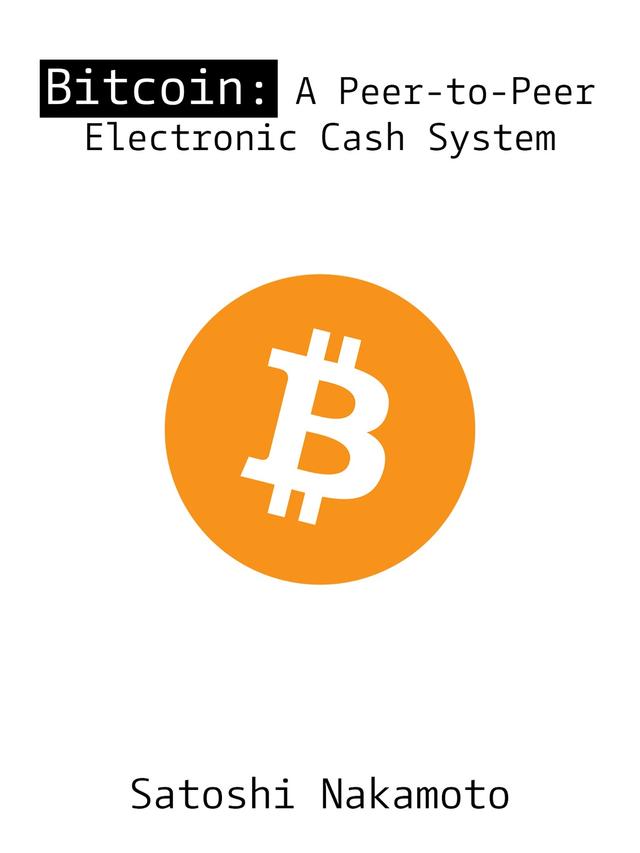
Bitcoin: A Peer-to-Peer Electronic Cash System
What It’s About
In nine pages published on a cypherpunk mailing list in 2008, an unknown author named Satoshi Nakamoto sketched the design for a peer-to-peer electronic cash system that needed no bank, no central authority, and no permission to use. This summary unpacks the whitepaper into plain language: how proof-of-work blocks double-spending, what nodes actually do, and why this small document set off a revolution in money.
Three Key Ideas
Trustless Digital Cash
Bitcoin lets two strangers transfer money directly over the internet without any bank or payment processor in the middle.
Proof-of-Work Consensus
Miners compete to solve a computationally expensive puzzle, making the shared transaction ledger prohibitively costly to forge or rewrite.
Fixed Supply and Miner Incentives
Block rewards halving toward 21 million coins align miners' financial interests with honest behavior, making attacks less profitable than honest mining.
Read a Sample
Bitcoin Whitepaper: summary
A nine-page paper that quietly rewired money
In late October 2008, with the global financial system smoldering and Lehman Brothers freshly buried, a stranger calling himself Satoshi Nakamoto sent a short email to an obscure cryptography mailing list. Attached was a PDF, just nine pages long, written in plain academic English with the matter-of-fact tone of someone describing a new kind of database. The title was modest to the point of boring. "Bitcoin: A Peer-to-Peer Electronic Cash System." There was no manifesto, no revolutionary fanfare, no curse at the bankers being bailed out that very week. Just a problem, a mechanism, and some math.
Almost nobody read it. The few who did mostly thought it would not work. And yet that document, drafted by a person or group whose real identity has never been confirmed, set in motion something nobody quite controls now: a global payment network running twenty-four hours a day, owned by no government and no company, with no head office to raid and no CEO to subpoena. This summary walks through what that paper actually says, why it works, and what it asks you to believe. It answers three questions: how do you send money over the internet without trusting a bank, how do strangers agree on what is true without a referee, and what does it cost to keep that agreement honest.
The hidden tax on every payment you make
Who It’s For
- Anyone who wants to understand how Bitcoin actually works at the protocol level, not just the price.
- Anyone who is curious why digital payments have historically required a trusted third party like a bank.
- Anyone who questions whether decentralized financial infrastructure is technically possible and wants to read the proof.
- Anyone who works in fintech, cryptography, or distributed systems and needs the foundational primary source.
About the Author: Satoshi Nakamoto
Satoshi Nakamoto is the pseudonym of the unknown person or group who published the Bitcoin whitepaper in October 2008 and launched the Bitcoin network in January 2009. No verified identity has ever been confirmed, and Nakamoto stopped communicating publicly around 2010.
The whitepaper draws on prior work in cryptography and distributed systems, citing contributions from researchers including Adam Back, Wei Dai, Nick Szabo, Stuart Haber, and W. Scott Stornetta. Whoever Nakamoto is, the writing shows deep fluency in cryptographic primitives, peer-to-peer networking, game theory, and probability.