Ch. 1free to read
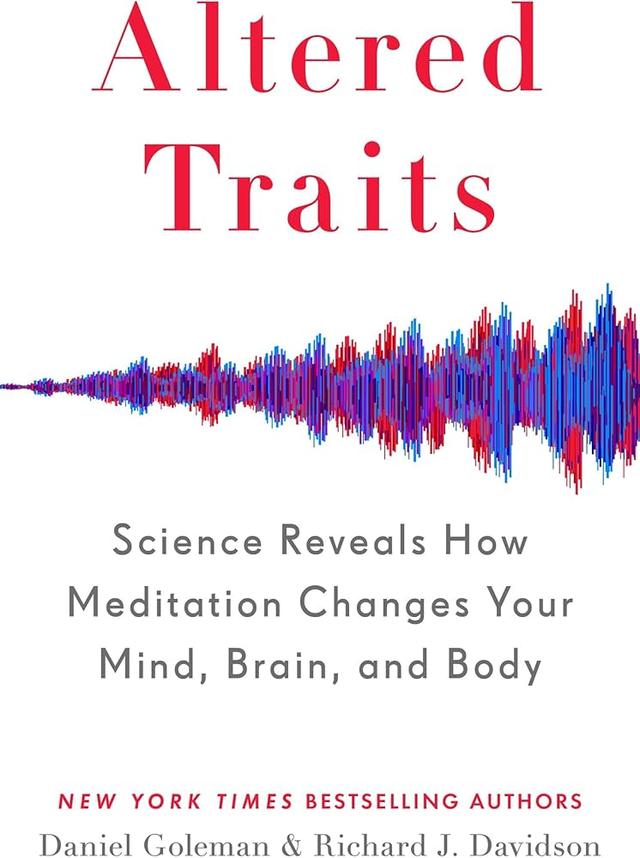
Altered Traits
What It’s About
Altered Traits explores the science behind meditation techniques and how they benefit us, as well as how they transform our minds and bodies.
Three Key Ideas
States Versus Traits
Meditation's lasting value lies not in the calm felt during practice but in the permanent shifts in behavior and perception that endure long after the session ends.
Dose-Response and Retreat Hours
Trait-level changes in stress reactivity, attention, and inflammation track retreat hours more than daily sitting time, making intensive practice a prerequisite for deep change.
Compassion as Neural Training
Loving-kindness practice rewires empathy circuits toward parental warmth rather than personal distress, and even brief training measurably increases prosocial behavior.
Read a Sample
Lieutenant Colonel Steve Z was at his Pentagon desk on the morning of September 11, 2001, when a hijacked jet struck the building. It hit close enough that the debris cascaded over him before the fireball could reach him. The debris saved his life. Four days later he was back at work, and within a year he had volunteered for a tour in Iraq. When he came home, he could not ride an elevator without his heart pounding, could not stand still in a shopping mall without scanning for exits, could not sit in traffic without feeling trapped. Conventional therapy did not touch the worst of it. What eventually did was mindfulness, then loving-kindness, then a sequence of retreats. The flashbacks never vanished. But as Steve told his therapist, he could finally see them coming.
That single line carries the central argument of *Altered Traits* by Daniel Goleman and Richard Davidson. Meditation does not erase what happens to you. It changes who is doing the looking. The book is a forty-year scientific accounting of that change: what holds up under scrutiny and what falls apart under it. It also asks what we can finally say with real confidence about whether sitting on a cushion for a few thousand hours rewires the human brain.
Goleman is the science journalist who wrote *Emotional Intelligence*, and Davidson is a neuroscientist. They have been friends since they shared a fourteenth-floor seminar room at Harvard in 1972. Both went to India as graduate students. Both watched meditation get marketed, oversold, and packaged into corporate wellness programs. Both spent decades waiting for the science to catch up with what their teachers in Asia had been claiming for centuries. A sustained practice, the teachers claimed, produces not a pleasant state but a permanent shift in who you are. The shift is what they call an altered trait. The promise of this book is that altered traits exist, that science can now measure them, and that almost everything you have heard about how to get there is wrong.
Who It’s For
- Anyone who wants to know which meditation claims are backed by rigorous science and which are overblown marketing.
- Anyone who struggles with chronic stress, anxiety, or emotional reactivity and is curious whether a contemplative practice can help.
- Anyone interested in neuroscience and how sustained mental training physically reshapes the brain and even gene expression.
- Anyone drawn to mindfulness or loving-kindness practice and wanting an honest guide to how much effort real transformation actually requires.
About the Author: Daniel Goleman
Daniel Goleman is a psychologist and science journalist best known for popularizing the concept of emotional intelligence. He studied at Harvard and spent time in India as a graduate student, where his encounters with Asian contemplative traditions shaped decades of subsequent research and writing.
Richard Davidson is a neuroscientist at the University of Wisconsin-Madison and founder of the Center for Healthy Minds. He has spent much of his career studying how meditation affects the brain and is one of the leading figures in contemplative neuroscience. Goleman and Davidson have collaborated since the early 1970s.